



Infectious vaccine-derived rubella viruses emerge, persist, and evolve in cutaneous granulomas of children with primary immunodeficiencies
Supporting Files

-
October 28 2019
File Language:
English
Details
-
Alternative Title:PLoS Pathog
-
Personal Author:Perelygina, Ludmila ; Chen, Min-hsin ; Suppiah, Suganthi ; Adebayo, Adebola ; Abernathy, Emily ; Dorsey, Morna ; Bercovitch, Lionel ; Paris, Kenneth ; White, Kevin P. ; Krol, Alfons ; Dhossche, Julie ; Torshin, Ivan Y. ; Saini, Natalie ; Klimczak, Leszek J. ; Gordenin, Dmitry A. ; Zharkikh, Andrey ; Plotkin, Stanley ; Sullivan, Kathleen E. ; Icenogle, Joseph
-
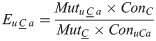
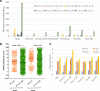
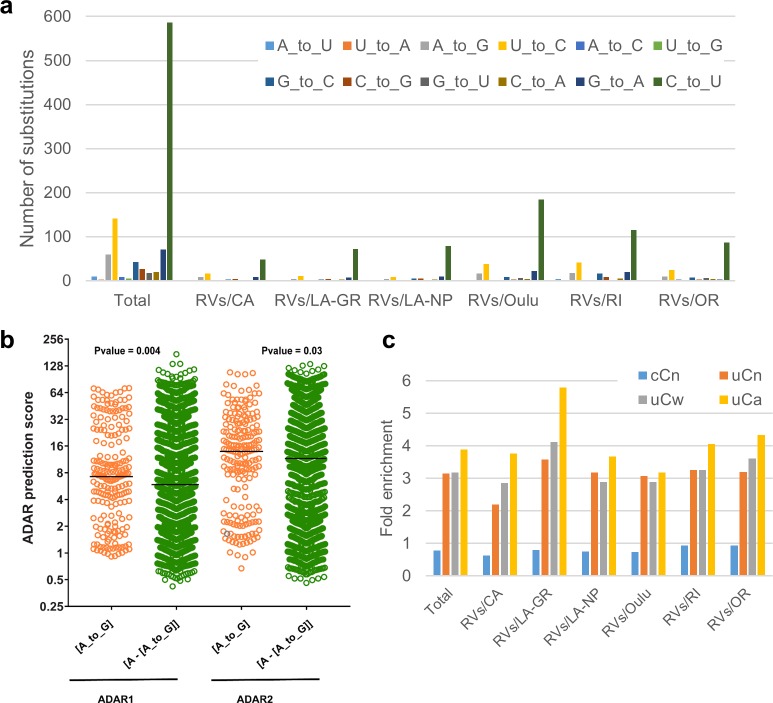
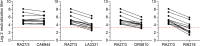
Description:Rubella viruses (RV) have been found in an association with granulomas in children with primary immune deficiencies (PID). Here, we report the recovery and characterization of infectious immunodeficiency-related vaccine-derived rubella viruses (iVDRV) from diagnostic skin biopsies of four patients. Sequence evolution within PID hosts was studied by comparison of the complete genomic sequences of the iVDRVs with the genome of the vaccine virus RA27/3. The degree of divergence of each iVDRV correlated with the duration of persistence indicating continuous intrahost evolution. The evolution rates for synonymous and nonsynonymous substitutions were estimated to be 5.7 x 10⁻³ subs/site/year and 8.9 x 10⁻⁴ subs/site/year, respectively. Mutational spectra and signatures indicated a major role for APOBEC cytidine deaminases and a secondary role for ADAR adenosine deaminases in generating diversity of iVDRVs. The distributions of mutations across the genes and 3D hotspots for amino acid substitutions in the E1 glycoprotein identified regions that may be under positive selective pressure. Quasispecies diversity was higher in granulomas than in recovered infectious iVDRVs. Growth properties of iVDRVs were assessed in WI-38 fibroblast cultures. None of the iVDRV isolates showed complete reversion to wild type phenotype but the replicative and persistence characteristics of iVDRVs were different from those of the RA27/3 vaccine strain, making predictions of iVDRV transmissibility and teratogenicity difficult. However, detection of iVDRV RNA in nasopharyngeal specimen and poor neutralization of some iVDRV strains by sera from vaccinated persons suggests possible public health risks associated with iVDRV carriers. Detection of IgM antibody to RV in sera of two out of three patients may be a marker of virus persistence, potentially useful for identifying patients with iVDRV before development of lesions. Studies of the evolutionary dynamics of iVDRV during persistence will contribute to development of infection control strategies and antiviral therapies.
-
Subjects:
- APOBEC Deaminases
- Adenosine Deaminase
- Adolescent
- Animals
- Antibodies, Viral
- Biopsy
- Cell Line
- Child
- Chlorocebus aethiops
- Genome, Viral
- Granuloma
- Humans
- Immunoglobulin M
- Measles-Mumps-Rubella Vaccine
- Primary Immunodeficiency Diseases
- RNA-Binding Proteins
- Rubella virus
- Skin
- Vero Cells
- Viral Envelope Proteins
- Virus Shedding
-
Source:PLoS Pathog. 15(10)
-
Pubmed ID:31658304
-
Pubmed Central ID:PMC6837625
-
Document Type:
-
Funding:
-
Volume:15
-
Issue:10
-
Download URL:
-
File Type:
 [PDF - 3.82 MB]
-
Collection(s):
-
Main Document Checksum:urn:sha256:a539c26d47a872a55509f613b48c3f594a726cd8276d1f20f571b0ee31e84bae
Supporting Files


File Language:
English
 Was this page helpful?
 Found an issue?







CDC STACKS serves as an archival repository of CDC-published products including
scientific findings, journal articles, guidelines, recommendations, or other public health information authored or
co-authored by CDC or funded partners.
As a repository, CDC STACKS retains documents in their original published format to ensure public access to scientific information.
As a repository, CDC STACKS retains documents in their original published format to ensure public access to scientific information.
You May Also Like
COLLECTION
CDC Public Access