


HIV-1 Drug Resistance Mutations: Potential Applications for Point-of-Care Genotypic Resistance Testing
Supporting Files

-
Dec 30 2015
-
File Language:
English
Details
-
Alternative Title:PLoS One
-
Personal Author:Rhee, Soo-Yon ; Jordan, Michael R. ; Raizes, Elliot ; Chua, Arlene ; Parkin, Neil ; Kantor, Rami ; Van Zyl, Gert U. ; Mukui, Irene ; Hosseinipour, Mina C. ; Frenkel, Lisa M. ; Ndembi, Nicaise ; Hamers, Raph L. ; Rinke de Wit, Tobias F. ; Wallis, Carole L. ; Gupta, Ravindra K. ; Fokam, Joseph ; Zeh, Clement ; Schapiro, Jonathan M. ; Carmona, Sergio ; Katzenstein, David ; Tang, Michele ; Aghokeng, Avelin F. ; De Oliveira, Tulio ; Wensing, Annemarie M. J. ; Gallant, Joel E. ; Wainberg, Mark A. ; Richman, Douglas D. ; Fitzgibbon, Joseph E. ; Schito, Marco ; Bertagnolio, Silvia ; Yang, Chunfu ; Shafer, Robert W.
-
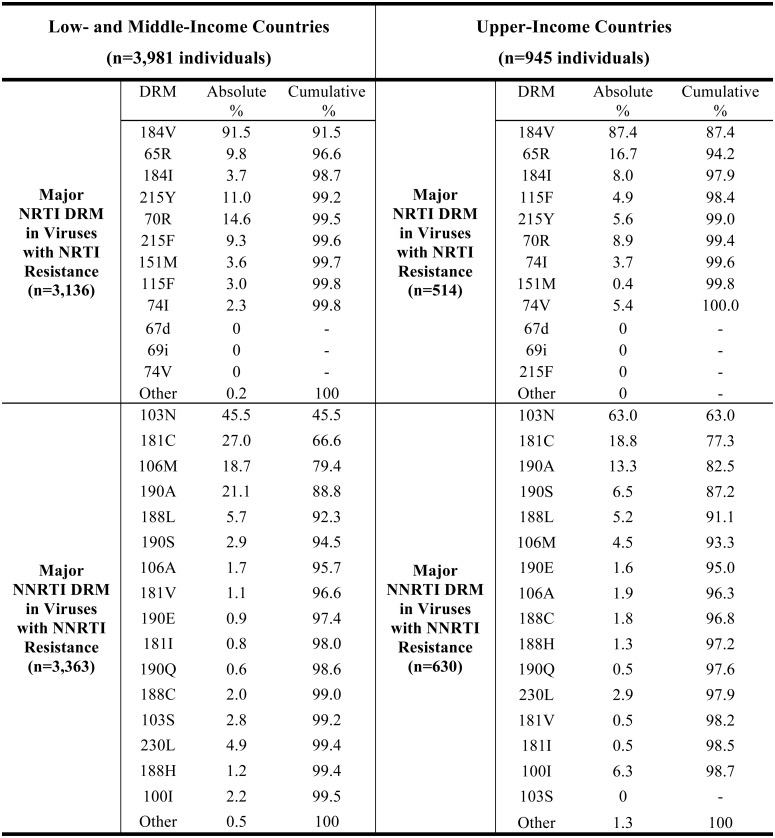
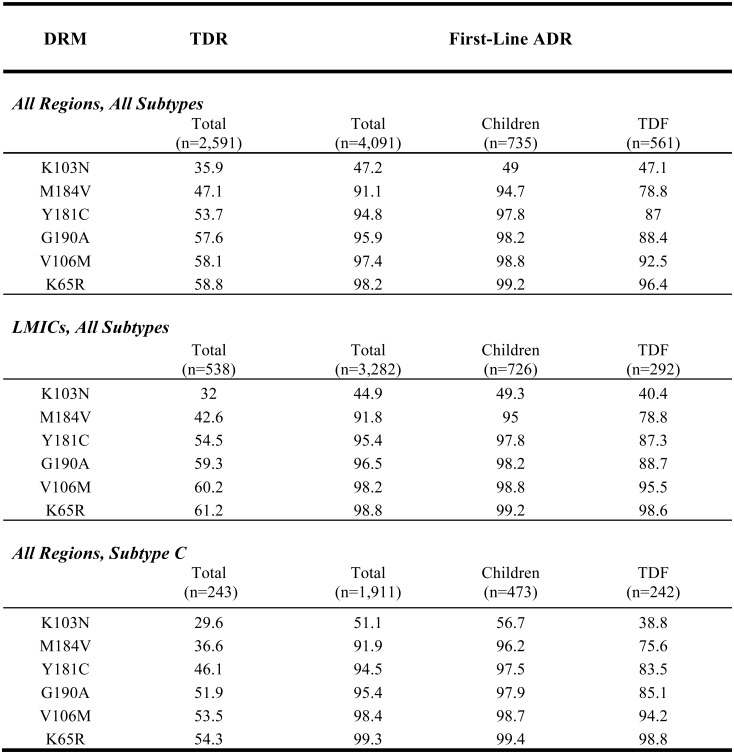
Description:The increasing prevalence of acquired and transmitted HIV-1 drug resistance is an obstacle to successful antiretroviral therapy (ART) in the low- and middle-income countries (LMICs) hardest hit by the HIV-1 pandemic. Genotypic drug resistance testing could facilitate the choice of initial ART in areas with rising transmitted drug resistance (TDR) and enable care-providers to determine which individuals with virological failure (VF) on a first- or second-line ART regimen require a change in treatment. An inexpensive near point-of-care (POC) genotypic resistance test would be useful in settings where the resources, capacity, and infrastructure to perform standard genotypic drug resistance testing are limited. Such a test would be particularly useful in conjunction with the POC HIV-1 viral load tests that are currently being introduced in LMICs. A POC genotypic resistance test is likely to involve the use of allele-specific point mutation assays for detecting drug-resistance mutations (DRMs). This study proposes that two major nucleoside reverse transcriptase inhibitor (NRTI)-associated DRMs (M184V and K65R) and four major NNRTI-associated DRMs (K103N, Y181C, G190A, and V106M) would be the most useful for POC genotypic resistance testing in LMIC settings. One or more of these six DRMs was present in 61.2% of analyzed virus sequences from ART-naïve individuals with intermediate or high-level TDR and 98.8% of analyzed virus sequences from individuals on a first-line NRTI/NNRTI-containing regimen with intermediate or high-level acquired drug resistance. The detection of one or more of these DRMs in an ART-naïve individual or in a individual with VF on a first-line NRTI/NNRTI-containing regimen may be considered an indication for a protease inhibitor (PI)-containing regimen or closer virological monitoring based on cost-effectiveness or country policy.
-
Subjects:
-
Source:PLoS One. 10(12).
-
Pubmed ID:26717411
-
Pubmed Central ID:PMC4696791
-
Document Type:
-
Funding:
-
Volume:10
-
Issue:12
-
Collection(s):
-
Main Document Checksum:urn:sha256:adcab36c67c4d10ffad80ad4059146e77e2e7a2173f75473e03d73e41bb98a41
-
Download URL:
-
File Type:
 [PDF
- 825.42 KB
]
[PDF
- 825.42 KB
]
Supporting Files


File Language:
English
ON THIS PAGE

CDC STACKS serves as an archival repository of CDC-published products including
scientific findings,
journal articles, guidelines, recommendations, or other public health information authored or
co-authored by CDC or funded partners.
As a repository, CDC STACKS retains documents in their original published format to ensure public access to scientific information.
As a repository, CDC STACKS retains documents in their original published format to ensure public access to scientific information.
You May Also Like
COLLECTION
CDC Public Access