



Noninvasive, MultiOmic, and Multicompartmental Biomarkers of Reflux Disease: A Systematic Review
Supporting Files

-
1 21 2023 ; 2023
-
Available in CDC Stacks on 2023-11-24T00:00:00Z
File Language:
English
Details
-
Alternative Title:Gastro Hep Adv
-
Personal Author:Farooqi, Muhammad S. ; Podury, Sanjiti ; Crowley, George ; Javed, Urooj ; Li, Yiwei ; Liu, Mengling ; Kwon, Sophia ; Grunig, Gabriele ; Khan, Abraham R. ; Francois, Fritz ; Nolan, Anna
-
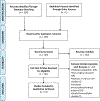
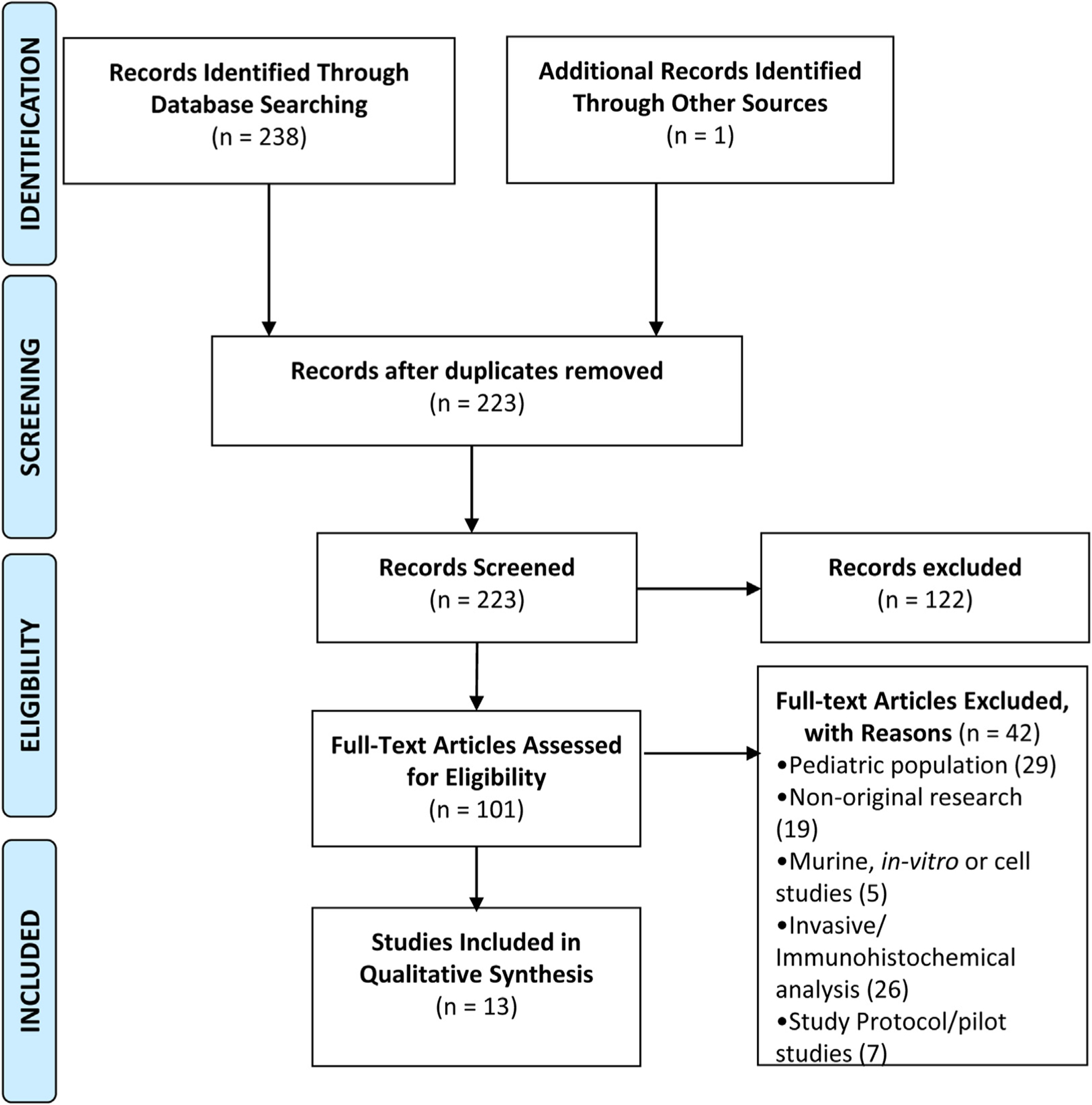
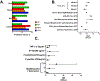
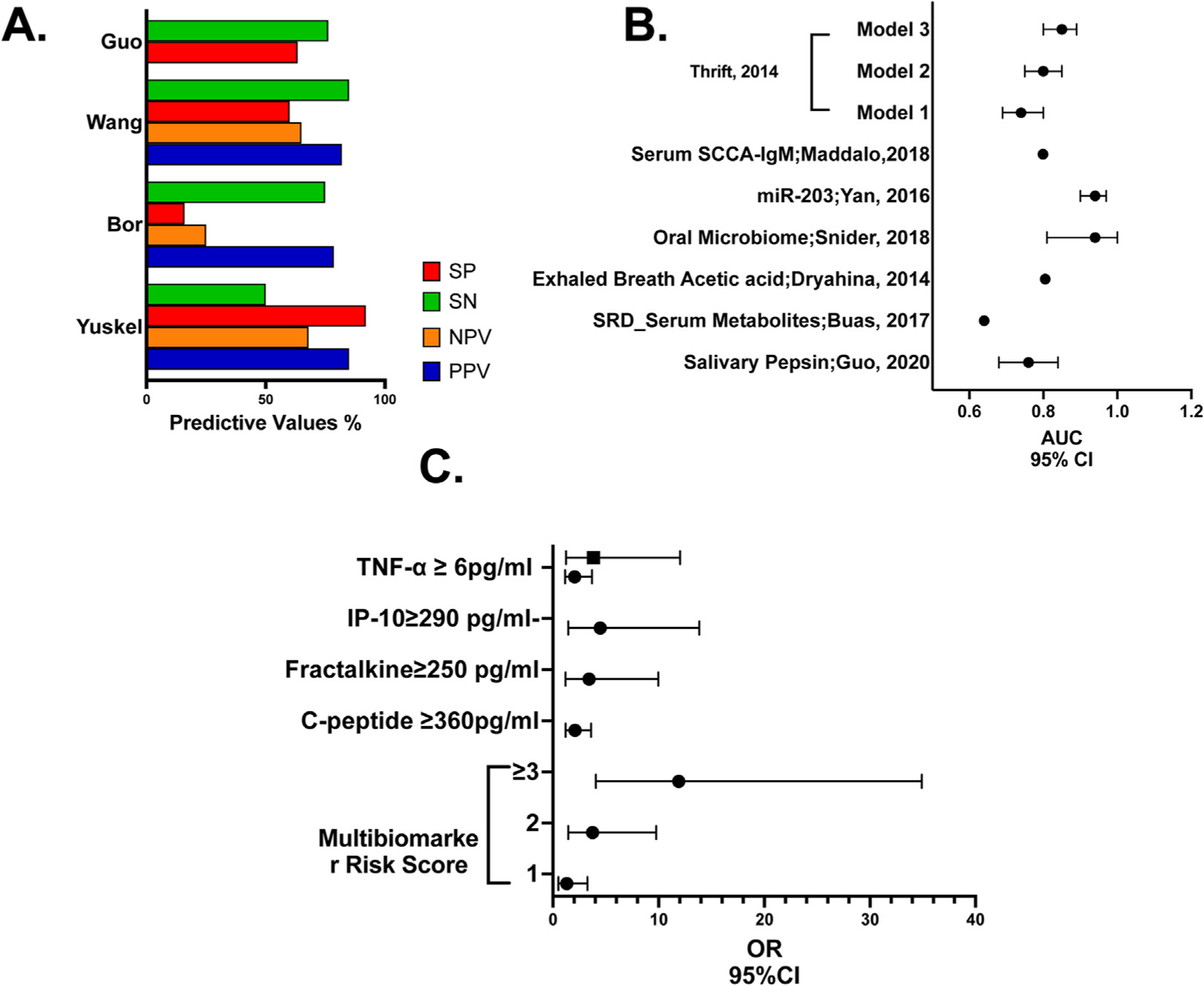
Description:BACKGROUND AND AIMS: ; Gastroesophageal reflux disease (GERD) is a prevalent gastrointestinal disorder that may complicate conditions such as obstructive airway disease. Our group has identified predictive biomarkers of GERD in particulate exposed first responders with obstructive airway disease. In addition, GERD diagnosis and treatment is costly and invasive. In light of these clinical concerns, we aimed to systematically review studies identifying noninvasive, multiOmic, and multicompartmental biomarkers of GERD. ; METHODS: ; A systematic review of PubMed and Embase was performed using keywords focusing on reflux disease and biomarkers and registered with PROSPERO. We included original human studies in English, articles focusing on noninvasive biomarkers of GERD published after December 31, 2009. GERD subtypes (non-erosive reflux disease and erosive esophagitis) and related conditions (Barrett’s Esophagus BE and Esophageal Adenocarcinoma). Predictive measures were synthesized and risk of bias assessed (Newcastle-Ottawa Scale). ; RESULTS: ; Initial search identified n = 238 studies andn 13 articles remained after applying inclusion/exclusion criteria. Salivary pepsin was the most studied biomarker with significant sensitivity and specificity for GERD. Serum assessment showed elevated levels of Tumor Necrosis Factor-alpha in both GERD and Barrett’s. Exhaled breath volatile sulfur compounds and acetic acid were associated with GERD. Oral Microbiome: Models with Lautropia, Streptococcus, and Bacteroidetes showed the greatest discrimination between BE and controls vs Lautropia; ROCAUC 0.94 (95% confidence interval; 0.85–1.00). ; CONCLUSION: ; Prior studies identified significant multiOmic, multicompartmental noninvasive biomarker risks for GERD and BE. However, studies have a high risk of bias and the reliability and accuracy of the biomarkers identified are greatly limited, which further highlights the need to discover and validate clinically relevant noninvasive biomarkers of GERD.
-
Keywords:
-
Source:Gastro Hep Adv. 2(4):608-620
-
Pubmed ID:38009162
-
Pubmed Central ID:PMC10673619
-
Document Type:
-
Funding:
-
Volume:2
-
Issue:4
-
Download URL:
-
File Type:
 [PDF - 826.08 KB]
 -
Collection(s):
-
Main Document Checksum:urn:sha-512:b91123e78198b2676b7001fd3bbf1eb0ed79a90c50e8f21457143d6a936d5c65320c84adad49cf6f384fe3203b134a6fac559cd242d1d04eecdbd17c102eadfa
Supporting Files


File Language:
English
 Was this page helpful?
 Found an issue?

CDC STACKS serves as an archival repository of CDC-published products including
scientific findings, journal articles, guidelines, recommendations, or other public health information authored or
co-authored by CDC or funded partners.
As a repository, CDC STACKS retains documents in their original published format to ensure public access to scientific information.
As a repository, CDC STACKS retains documents in their original published format to ensure public access to scientific information.
You May Also Like
COLLECTION
CDC Public Access