



Particulate Matter Exposure, Dietary Inflammatory Index and Preterm Birth in Mexico City, Mexico
Supporting Files

-
10 2020 ; 10-2020
-
Available in CDC Stacks on October 01, 2021, 12:00 AM
File Language:
English
Details
-
Alternative Title:Environ Res
-
Personal Author:
-
Description:Background:
Particulate matter ≤10 μm in aerodynamic diameter (PM10) and diet quality are risk factors for systemic inflammation, which is associated with preterm birth (PTB). PM10 and a pro-inflammatory diet (assessed by the Dietary Inflammatory Index DII®) have been individually evaluated as causes of PTB and differences by offspring sex have been reported for the DII. However, additional studies are needed to evaluate joint effects of these associations to inform intervention efforts.
Objectives:
To evaluate the independent and joint effects of PM10 and energy-adjusted DII (E-DII) on PTB risks.
Methods:
PM10 estimates were generated from daily citywide averages for 1216 pregnant women from three subcohorts of the Early Life Exposures in Mexico to Environmental Toxicants study using data from the Mexico City Outdoor Air Monitoring Network. Among a subset of participants (N = 620), E-DII scores were calculated using a validated food frequency questionnaire. Cox Proportional Hazards models were run for select periods during pregnancy and entire pregnancy averages for E-DII and PM10. We assessed for potential non-linear associations using natural splines.
Results:
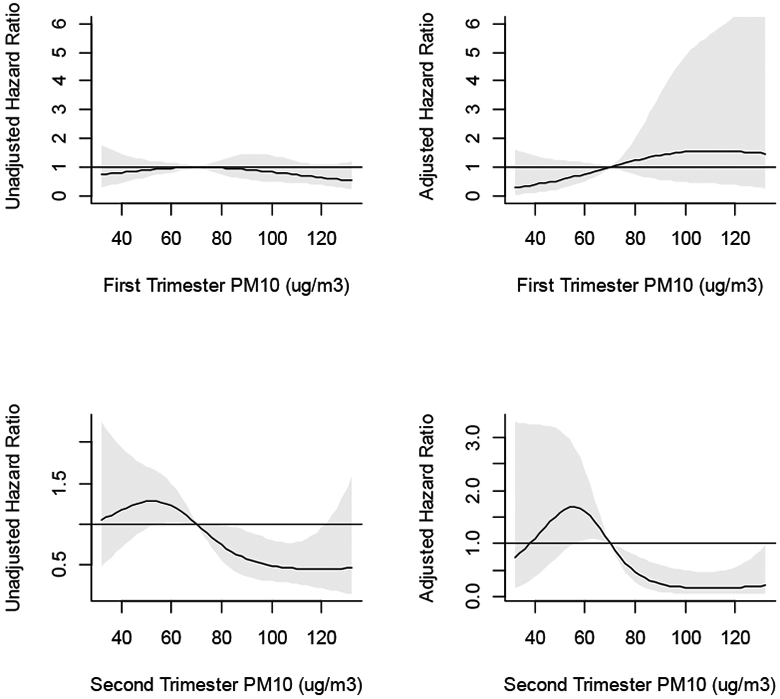
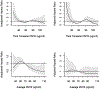
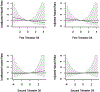
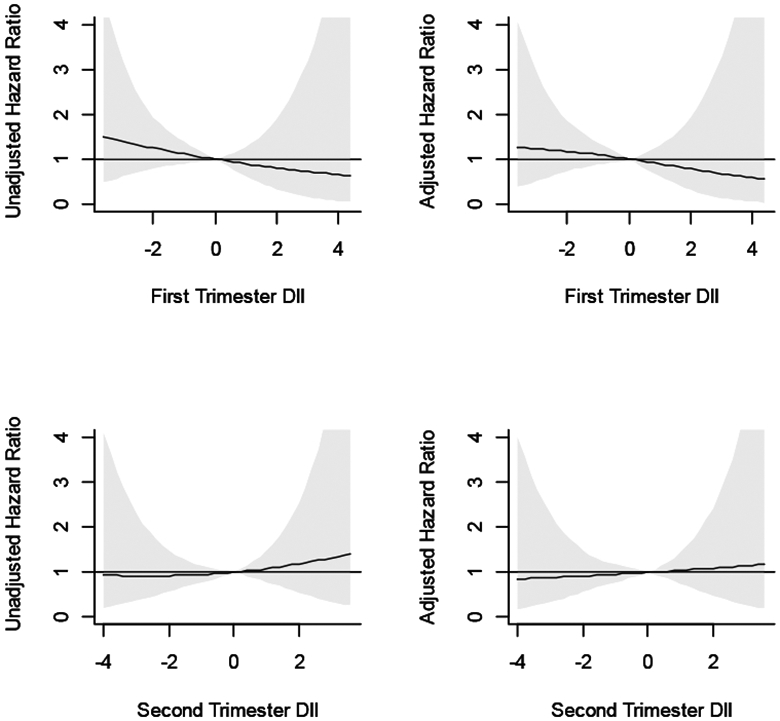
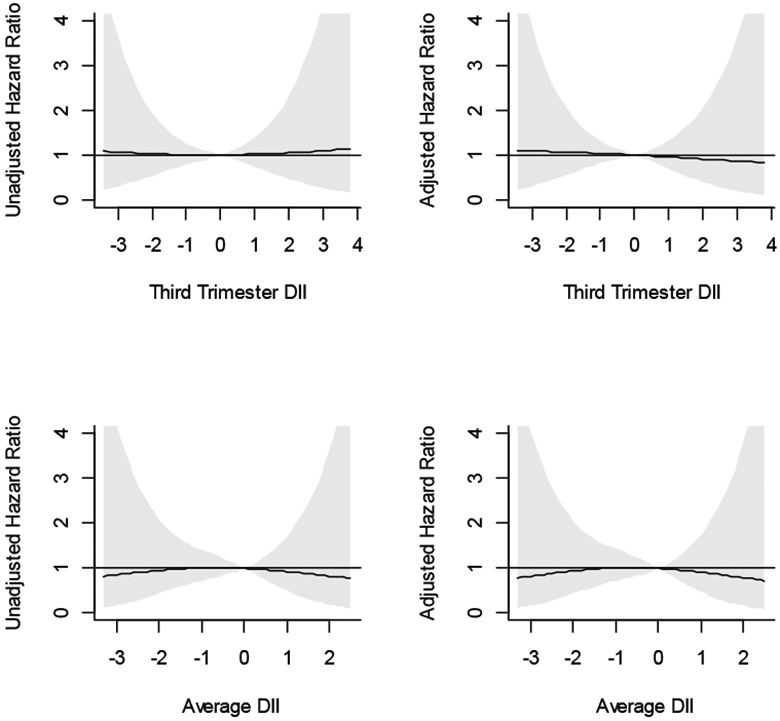
In adjusted models, PM10 exposure was associated with increased risks of PTB for a range of values (58 – 72 μg/m3) during the second trimester, while negative associations were seen during the second (≥ 74 μg/m3) and third trimesters (55-65 μg/m3). Analyses conducted using distributed lag models for periods closer to delivery (max lag =90) did not show negative associations between PM10 exposure and preterm birth, and indeed positive significant associations were observed (estimates and figures). E-DII was not associated with PTB and there was no evidence of effect modification by infant sex. There was no evidence of interaction between PM10 and E-DII and the risk of preterm birth.
Discussion:
Associations between PM10 and PTB in Mexico City varied over time and across levels of PM10. Our findings of negative associations in the second and third trimesters, which are contrary to the hypothesized relationship between PM10 and PTB, may be due to a number of factors, including live birth bias and the exposure period evaluated. Differences in results for the periods evaluated suggest that PM10 from shorter exposure windows may play a more proximal role in initiating preterm labor. -
Subjects:
-
Keywords:
-
Source:Environ Res. 189:109852
-
Pubmed ID:32979989
-
Pubmed Central ID:PMC7525039
-
Document Type:
-
Funding:T42 OH008455/OH/NIOSH CDC HHSUnited States/ ; R01 ES007821/ES/NIEHS NIH HHSUnited States/ ; P30 ES017885/ES/NIEHS NIH HHSUnited States/ ; P30 DK089503/DK/NIDDK NIH HHSUnited States/ ; R00 ES026198/ES/NIEHS NIH HHSUnited States/ ; R01 ES016932/ES/NIEHS NIH HHSUnited States/ ; P42 ES005947/ES/NIEHS NIH HHSUnited States/ ; P01 ES022844/ES/NIEHS NIH HHSUnited States/ ; T32 ES007062/ES/NIEHS NIH HHSUnited States/ ; R01 ES017022/ES/NIEHS NIH HHSUnited States/
-
Volume:189
-
Download URL:
-
File Type:
 [PDF - 738.79 KB]
 -
Collection(s):
-
Main Document Checksum:urn:sha256:4add0cd161457e58707eb3980b049516f9fe954e1c8fbebf464a8514b9fe588e
Supporting Files


File Language:
English
 Was this page helpful?
 Found an issue?




CDC STACKS serves as an archival repository of CDC-published products including
scientific findings, journal articles, guidelines, recommendations, or other public health information authored or
co-authored by CDC or funded partners.
As a repository, CDC STACKS retains documents in their original published format to ensure public access to scientific information.
As a repository, CDC STACKS retains documents in their original published format to ensure public access to scientific information.
You May Also Like
COLLECTION
CDC Public Access