


Exploration of risk factors for ceftriaxone resistance in invasive non-typhoidal Salmonella infections in western Kenya
Supporting Files
Public Domain

-
March 03 2020
-
File Language:
English
Details
-
Alternative Title:PLoS One
-
Personal Author:
-
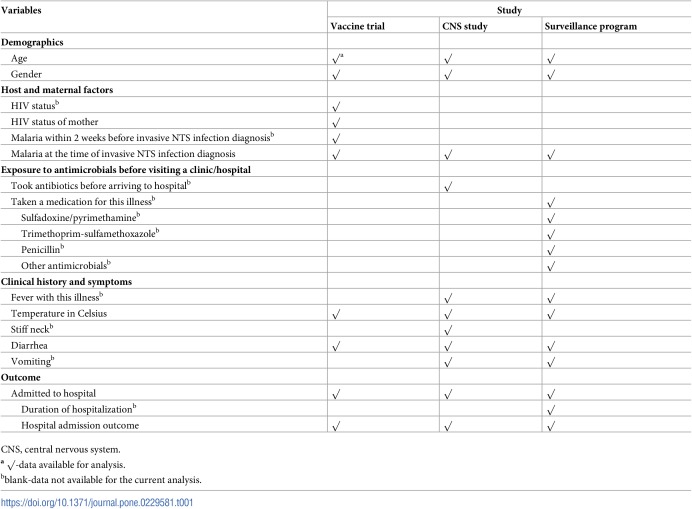
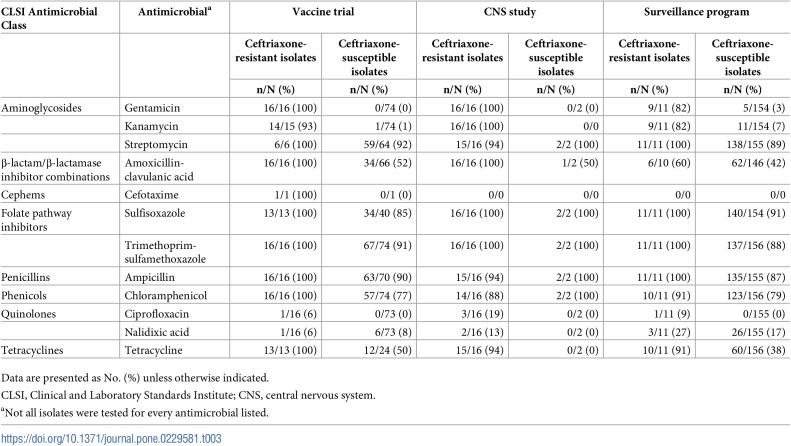
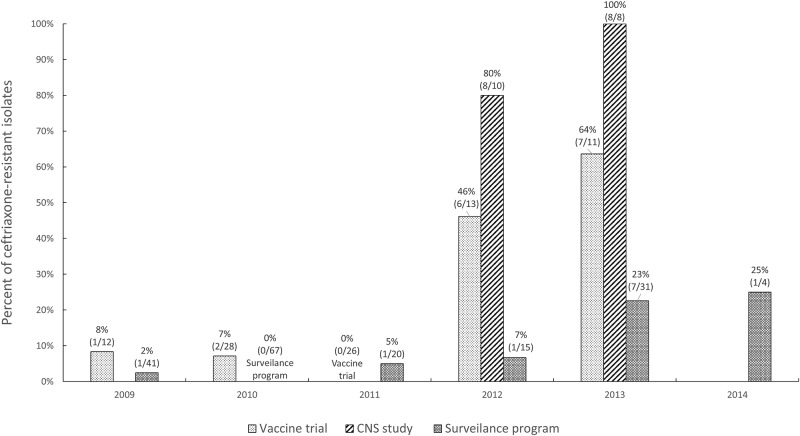
Description:Multidrug-resistant non-typhoidal Salmonella (NTS) infection has emerged as a prominent cause of invasive infections in Africa. We investigated the prevalence of ceftriaxone-resistant invasive NTS infections, conducted exploratory analysis of risk factors for resistance, and described antimicrobial use in western Kenya. We conducted a secondary analysis of existing laboratory, epidemiology, and clinical data from three independent projects, a malaria vaccine trial, a central nervous system (CNS) study, and the International Emerging Infections Program morbidity surveillance (surveillance program) during 2009-2014. We calculated odds ratios (OR) with 95% confidence intervals (CI) for ceftriaxone-resistant NTS infections compared with ceftriaxone-susceptible infections. We surveyed hospitals, pharmacies, and animal drug retailers about the availability and use of antimicrobials. In total, 286 invasive NTS infections were identified in the three projects; 43 NTS isolates were ceftriaxone-resistant. The absolute prevalence of ceftriaxone resistance varied among these methodologically diverse projects, with 18% (16/90) of isolates resistant to ceftriaxone in the vaccine trial, 89% (16/18) in the CNS study, and 6% (11/178) in the surveillance program. Invasive ceftriaxone-resistant infections increased over time. Most ceftriaxone-resistant isolates were co-resistant to multiple other antimicrobials. Having an HIV-positive mother (OR = 3.7; CI = 1.2-11.4) and taking trimethoprim-sulfamethoxazole for the current illness (OR = 9.6, CI = 1.2-78.9) were significantly associated with acquiring ceftriaxone-resistant invasive NTS infection. Ceftriaxone and other antibiotics were widely prescribed; multiple issues related to prescription practices and misuse were identified. In summary, ceftriaxone-resistant invasive NTS infection is increasing and limiting treatment options for serious infections. Efforts are ongoing to address the urgent need for improved microbiologic diagnostic capacity and an antimicrobial surveillance system in Kenya.
-
Subjects:
-
Source:PLoS One. 15(3)
-
Pubmed ID:32126103
-
Pubmed Central ID:PMC7053705
-
Document Type:
-
Place as Subject:
-
Volume:15
-
Issue:3
-
Collection(s):
-
Main Document Checksum:urn:sha256:d289a7121efcbf7fde394d6e2ea4f1d7b6291b717e3f3ba86523e63f5f3ae01a
-
Download URL:
-
File Type:
 [PDF
- 703.04 KB
]
[PDF
- 703.04 KB
]
Supporting Files


File Language:
English
ON THIS PAGE



CDC STACKS serves as an archival repository of CDC-published products including
scientific findings,
journal articles, guidelines, recommendations, or other public health information authored or
co-authored by CDC or funded partners.
As a repository, CDC STACKS retains documents in their original published format to ensure public access to scientific information.
As a repository, CDC STACKS retains documents in their original published format to ensure public access to scientific information.
You May Also Like
COLLECTION
CDC Public Access