


Serum macrophage-derived chemokine/CCL22 levels are associated with glioma risk, CD4 T cell lymphopenia and survival time
Supporting Files

-
8 15 2015
-
File Language:
English
Details
-
Alternative Title:Int J Cancer
-
Personal Author:
-
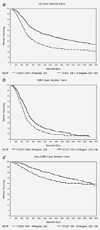
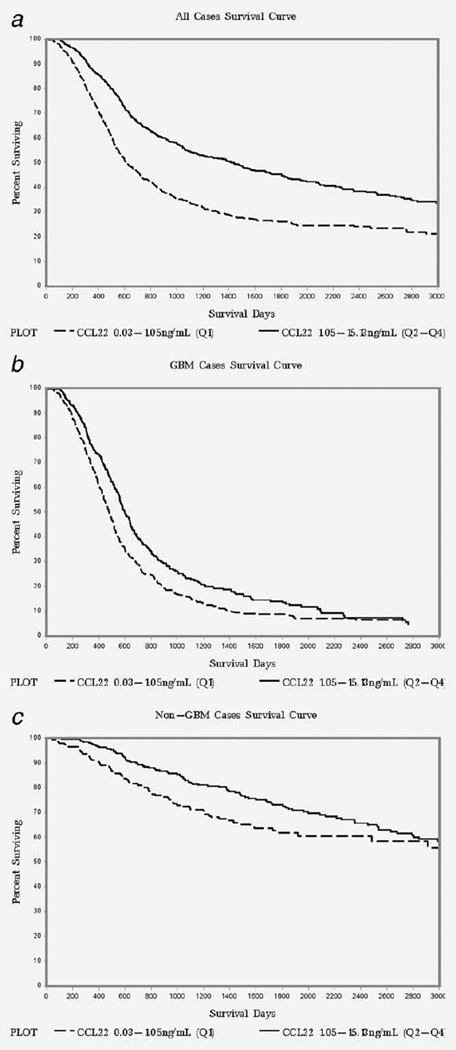
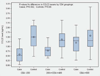
Description:Defects in antigen presenting cell function have been implicated in glioma immunosuppression. We measured peripheral CCL22, a dendritic cell/macrophage derived T cell trafficking chemokine, in sera from 1,208 glioma cases and 976 controls to assess whether it might provide a biomarker of glioma risk, survival and immune dysfunction. Cluster models were used to examine the relationship between CCL22 and glioma risk. Patient survival was assessed using Cox regression models. We also examined the relationship between CCL22 levels and CD4 cell counts, as well as allergy history and IgE levels. CCL22 levels were significantly lower among glioma cases compared with controls (Mean ± SEM: 1.23 ± 0.03 ng/mL in cases vs. 1.60 ± 0.03 ng/mL in controls, p < 0.0001) and this difference remained significant even after controlling for other covariates in the cluster models (highest quartile versus lowest Odds Ratio = 0.21, p < 0.0001). CD4 cell counts were positively correlated with CCL22 in glioma cases (Spearman r(2) = 0.51, p < 0.01) and were significantly lower in cases compared with controls. Higher CCL22 levels were associated with longer survival in all cases combined and in GBM cases (hazard ratio(allcases) = 0.81; 95% CI: 0.72-0.91, p = 0.0003). CCL22 levels were not associated with IgE level or self-reported allergies. Circulating CCL22 levels are related to both glioma risk and survival duration independent of age, histology, grade and IDH mutation status. CCL22 should be considered a marker of immune status with potential prognostic value.
-
Subjects:
-
Keywords:
-
Source:Int J Cancer. 137(4):826-836
-
Pubmed ID:25604093
-
Pubmed Central ID:PMC4478165
-
Document Type:
-
Funding:R01 CA139020/CA/NCI NIH HHSUnited States/ ; R01CA126831/CA/NCI NIH HHSUnited States/ ; U58DP003862-01/DP/NCCDPHP CDC HHSUnited States/ ; HHSN261201000140C/CA/NCI NIH HHSUnited States/ ; HHSN261201000035C/CA/NCI NIH HHSUnited States/ ; R25 CA112355/CA/NCI NIH HHSUnited States/ ; R01 CA126831/CA/NCI NIH HHSUnited States/ ; UL1 RR024131/RR/NCRR NIH HHSUnited States/ ; P50 CA097257/CA/NCI NIH HHSUnited States/ ; U58 DP003862/DP/NCCDPHP CDC HHSUnited States/ ; R01 CA052689/CA/NCI NIH HHSUnited States/ ; R25CA112355/CA/NCI NIH HHSUnited States/ ; HHSN261201000035I/CA/NCI NIH HHSUnited States/ ; P50CA097257/CA/NCI NIH HHSUnited States/ ; HHSN261201000034C/CA/NCI NIH HHSUnited States/ ; R01CA139020/CA/NCI NIH HHSUnited States/ ; R01CA52689/CA/NCI NIH HHSUnited States/
-
Volume:137
-
Issue:4
-
Collection(s):
-
Main Document Checksum:urn:sha256:a1dca27876ee2cf8daf6d4790faa19fcca8c661e080137c3345ab42b84bce434
-
Download URL:
-
File Type:
 [PDF
- 873.49 KB
]
[PDF
- 873.49 KB
]
Supporting Files


File Language:
English
ON THIS PAGE


CDC STACKS serves as an archival repository of CDC-published products including
scientific findings,
journal articles, guidelines, recommendations, or other public health information authored or
co-authored by CDC or funded partners.
As a repository, CDC STACKS retains documents in their original published format to ensure public access to scientific information.
As a repository, CDC STACKS retains documents in their original published format to ensure public access to scientific information.
You May Also Like
COLLECTION
CDC Public Access