


Impact of Intensive Handwashing Promotion on Secondary Household Influenza-Like Illness in Rural Bangladesh: Findings from a Randomized Controlled Trial
Supporting Files

-
Jun 11 2015
-
File Language:
English
Details
-
Alternative Title:PLoS One
-
Personal Author:Ram, Pavani K. ; DiVita, Margaret A. ; Khatun-e-Jannat, Kaniz ; Islam, Manoshi ; Krytus, Kimberly ; Cercone, Emily ; Sohel, Badrul Munir ; Ahmed, Makhdum ; Rahman, Abid Mahmud Quaiyum ; Rahman, Mustafizur ; Yu, Jihnhee ; Brooks, W. Abdullah ; Azziz-Baumgartner, Eduardo ; Fry, Alicia M. ; Luby, Stephen P.
-
Description:Rationale
There is little evidence for the efficacy of handwashing for prevention of influenza transmission in resource-poor settings. We tested the impact of intensive handwashing promotion on household transmission of influenza-like illness and influenza in rural Bangladesh.
Methods
In 2009–10, we identified index case-patients with influenza-like illness (fever with cough or sore throat) who were the only symptomatic person in their household. Household compounds of index case-patients were randomized to control or intervention (soap and daily handwashing promotion). We conducted daily surveillance and collected oropharyngeal specimens. Secondary attack ratios (SAR) were calculated for influenza and ILI in each arm. Among controls, we investigated individual risk factors for ILI among household contacts of index case-patients.
Results
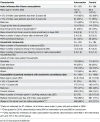
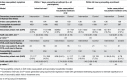
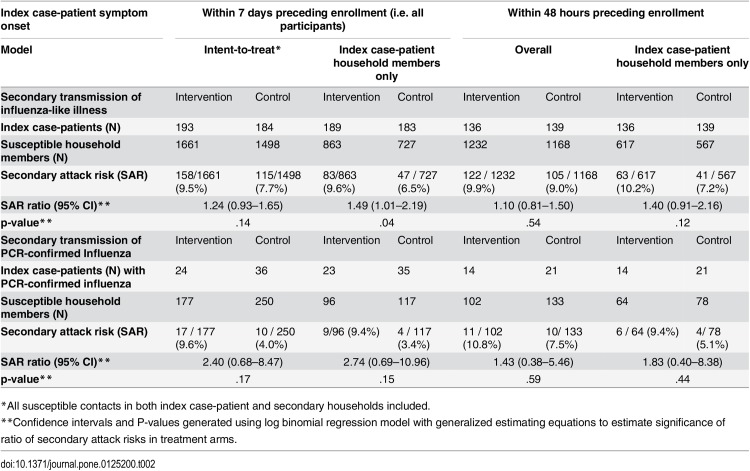
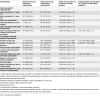
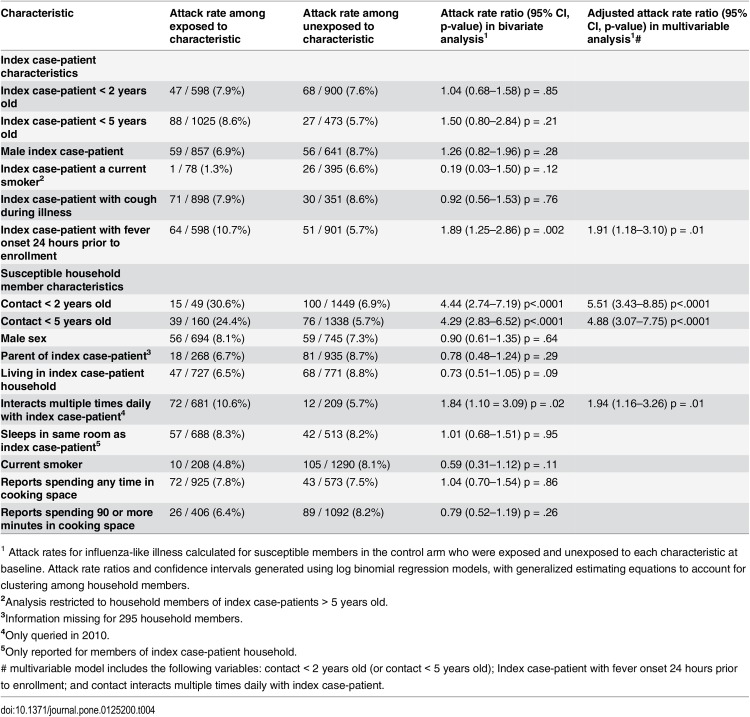
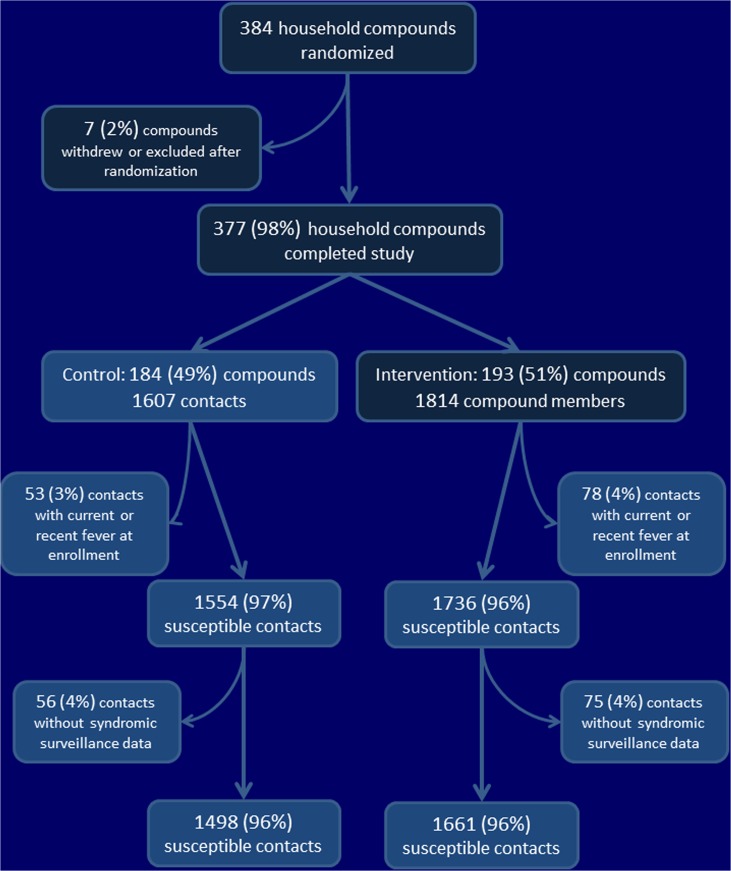
Among 377 index case-patients, the mean number of days between fever onset and study enrollment was 2.1 (SD 1.7) among the 184 controls and 2.6 (SD 2.9) among 193 intervention case-patients. Influenza infection was confirmed in 20% of controls and 12% of intervention index case-patients. The SAR for influenza-like illness among household contacts was 9.5% among intervention (158/1661) and 7.7% among control households (115/1498) (SAR ratio 1.24, 95% CI 0.92–1.65). The SAR ratio for influenza was 2.40 (95% CI 0.68–8.47). In the control arm, susceptible contacts <2 years old (RRadj 5.51, 95% CI 3.43–8.85), those living with an index case-patient enrolled ≤24 hours after symptom onset (RRadj 1.91, 95% CI 1.18–3.10), and those who reported multiple daily interactions with the index case-patient (RRadj 1.94, 95% CI 1.71–3.26) were at increased risk of influenza-like illness.
Discussion
Handwashing promotion initiated after illness onset in a household member did not protect against influenza-like illness or influenza. Behavior may not have changed rapidly enough to curb transmission between household members. A reactive approach to reduce household influenza transmission through handwashing promotion may be ineffective in the context of rural Bangladesh.
Trial Registration
ClinicalTrials.gov NCT00880659
-
Subjects:
-
Source:PLoS One. 10(6).
-
Pubmed ID:26066651
-
Pubmed Central ID:PMC4465839
-
Document Type:
-
Funding:
-
Place as Subject:
-
Volume:10
-
Issue:6
-
Collection(s):
-
Main Document Checksum:urn:sha256:8a34eae5d8b5f88cca8e23e257cc772d71a7d6c3bc42860caedfe4753fc6e2aa
-
Download URL:
-
File Type:
 [PDF
- 2.76 MB
]
[PDF
- 2.76 MB
]
Supporting Files


File Language:
English
ON THIS PAGE






CDC STACKS serves as an archival repository of CDC-published products including
scientific findings,
journal articles, guidelines, recommendations, or other public health information authored or
co-authored by CDC or funded partners.
As a repository, CDC STACKS retains documents in their original published format to ensure public access to scientific information.
As a repository, CDC STACKS retains documents in their original published format to ensure public access to scientific information.
You May Also Like
COLLECTION
CDC Public Access