



Standard-Dose Intradermal Influenza Vaccine Elicits Cellular Immune Responses Similar to Those of Intramuscular Vaccine in Men With and Those Without HIV Infection
Supporting Files

-
7 31 2019 ; 7-31-
-
Available in CDC Stacks on 2024-08-05T00:00:00Z
File Language:
English
Details
-
Alternative Title:J Infect Dis
-
Personal Author:Amoah, Samuel ; Mishina, Margarita ; Praphasiri, Prabda ; Cao, Weiping ; Kim, Jin Hyang ; Liepkalns, Justine S. ; Guo, Zhu ; Carney, Paul J. ; Chang, Jessie C. ; Fernandez, Stefan ; Garg, Shikha ; Beacham, Lauren ; Holtz, Timothy H. ; Curlin, Marcel E. ; Dawood, Fatimah ; Olsen, Sonja J. ; Gangappa, Shivaprakash ; Stevens, James ; Sambhara, Suryaprakash
-
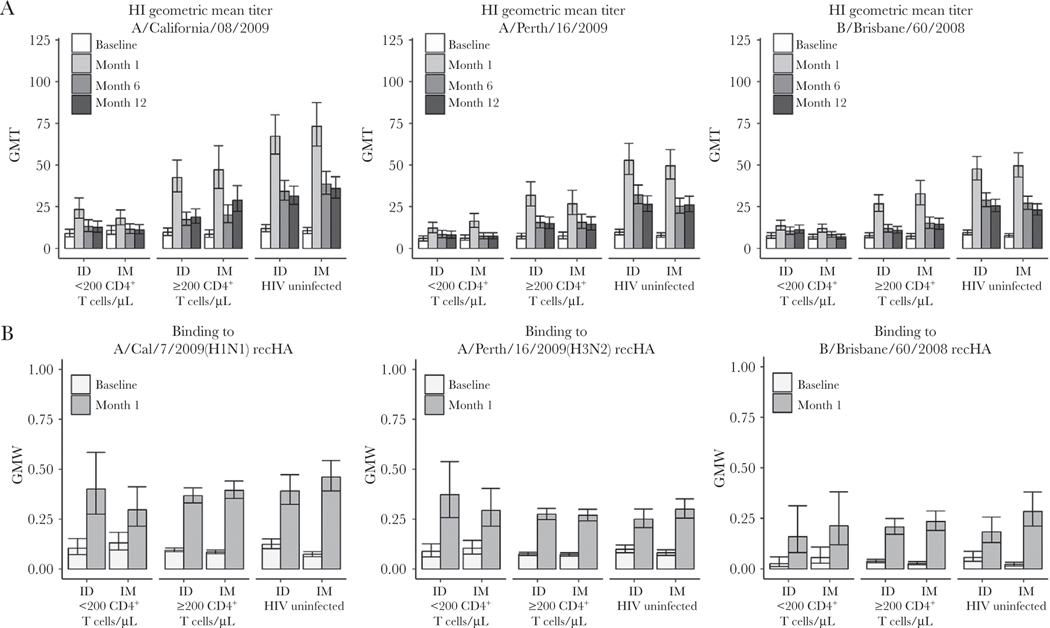
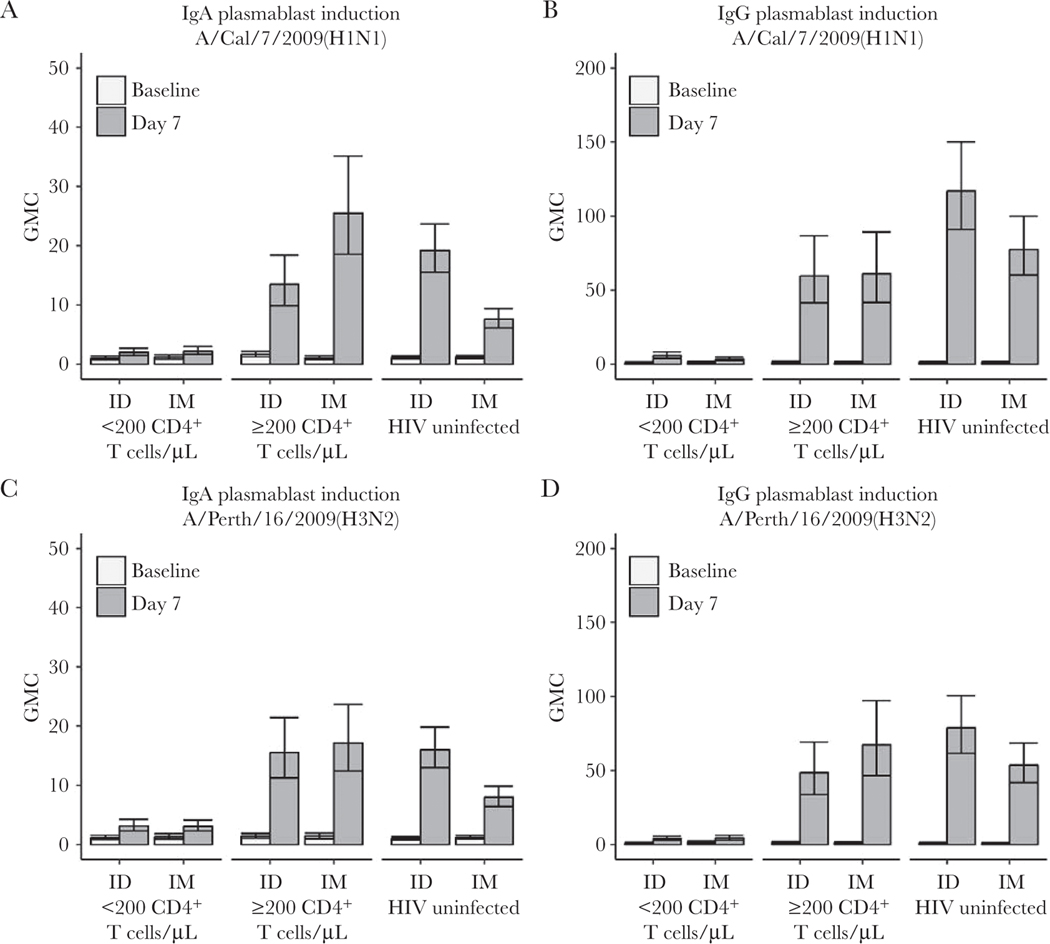
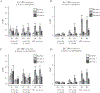
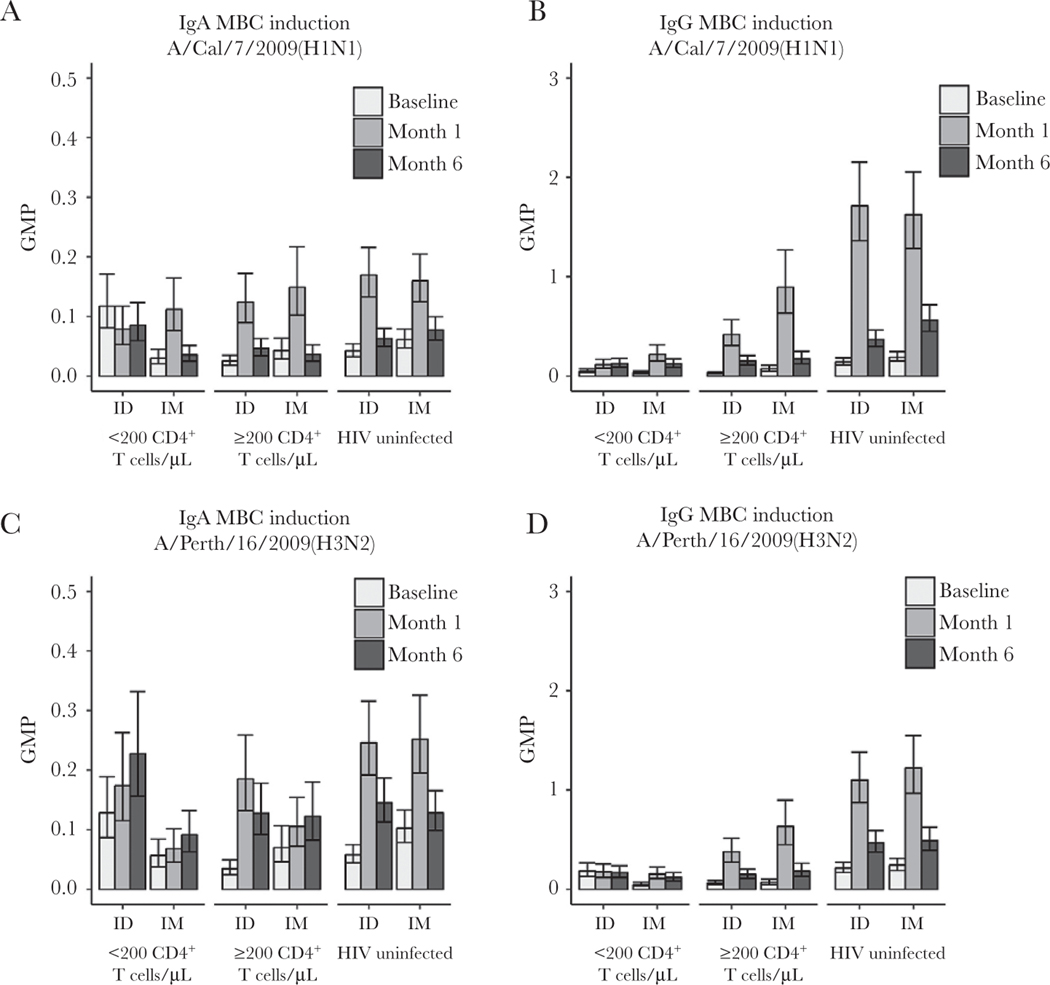
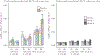
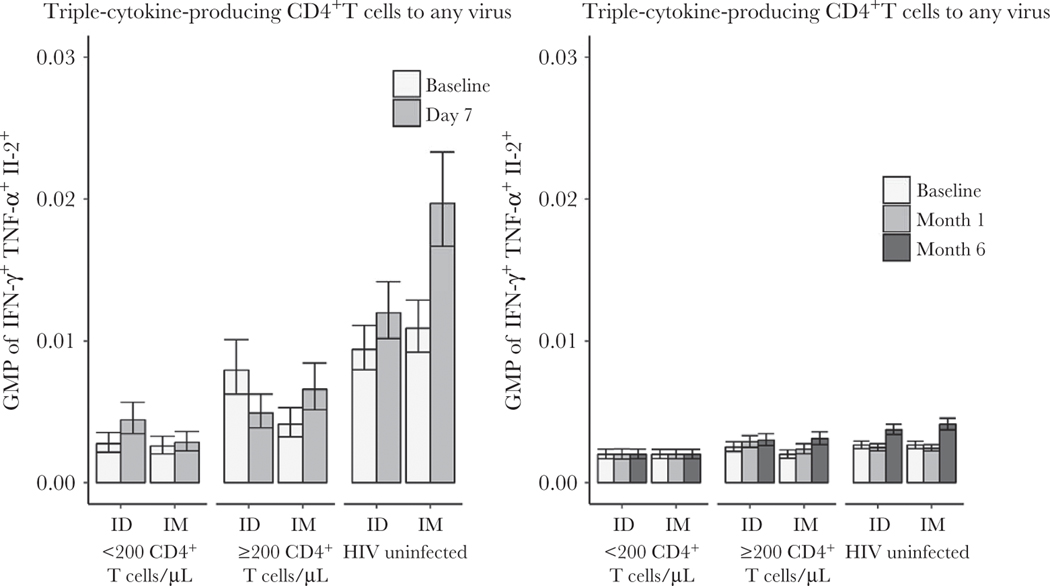
Description:Background. ; Human immunodeficiency virus (HIV)–infected persons are at a higher risk of severe influenza. Although we have shown that a standard-dose intradermal influenza vaccine versus a standard-dose intramuscular influenza vaccine does not result in differences in hemagglutination-inhibition titers in this population, a comprehensive examination of cell-mediated immune responses remains lacking. ; Methods. ; Serological, antigen-specific B-cell, and interleukin 2–, interferon γ–, and tumor necrosis factor α–secreting T-cell responses were assessed in 79 HIV-infected men and 79 HIV-uninfected men. ; Results. ; The route of vaccination did not affect the immunoglobulin A and immunoglobulin G (IgG) plasmablast or memory B-cell response, although these were severely impaired in the group with a CD4+ T-cell count of <200 cells/μL. The frequencies of IgG memory B cells measured on day 28 after vaccination were highest in the HIV-uninfected group, followed by the group with a CD4+ T-cell count of ≥200 cells/μL and the group with a CD4+ T-cell count of <200 cells/μL. The route of vaccination did not affect the CD4+ or CD8+ T-cell responses measured at various times after vaccination. ; Conclusions. ; The route of vaccination had no effect on antibody responses, antibody avidity, T-cell responses, or B-cell responses in HIV-infected or HIV-uninfected subjects. With the serological and cellular immune responses to influenza vaccination being impaired in HIV-infected individuals with a CD4+ T-cell count of <200 cells/μL, passive immunization strategies need to be explored to protect this population. ; Clinical trials registration. ; NCT01538940.
-
Subjects:
- Adult
- Antibodies, Viral
- Antibody Formation
- B-Lymphocytes
- CD4 Lymphocyte Count
- CD4-Positive T-Lymphocytes
- CD8-Positive T-Lymphocytes
- HIV Infections
- Hemagglutination Inhibition Tests
- Hemagglutinin Glycoproteins, Influenza Virus
- Humans
- Immunity, Cellular
- Immunoglobulin A
- Immunoglobulin G
- Influenza A Virus, H1N1 Subtype
- Influenza Vaccines
- Influenza, Human
- Interferon-gamma
- Interleukin-2
- Male
- Middle Aged
- Thailand
- Tumor Necrosis Factor-alpha
- Vaccination
-
Keywords:
-
Source:J Infect Dis. 220(5):743-751
-
Pubmed ID:31045222
-
Pubmed Central ID:PMC11298778
-
Document Type:
-
Funding:
-
Volume:220
-
Issue:5
-
Download URL:
-
File Type:
 [PDF - 1.32 MB]
 -
Collection(s):
-
Main Document Checksum:urn:sha-512:f0e30bb0cb445c96c4c7c4a8092f15a39dce39f01e738fdeee62ead36a641fe5030125c2a8ecfc0844e30647bd0275eae0b23d8a964e87d380033770a54514ba
Supporting Files


File Language:
English
 Was this page helpful?
 Found an issue?

CDC STACKS serves as an archival repository of CDC-published products including
scientific findings, journal articles, guidelines, recommendations, or other public health information authored or
co-authored by CDC or funded partners.
As a repository, CDC STACKS retains documents in their original published format to ensure public access to scientific information.
As a repository, CDC STACKS retains documents in their original published format to ensure public access to scientific information.
You May Also Like
COLLECTION
CDC Public Access