



Cigarette smoking is associated with acrylamide exposure among the U.S. population: NHANES 2011–2016
Supporting Files

-
6 2022 ; 6-2022
-
Available in CDC Stacks on 2024-07-24T00:00:00Z
File Language:
English
Details
-
Alternative Title:Environ Res
-
Personal Author:
-
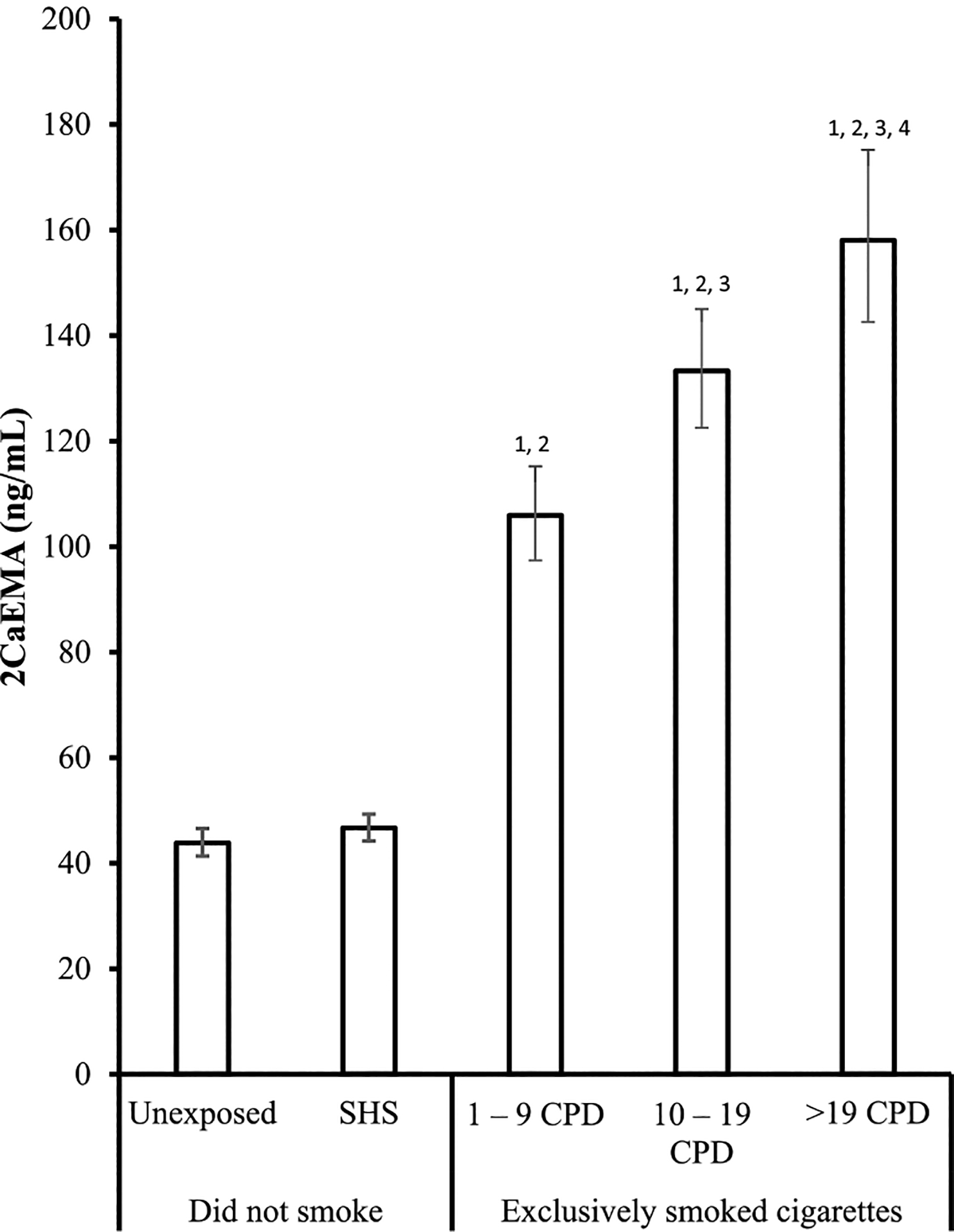
Description:2-carbamoylethyl mercapturic acid (2CaEMA, N-Acetyl-S-carbamoylethyl-L-cysteine) is a urinary metabolite and exposure biomarker of acrylamide, which is a harmful volatile organic compound found in cigarette smoke and in some foods. The goal of this study was to determine the association between cigarette smoking and urinary 2CaEMA concentrations among the U.S. population while considering potential dietary sources of acrylamide intake and demographics. We measured 2CaEMA concentrations in urine specimens collected during the National Health and Nutrition Examination Survey 2011-2012, 2013-2014, and 2015-2016 cycles from eligible participants 18 years and older (n = 5443) using liquid chromatography/tandem mass spectrometry. We developed multiple regression models with urinary 2CaEMA concentrations as the dependent variable and sex, age, race/Hispanic origin, reported primary sources of dietary acrylamide intake, and cigarette smoke exposure as independent variables. This study demonstrates that cigarette smoking is strongly associated with urinary 2CaEMA, suggests that cigarette smoking is likely a primary source of acrylamide exposure, and provides a baseline measure for 2CaEMA in the U.S. population.
-
Subjects:
-
Keywords:
-
Source:Environ Res. 209:112774
-
Pubmed ID:35074357
-
Pubmed Central ID:PMC11268364
-
Document Type:
-
Funding:
-
Volume:209
-
Download URL:
-
File Type:
 [PDF - 248.43 KB]
 -
Collection(s):
-
Main Document Checksum:urn:sha-512:780b5c60c62933100295a439f631f801711bffcfb80588b8fd0003edce5f9aa704395767467c02a9a14e85ae4b99045ca55da5aa24640faeaac6fe09fe88f3ee
Supporting Files


File Language:
English
 Was this page helpful?
 Found an issue?

CDC STACKS serves as an archival repository of CDC-published products including
scientific findings, journal articles, guidelines, recommendations, or other public health information authored or
co-authored by CDC or funded partners.
As a repository, CDC STACKS retains documents in their original published format to ensure public access to scientific information.
As a repository, CDC STACKS retains documents in their original published format to ensure public access to scientific information.
You May Also Like
COLLECTION
CDC Public Access