



Human Metapneumovirus as a Cause of Community-Acquired Respiratory Illness1
Supporting Files
Public Domain

-
Sep 2002
Details
-
Alternative Title:Emerg Infect Dis
-
Personal Author:
-
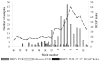
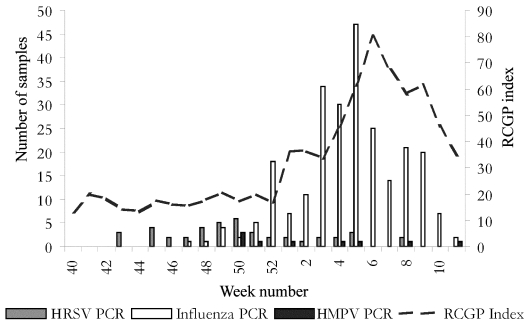
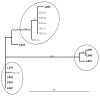
Description:Human metapneumovirus (HMPV) is a recently identified Paramyxovirus first isolated from hospitalized children with acute respiratory tract infections (ARTI). We sought evidence of HMPV infection in patients who had visited general practitioners, had influenzalike illnesses (ILI), and had negative tests for influenza and Human respiratory syncytial virus (HRSV). As part of national virologic surveillance, sentinel general practices in England and Wales collected samples from patients of all ages with ILI during winter 2000-01. Reverse transcriptase-polymerase chain reaction (PCR) for HMPV, influenza A (H1 and H3), influenza B, and HRSV (A and B) was used to screen combined nose and throat swabs. PCR products from the HMPV-positive samples were sequenced to confirm identity and construct phylogenetic trees. Of 711 swabs submitted, 408 (57.3%) were negative for influenza and HRSV; HMPV was identified in 9 (2.2%) patients. HMPV appears to be associated with community-acquired ARTI. The extent of illness and possible complications related to this new human virus need to be clarified.
-
Subjects:
- Research
- Human Metapneumovirus
- community
- acute respiratory illness
- Adult
- Aged
- Community-Acquired Infections
- England
- Female
- Humans
- Infant
- Male
- Metapneumovirus
- Middle Aged
- Molecular Sequence Data
- Paramyxoviridae Infections
- Phylogeny
- Polymerase Chain Reaction
- Respiratory Tract Infections
- Seasons
- Sensitivity and Specificity
- Sentinel Surveillance
- Wales
-
Source:Emerg Infect Dis. 8(9):897-901.
-
Document Type:
-
Volume:8
-
Issue:9
-
Download URL:
-
File Type:
 [PDF - 227.88 KB]
 -
Collection(s):
-
Main Document Checksum:urn:sha256:d7b46ca1bbfccecdfd166d844b9d8de0106ecb9f4e8f68d832d7675f4c12031a
Supporting Files


 Was this page helpful?
 Found an issue?


CDC STACKS serves as an archival repository of CDC-published products including
scientific findings, journal articles, guidelines, recommendations, or other public health information authored or
co-authored by CDC or funded partners.
As a repository, CDC STACKS retains documents in their original published format to ensure public access to scientific information.
As a repository, CDC STACKS retains documents in their original published format to ensure public access to scientific information.
You May Also Like
COLLECTION
Emerging Infectious Diseases