



Comorbidities in a Nationwide, Heterogenous Population of Veterans with Interstitial Cystitis/Bladder Pain Syndrome
Supporting Files

-
10 2021
-
Available in CDC Stacks on November 17, 2021, 12:00 AM
File Language:
English
Details
-
Alternative Title:Urology
-
Personal Author:
-
Description:OBJECTIVE
To examine the prevalence of comorbid conditions in a nationwide population of men and women with IC/BPS utilizing a more heterogeneous sample than most studies to date.
METHODS
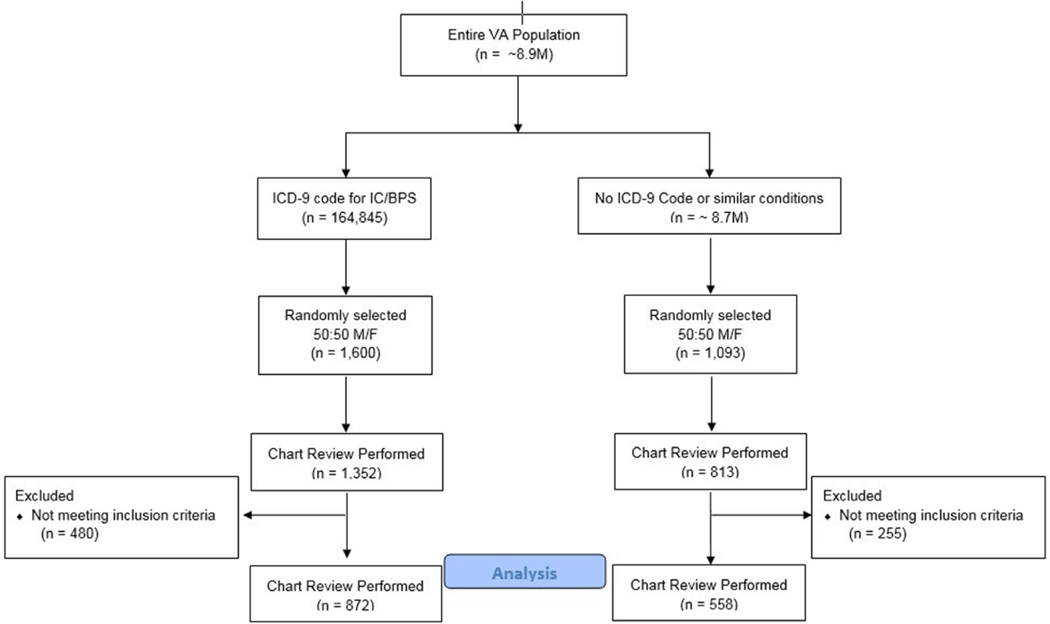
Using the Veterans Affairs Informatics and Computing Infrastructure, we identified random samples of male and female patients with and without an ICD-9/ICD-10 diagnosis of IC/BPS. Presence of comorbidities (NUAS chronic fatigue syndrome, fibromyalgia, irritable bowel syndrome, migraines, back pain, diabetes, and smoking) and psychosocial factors (alcohol abuse, post-traumatic stress disorder, sexual trauma, and history of depression) were determined using ICD-9 and ICD-IO codes. Associations between these variables and IC/BPS status were evaluated while adjusting for the potential confounding impact of race/ethnicity, age, and gender.
RESULTS
Data was analyzed from 872 IC/BPS patients (355 41% men, 517 59% women) and 558 non-IC/BPS patients (291 52% men, 267 48% women). IC/BPS patients were more likely than non-IC/BPS patients to have a greater number of comorbidities (2.72+/−1.77 vs 1.73+/−1.30, P < 0.001), experience one or more NUAS (chronic fatigue syndrome, fibromyalgia, irritable bowel syndrome, and migraines) (45% 388/872 vs. 18% 101/558; P < 0.001) and had a higher prevalence of at least one psychosocial factor (61 % 529/872 v. 46% 256/558; P < 0.001). Differences in the frequencies of comorbidities between patients with and without IC/BPS were more pronounced in female patients.
CONCLUSION
These findings validate the findings of previous comorbidity studies of IC/BPS in a more diverse population. -
Subjects:
-
Source:Urology. 156:37-43
-
Pubmed ID:33901534
-
Pubmed Central ID:PMC8536792
-
Document Type:
-
Funding:
-
Place as Subject:
-
Volume:156
-
Download URL:
-
File Type:
 [PDF - 492.65 KB]
 -
Collection(s):
-
Main Document Checksum:urn:sha256:8696c1a65d211c6fd6bf959297c08b3e24bf3c3b926c9fbde876e4d56caeb6dc
Supporting Files


File Language:
English
 Was this page helpful?
 Found an issue?

CDC STACKS serves as an archival repository of CDC-published products including
scientific findings, journal articles, guidelines, recommendations, or other public health information authored or
co-authored by CDC or funded partners.
As a repository, CDC STACKS retains documents in their original published format to ensure public access to scientific information.
As a repository, CDC STACKS retains documents in their original published format to ensure public access to scientific information.
You May Also Like
COLLECTION
CDC Public Access