



Racial/ethnic disparities in survival after breast cancer diagnosis by estrogen and progesterone receptor status: A pooled analysis
Supporting Files

-
Feb 2021
-
File Language:
English
Details
-
Alternative Title:Cancer Epidemiol Biomarkers Prev
-
Personal Author:
-
Description:Background:
Limited studies have investigated racial/ethnic survival disparities for breast cancer (BC) defined by estrogen receptor (ER) and progesterone receptor (PR) status in a multiethnic population.
Methods:
Using multivariable Cox proportional hazards models, we assessed associations of race/ethnicity with ER/PR-specific BC mortality in 10,366 Californian women diagnosed with BC from 1993-2009. We evaluated joint associations of race/ethnicity, healthcare, sociodemographic, and lifestyle factors with mortality.
Results:
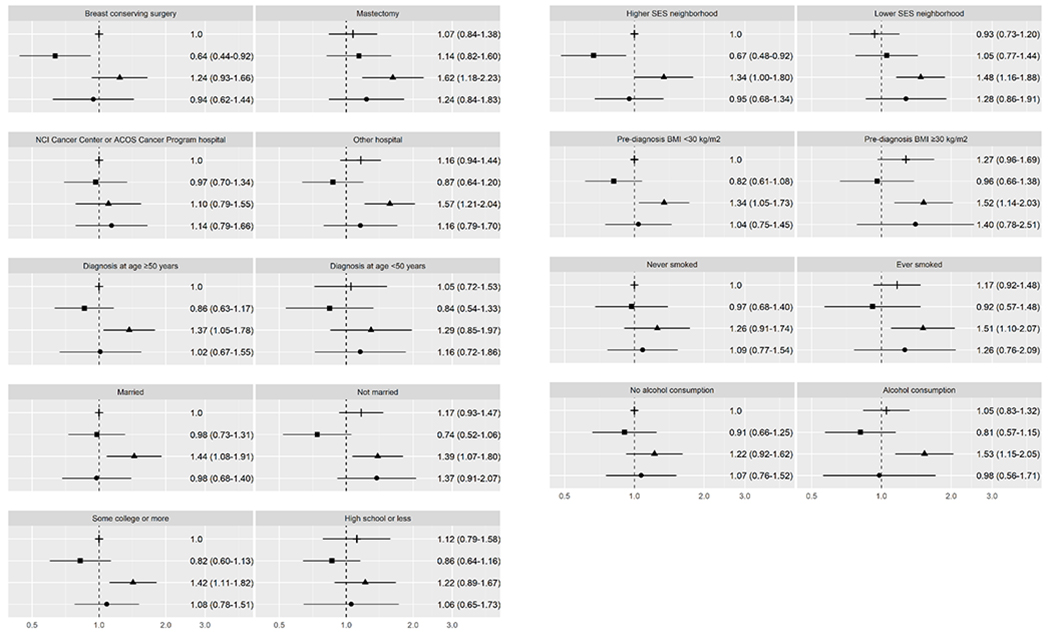
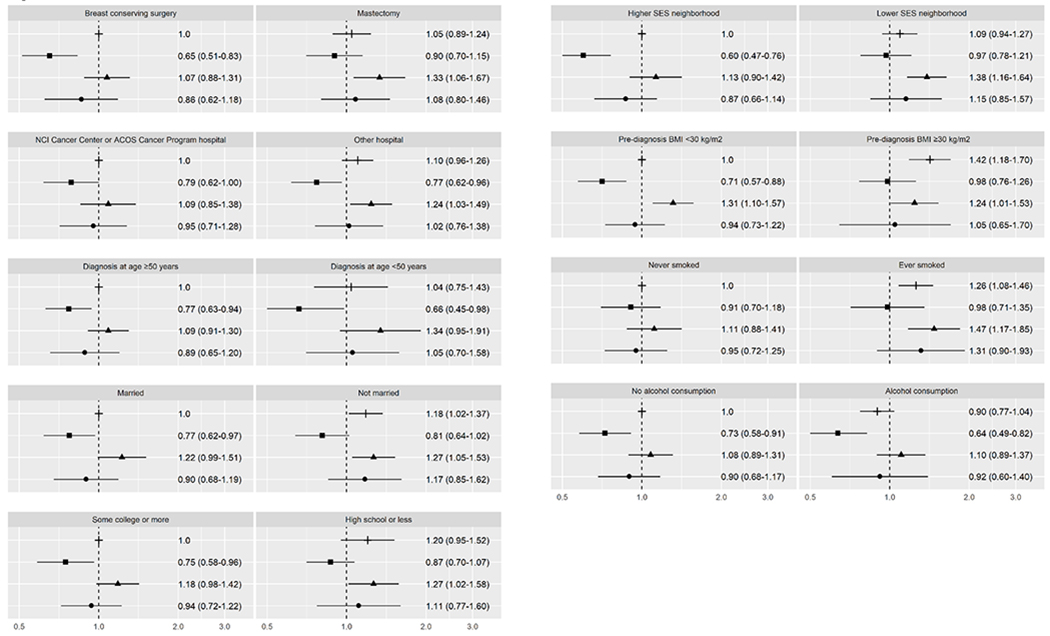
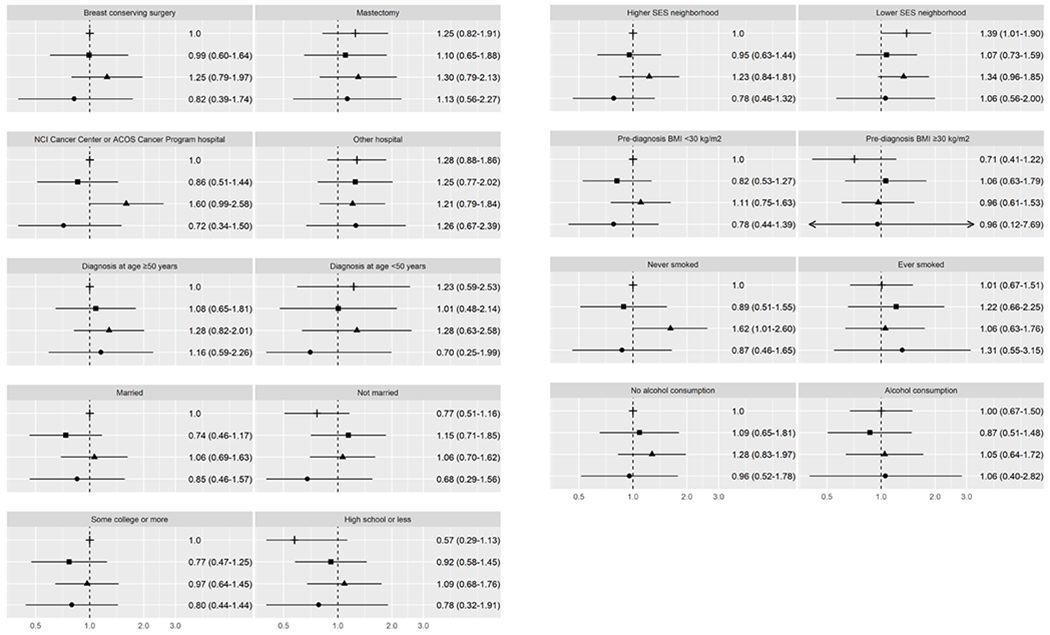
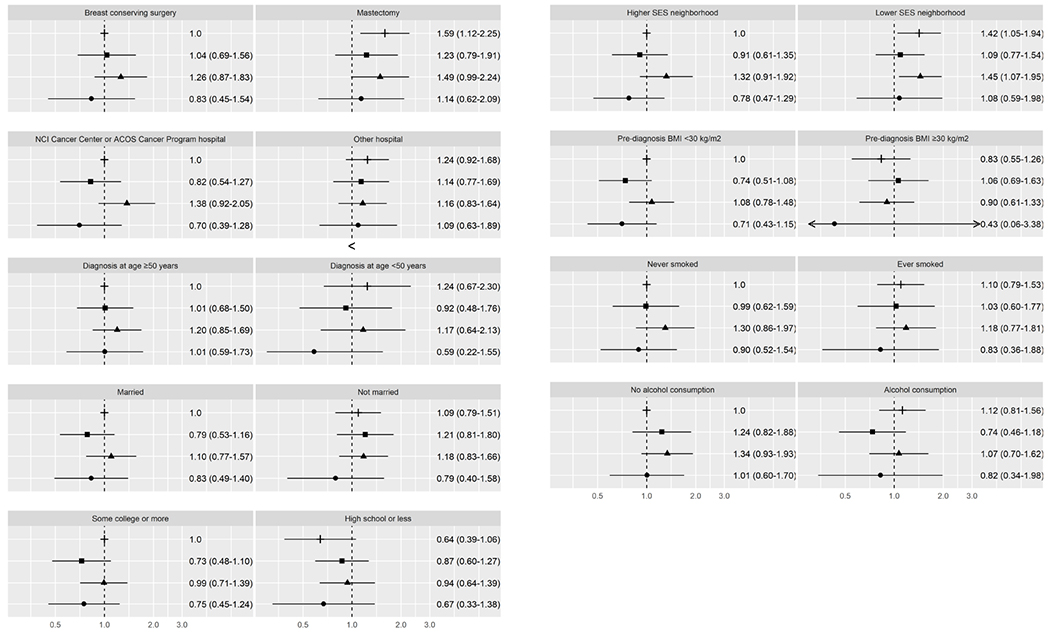
Among women with ER/PR+ BC, BC-specific mortality was similar among Hispanic and Asian American women, but higher among African American women (hazard ratio (HR) 1.31, 95% confidence interval 1.05-1.63) compared to non-Hispanic White (NHW) women. BC-specific mortality was modified by surgery type, hospital type, education, neighborhood socioeconomic status (SES), smoking history, and alcohol consumption. Among African American women, BC-specific mortality was higher among those treated at non-accredited hospitals (HR 1.57, CI 1.21-2.04) and those from lower SES neighborhoods (HR 1.48, CI 1.16-1.88) compared to NHW women without these characteristics. BC-specific mortality was higher among African American women with at least some college education (HR 1.42, CI 1.11-1.82) compared to NHW women with similar education. For ER−/PR− disease, BC-specific mortality did not differ by race/ethnicity and associations of race/ethnicity with BC-specific mortality varied only by neighborhood SES among African American women.
Conclusions:
Racial/ethnic survival disparities are more striking for ER/PR+ than ER−PR− BC. Social determinants and lifestyle factors may explain some of the survival disparities for ER/PR+ BC.
Impact:
Addressing these factors may help reduce the higher mortality of African American women with ER/PR+ BC.
-
Subjects:
-
Source:Cancer Epidemiol Biomarkers Prev. 30(2):351-363
-
Pubmed ID:33355191
-
Pubmed Central ID:PMC7867638
-
Document Type:
-
Funding:HHSN261201800032C/CA/NCI NIH HHSUnited States/ ; HHSN261201800009C/CA/NCI NIH HHSUnited States/ ; NU58DP006344/DP/NCCDPHP CDC HHSUnited States/ ; HHSN261201800015I/CA/NCI NIH HHSUnited States/ ; R01 CA129059/CA/NCI NIH HHSUnited States/ ; K05 CA136967/CA/NCI NIH HHSUnited States/ ; U01 CA164920/CA/NCI NIH HHSUnited States/ ; HHSN261201800032I/CA/NCI NIH HHSUnited States/ ; HHSN261201800015C/CA/NCI NIH HHSUnited States/ ; HHSN261201800009I/CA/NCI NIH HHSUnited States/ ; R01 CA063446/CA/NCI NIH HHSUnited States/ ; R01 CA077398/CA/NCI NIH HHSUnited States/ ; R01 CA054281/CA/NCI NIH HHSUnited States/ ; U01 CA164973/CA/NCI NIH HHSUnited States/ ; R37 CA054281/CA/NCI NIH HHSUnited States/
-
Volume:30
-
Issue:2
-
Collection(s):
-
Main Document Checksum:urn:sha256:b07a510ad872b4f9f55390a4e1366f275496427cf5839b3b75bf125c09290d21
-
Download URL:
-
File Type:
 [PDF
- 820.51 KB
]
[PDF
- 820.51 KB
]
Supporting Files


File Language:
English
 Was this page helpful?
 Found an issue?
CDC STACKS serves as an archival repository of CDC-published products including
scientific findings,
journal articles, guidelines, recommendations, or other public health information authored or
co-authored by CDC or funded partners.
As a repository, CDC STACKS retains documents in their original published format to ensure public access to scientific information.
As a repository, CDC STACKS retains documents in their original published format to ensure public access to scientific information.
You May Also Like
COLLECTION
CDC Public Access