


Causes of fever in primary care in Southeast Asia and the performance of C-reactive protein in discriminating bacterial from viral pathogens
Supporting Files
Public Domain

-
May 11 2020
-
File Language:
English
Details
-
Alternative Title:Int J Infect Dis
-
Personal Author:
-
Description:Objectives
This study investigated causes of fever in the primary levels of care in Southeast Asia, and evaluated whether C-reactive protein (CRP) could distinguish bacterial from viral pathogens.
Methods
Blood and nasopharyngeal swab specimens were taken from children and adults with fever (>37.5 °C) or history of fever (<14 days) in Thailand and Myanmar.
Results
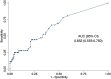
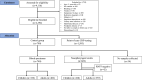
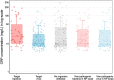
Of 773 patients with at least one blood or nasopharyngeal swab specimen collected, 227 (29.4%) had a target organism detected. Influenza virus type A was detected in 85/227 cases (37.5%), followed by dengue virus (30 cases, 13.2%), respiratory syncytial virus (24 cases, 10.6%) and Leptospira spp. (nine cases, 4.0%). Clinical outcomes were similar between patients with a bacterial or a viral organism, regardless of antibiotic prescription. CRP was higher among patients with a bacterial organism compared with those with a viral organism (median 18 mg/L, interquartile range [10–49] versus 10 mg/L [≤8–22], p = 0.003), with an area under the curve of 0.65 (95% CI 0.55–0.75).
Conclusions
Serious bacterial infections requiring antibiotics are an exception rather than the rule in the first line of care. CRP testing could assist in ruling out such cases in settings where diagnostic uncertainty is high and routine antibiotic prescription is common.
-
Subjects:
-
Source:Int J Infect Dis. 2020; 96:334-342
-
Pubmed ID:32437937
-
Pubmed Central ID:PMC7211754
-
Document Type:
-
Place as Subject:
-
Volume:96
-
Collection(s):
-
Main Document Checksum:urn:sha-512:35ae4d68f509fb8e710b4b2bb0013ed641102acaf7aff526ccead9df2f01554b0bb01734bf6939f9dff06b4a9a194f956fc34a7c68a3e79ca28489db326a20ba
-
Download URL:
-
File Type:
 [PDF
- 857.42 KB
]
[PDF
- 857.42 KB
]
Supporting Files


File Language:
English
ON THIS PAGE








CDC STACKS serves as an archival repository of CDC-published products including
scientific findings,
journal articles, guidelines, recommendations, or other public health information authored or
co-authored by CDC or funded partners.
As a repository, CDC STACKS retains documents in their original published format to ensure public access to scientific information.
As a repository, CDC STACKS retains documents in their original published format to ensure public access to scientific information.
You May Also Like
COLLECTION
CDC Public Access