


Epilepsy by the numbers – From the US Centers for Disease Control and Prevention
Supporting Files
Public Domain

-
August 01 2020
-
File Language:
English
Details
-
Alternative Title:Epilepsy Behav
-
Personal Author:
-
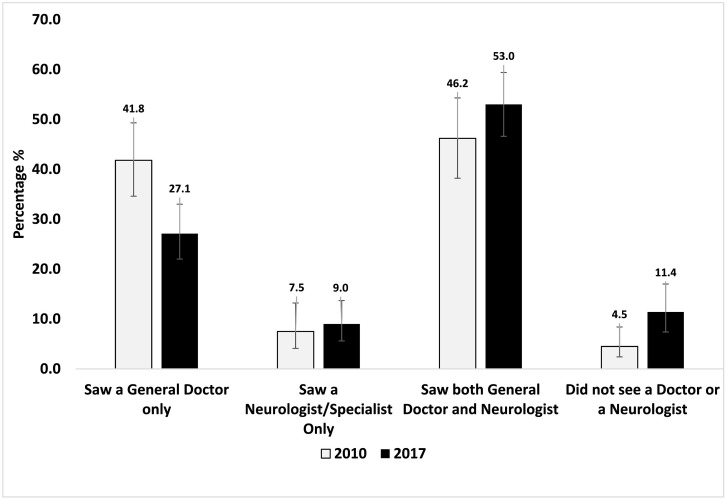
Description:This study used the most recent national data on epilepsy from the 2017 National Health Interview Survey (NHIS) to examine the distribution of types of provider visits in the last 12 months among 2.9 million adult respondents aged ≥18 years with active epilepsy (self-reported doctor-diagnosed epilepsy taking antiseizure medications and/or having ≥1 seizure in the past year) and compared these estimates with 2010 NHIS data. We calculated age-standardized percentages of visits to a general doctor and an epilepsy specialist during the past 12 months, accounting for the complex survey design. Among US adults with active epilepsy in 2017, 27.1% saw a general doctor only, 9.0% saw a neurologist/epilepsy specialist only, 53.0% visited both a general doctor and a neurologist/epilepsy specialist, and 11.4% did not see either a general doctor or a neurologist/specialist. Overall, 62.0% [95% confidence interval (CI) = 55.2%-67.5%] of adults with active epilepsy visited a neurologist or epilepsy specialist in the past year. A visit in the past 12 months with both provider types was not significantly different in 2017 compared with 2010 (53.0% vs 46.2%) while seeing a general doctor only had declined (41.8% vs 27.1%, p < 0.05). Given that 79.8% of US adults with active epilepsy reported being seen by a general doctor within the past 12 months, epilepsy stakeholders have an opportunity to enhance epilepsy care by ensuring that general practitioners have access to the latest information about epilepsy diagnosis and new treatment options. National Health Interview Survey data can be used to track the distribution of provider visits in the coming decade to assess changes in access to primary care, specialty care, or other types of healthcare for people with epilepsy.
-
Subjects:
-
Source:Epilepsy Behav. 112:107348
-
Pubmed ID:32755817
-
Pubmed Central ID:PMC7395900
-
Document Type:
-
Volume:112
-
Collection(s):
-
Main Document Checksum:urn:sha256:40018ff0b270fe15fa3d01b12d0e04ecbafbf65ee588690454d5a832b9a01bad
-
Download URL:
-
File Type:
 [PDF
- 492.44 KB
]
[PDF
- 492.44 KB
]
Supporting Files


File Language:
English
ON THIS PAGE




CDC STACKS serves as an archival repository of CDC-published products including
scientific findings,
journal articles, guidelines, recommendations, or other public health information authored or
co-authored by CDC or funded partners.
As a repository, CDC STACKS retains documents in their original published format to ensure public access to scientific information.
As a repository, CDC STACKS retains documents in their original published format to ensure public access to scientific information.
You May Also Like
COLLECTION
CDC Public Access