


Glucocorticoid receptor sensitivity in early pregnancy in an African American cohort
Supporting Files

-
May 23 2020
-
File Language:
English
Details
-
Alternative Title:Am J Reprod Immunol
-
Personal Author:
-
Description:Problem
Disruption in homeostatic feedback loops between inflammatory mediators and the hypothalamic-pituitary-adrenal (HPA) axis is a key mechanism linking chronic stress to inflammation and adverse health outcomes, including those occurring during pregnancy. In particular, alterations in glucocorticoid sensitivity may occur as a result of chronic stress, including that due to racial discrimination, and may be implicated in the persistent adverse maternal and infant health outcomes experienced by African Americans. While there are a few large-scale studies in human pregnancy that measure both cytokines and HPA axis hormones, none directly measured glucocorticoid sensitivity at the cellular level, especially in an African American population.
Method of study
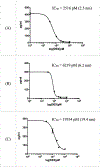
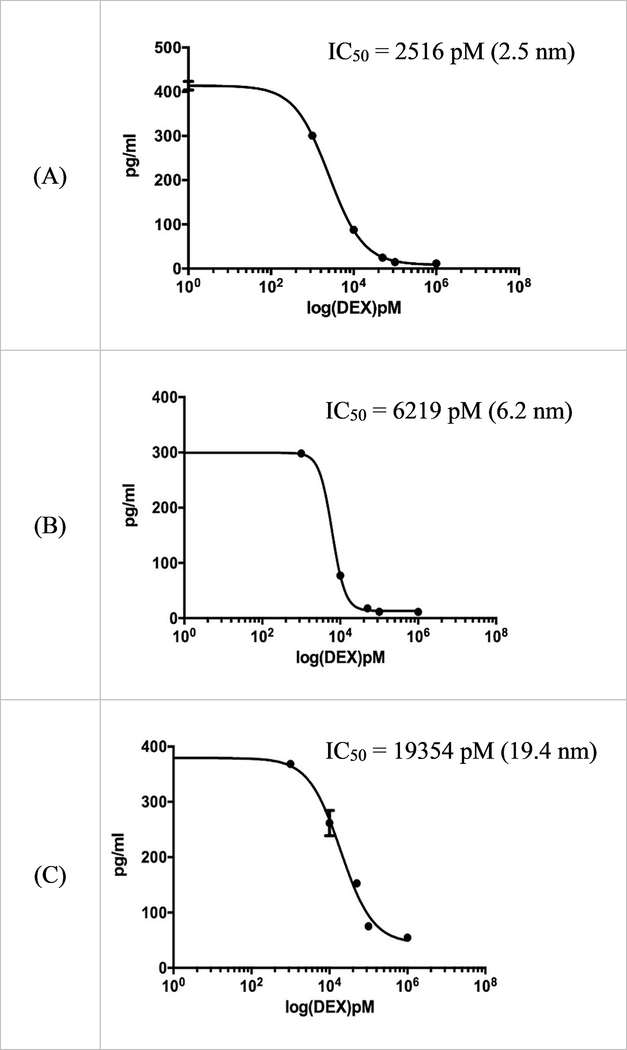
We measured the full range of the dexamethasone (DEX) dose response suppression of TNF-α in first trimester blood samples from 408 African American women, and estimated leukocyte cell type contribution to the production of TNF-α.
Results
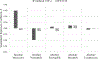
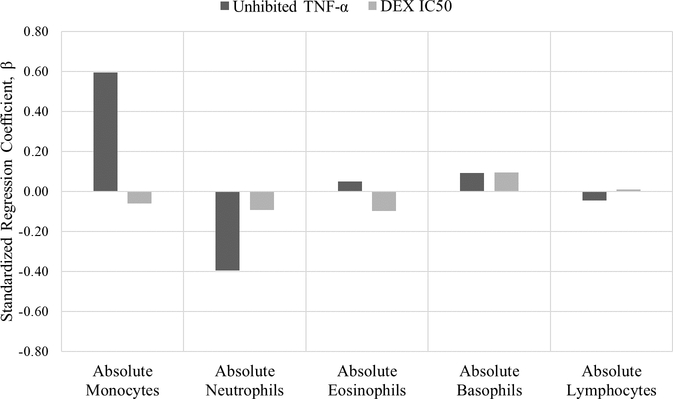
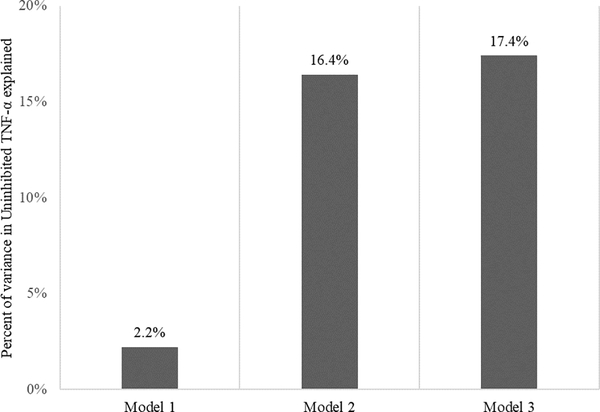
The mean (SD) DEX level needed to inhibit TNF-α production by 50% (i.e., DEX IC50) was 9.8 (5.8) nmol/L. Monocytes appeared to be the main driver of uninhibited TNF-α production, but monocyte counts explained only 14% of the variation. Monocyte counts were only weakly correlated with the DEX IC50 (r=−0.11, p<0.05). Moreover, there was no statistically significant correlation between the DEX IC50 and circulating proinflammatory (CRP, IL-6, IFN-γ) or anti-inflammatory (IL-10) mediators (p>0.05).
Conclusions
These findings challenge some prior assumptions and position our comprehensive study of glucocorticoid sensitivity as an important anchor point in the growing recognition of interindividual variation in maternal HPA axis regulation and inflammatory responses.
-
Subjects:
-
Source:Am J Reprod Immunol. 84(1):e13252
-
Pubmed ID:32320110
-
Pubmed Central ID:PMC7416519
-
Document Type:
-
Funding:R01 NR014800/NR/NINR NIH HHS/United States ; H/NH/NIH HHS/United States ; 2/NH/NIH HHS/United States ; R01 MD009064/MD/NIMHD NIH HHS/United States ; CD/ODCDC CDC HHS/United States ; D/NH/NIH HHS/United States ; 3/NH/NIH HHS/United States ; 1/NH/NIH HHS/United States ; 8/NH/NIH HHS/United States ; 0/NH/NIH HHS/United States ; U/NH/NIH HHS/United States ; R01NR014800/NR/NINR NIH HHS/United States ; UH3 OD023318/OD/NIH HHS/United States ; O/NH/NIH HHS/United States ; R01MD009064/MD/NIMHD NIH HHS/United States
-
Volume:84
-
Issue:1
-
Collection(s):
-
Main Document Checksum:urn:sha256:805fe813c015eb59d17548574540a8515e1e1e2c0083d067739bdc320e3e7411
-
Download URL:
-
File Type:
 [PDF
- 622.61 KB
]
[PDF
- 622.61 KB
]
Supporting Files


File Language:
English
ON THIS PAGE

CDC STACKS serves as an archival repository of CDC-published products including
scientific findings,
journal articles, guidelines, recommendations, or other public health information authored or
co-authored by CDC or funded partners.
As a repository, CDC STACKS retains documents in their original published format to ensure public access to scientific information.
As a repository, CDC STACKS retains documents in their original published format to ensure public access to scientific information.
You May Also Like
COLLECTION
CDC Public Access