



Loss of RAD9B impairs early neural development and contributes to the risk for human spina bifida
Supporting Files

-
4 2020 ; 4-2020
-
Available in CDC Stacks on 2020-04-27T00:00:00Z
File Language:
English
Details
-
Alternative Title:Hum Mutat
-
Personal Author:Cao, Xuanye ; Tian, Tian ; Steele, John W. ; Cabrera, Robert M. ; Aguiar-Pulido, Vanessa ; Wadhwa, Shruti ; Bhavani, Nikitha ; Bi, Patrick ; Gargurevich, Nick H. ; Hoffman, Ethan N. ; Cai, Chun-Quan ; Marini, Nicholas J. ; Yang, Wei ; Shaw, Gary M. ; Ross, Margaret E.
 ;
Finnell, Richard H.
;
Lei, Yunping
;
Finnell, Richard H.
;
Lei, Yunping
-
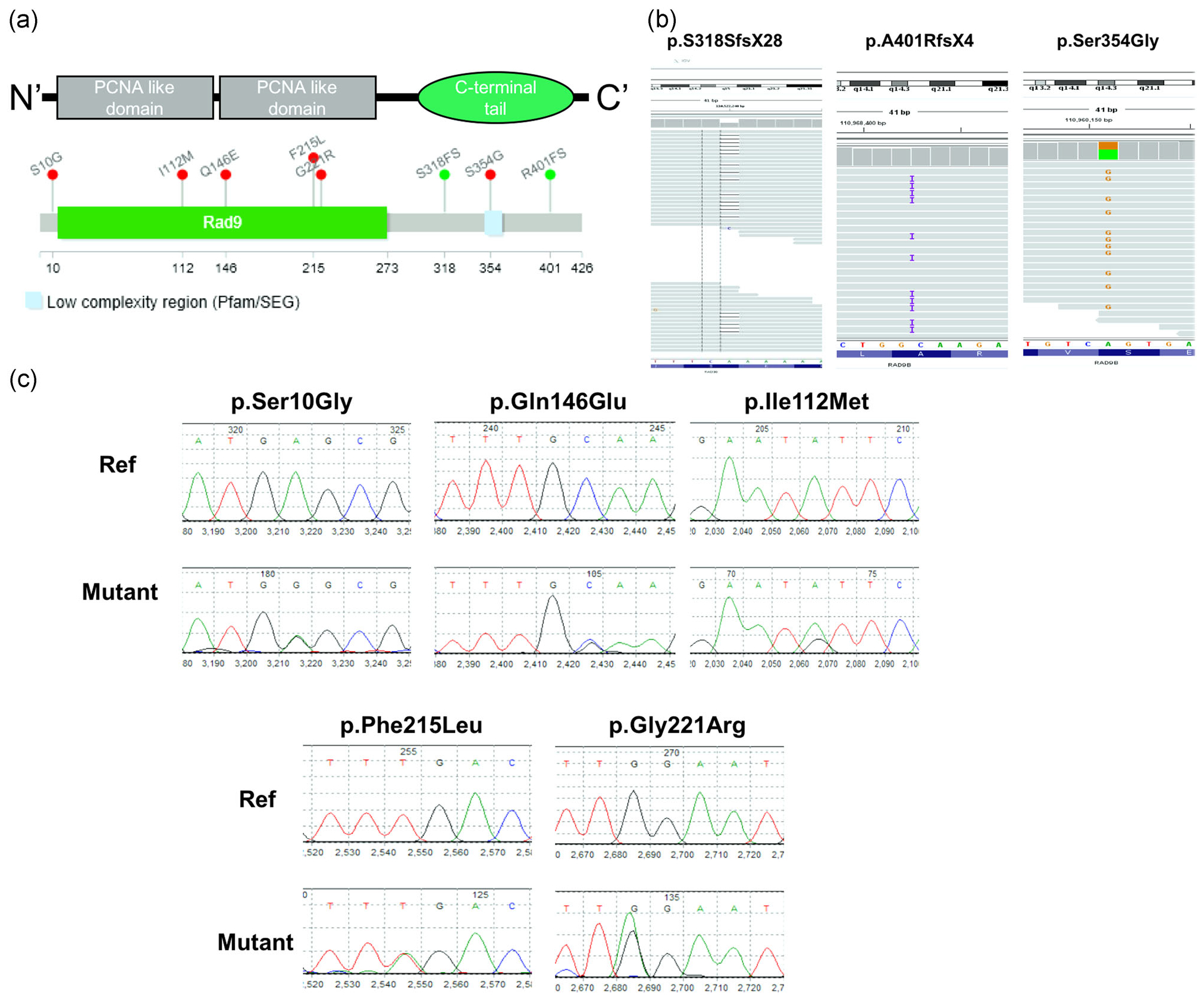
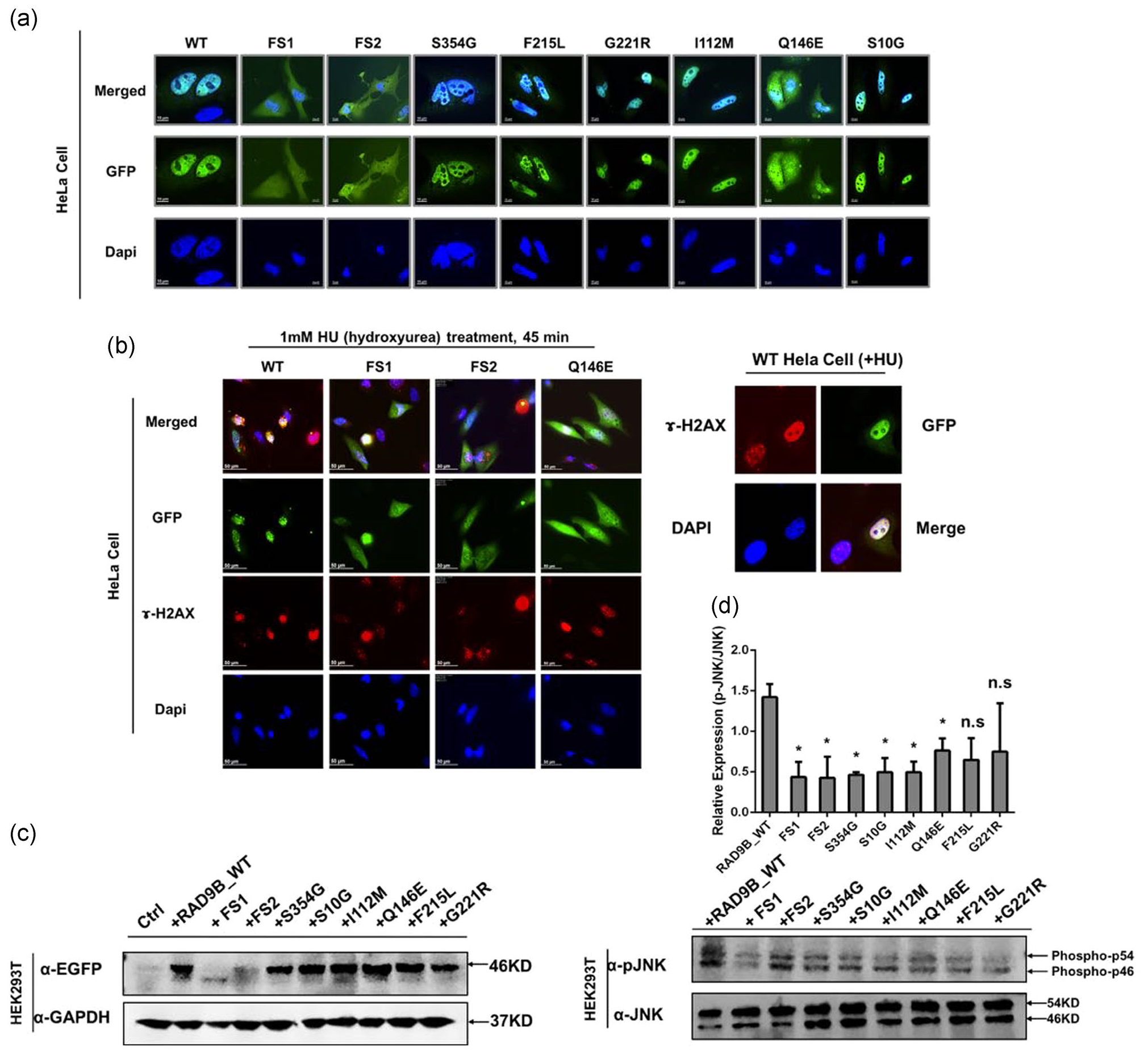
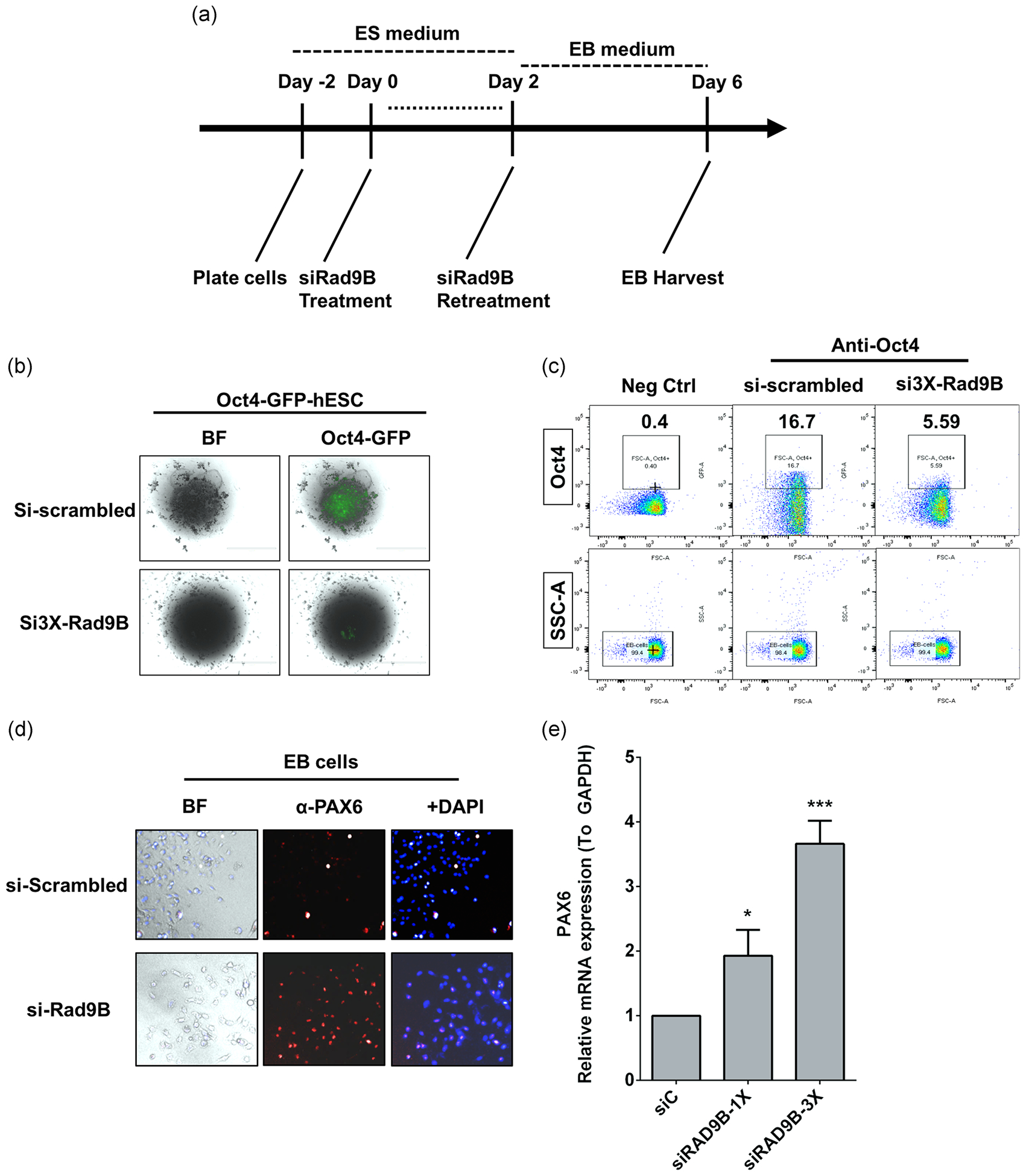
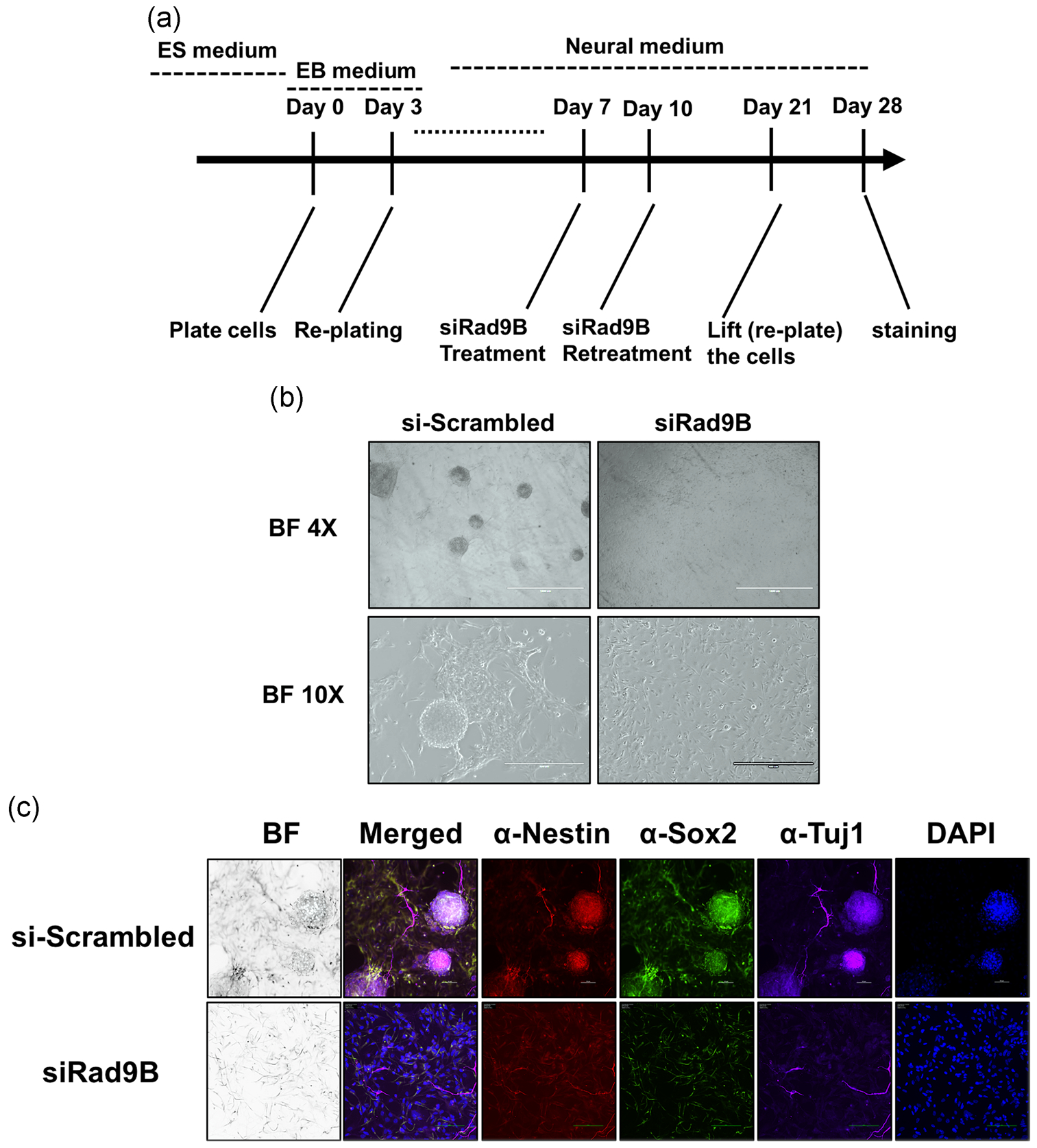
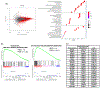
Description:DNA damage response (DDR) genes orchestrating the network of DNA repair, cell cycle control, are essential for the rapid proliferation of neural progenitor cells. To date, the potential association between specific DDR genes and the risk of human neural tube defects (NTDs) has not been investigated. Using whole-genome sequencing and targeted sequencing, we identified significant enrichment of rare deleterious RAD9B variants in spina bifida cases compared to controls (8/409 vs. 0/298; p = .0241). Among the eight identified variants, the two frameshift mutants and p.Gln146Glu affected RAD9B nuclear localization. The two frameshift mutants also decreased the protein level of RAD9B. p.Ser354Gly, as well as the two frameshifts, affected the cell proliferation rate. Finally, p.Ser354Gly, p.Ser10Gly, p.Ile112Met, p.Gln146Glu, and the two frameshift variants showed a decreased ability for activating JNK phosphorylation. RAD9B knockdowns in human embryonic stem cells profoundly affected early differentiation through impairing PAX6 and OCT4 expression. RAD9B deficiency impeded in vitro formation of neural organoids, a 3D cell culture model for human neural development. Furthermore, the RNA-seq data revealed that loss of RAD9B dysregulates cell adhesion genes during organoid formation. These results represent the first demonstration of a DDR gene as an NTD risk factor in humans.
-
Subjects:
-
Keywords:
-
Source:Hum Mutat. 41(4):786-799
-
Pubmed ID:31898828
-
Pubmed Central ID:PMC7185173
-
Document Type:
-
Funding:R01 HD083809/HD/NICHD NIH HHSUnited States/ ; U01 DD001033/DD/NCBDD CDC HHSUnited States/ ; U01DD001033/ACL/ACL HHSUnited States/ ; CU01DD001033/CC/CDC HHSUnited States/ ; P01 HD067244/HD/NICHD NIH HHSUnited States/ ; R01 HD074695/HD/NICHD NIH HHSUnited States/ ; R01 HD095520/HD/NICHD NIH HHSUnited States/ ; R01 HD081216/HD/NICHD NIH HHSUnited States/
-
Volume:41
-
Issue:4
-
Download URL:
-
File Type:
 [PDF - 2.17 MB]
 -
Collection(s):
-
Main Document Checksum:urn:sha256:45eeac3fce3d7980f085dbb1fa694e42c7c7357b04dddca426f7ff6787017da6
Supporting Files


File Language:
English
 Was this page helpful?
 Found an issue?



CDC STACKS serves as an archival repository of CDC-published products including
scientific findings, journal articles, guidelines, recommendations, or other public health information authored or
co-authored by CDC or funded partners.
As a repository, CDC STACKS retains documents in their original published format to ensure public access to scientific information.
As a repository, CDC STACKS retains documents in their original published format to ensure public access to scientific information.
You May Also Like
COLLECTION
CDC Public Access