



Accuracy and reliability of a low-cost, handheld 3D imaging system for child anthropometry
Supporting Files
Public Domain

-
October 24 2018
-
File Language:
English
Details
-
Alternative Title:PLoS One
-
Personal Author:
-
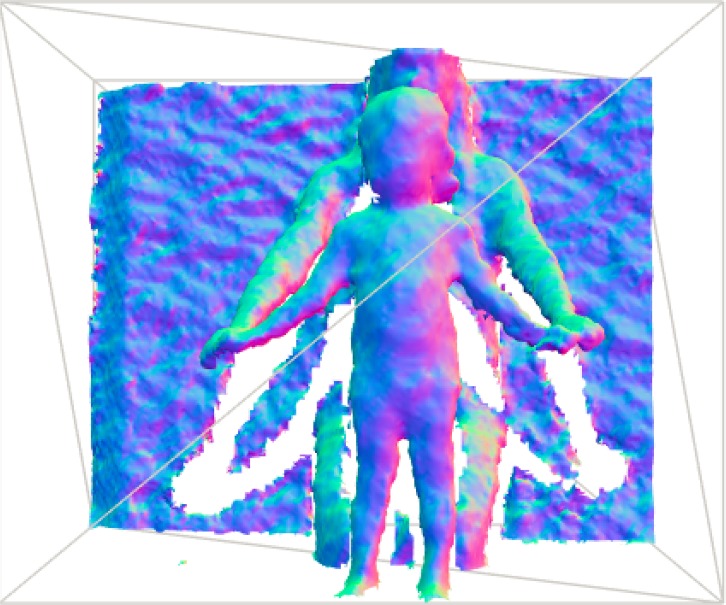
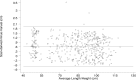
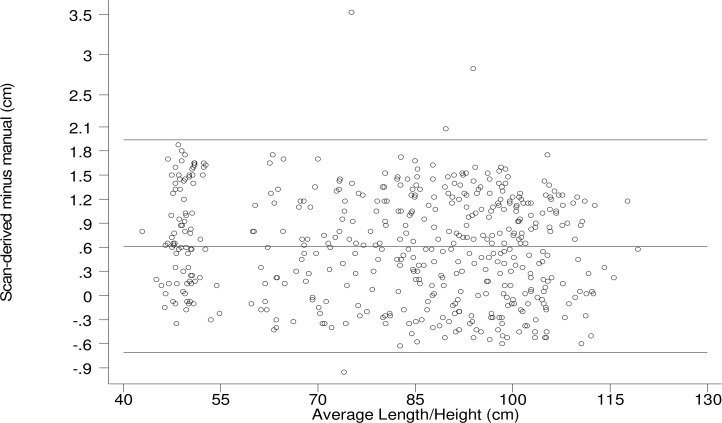
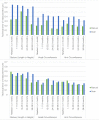
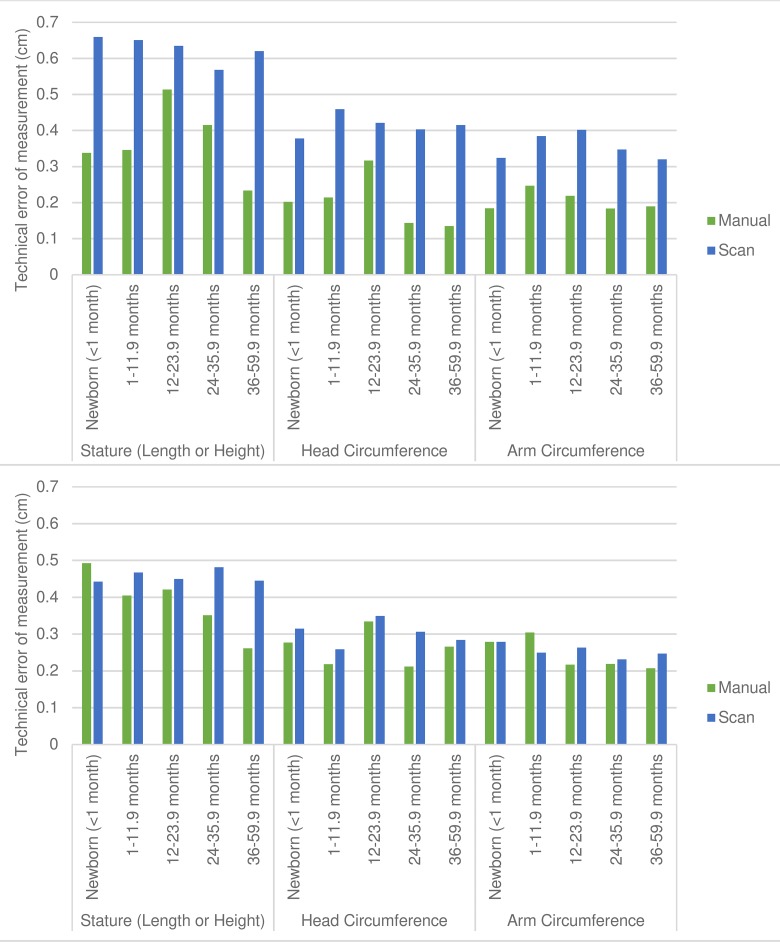
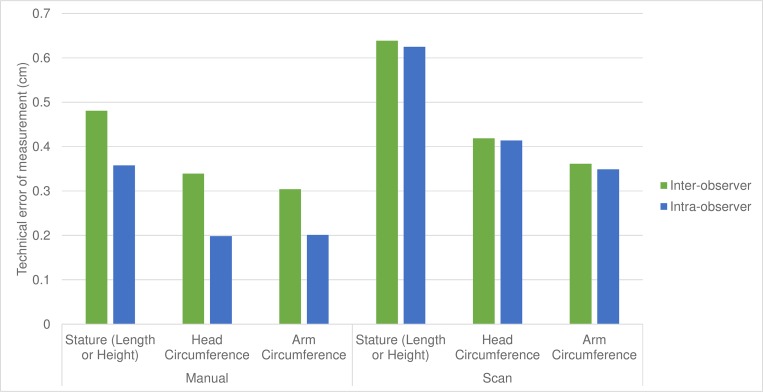
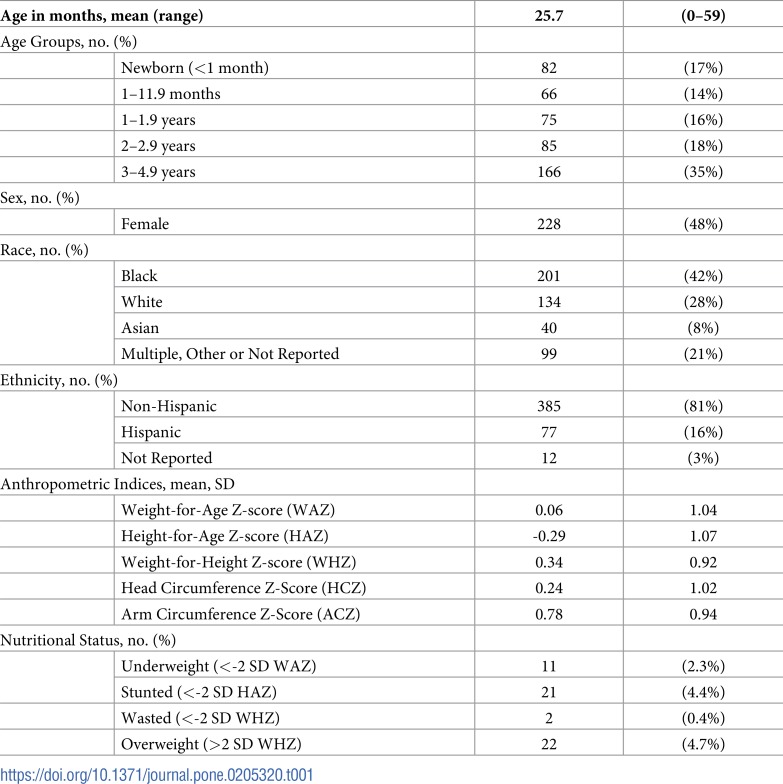
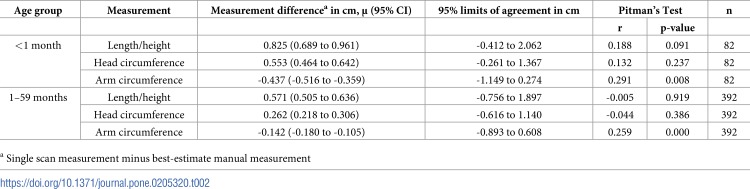
Description:The usefulness of anthropometry to define childhood malnutrition is undermined by poor measurement quality, which led to calls for new measurement approaches. We evaluated the ability of a 3D imaging system to correctly measure child stature (length or height), head circumference and arm circumference. In 2016-7 we recruited and measured children at 20 facilities in and around metro Atlanta, Georgia, USA; including at daycare, higher education, religious, and medical facilities. We selected recruitment sites to reflect a generally representative population of Atlanta and to oversample newborns and children under two years of age. Using convenience sampling, a total of 474 children 0-5 years of age who were apparently healthy and who were present at the time of data collection were included in the analysis. Two anthropometrists each took repeated manual measures and repeated 3D scans of each child. We evaluated the reliability and accuracy of 3D scan-derived measurements against manual measurements. The mean child age was 26 months, and 48% of children were female. Based on reported race and ethnicity, the sample was 42% Black, 28% White, 8% Asian, 21% multiple races, other or race not reported; and 16% Hispanic. Measurement reliability of repeated 3D scans was within 1 mm of manual measurement reliability for stature, head circumference and arm circumference. We found systematic bias when analyzing accuracy-on average 3D imaging overestimated stature and head circumference by 6 mm and 3 mm respectively, and underestimated arm circumference by 2 mm. The 3D imaging system used in this study is reliable, low-cost, portable, and can handle movement; making it ideal for use in routine nutritional assessment. However, additional research, particularly on accuracy, and further development of the scanning and processing software is needed before making policy and clinical practice recommendations on the routine use of 3D imaging for child anthropometry.
-
Subjects:
-
Source:PLoS One. 13(10)
-
Pubmed ID:30356325
-
Pubmed Central ID:PMC6200231
-
Document Type:
-
Place as Subject:
-
Volume:13
-
Issue:10
-
Collection(s):
-
Main Document Checksum:urn:sha256:1c0be9d4273a7673358d5d076ef0e11cb766e373f51e6cb6af489cd0eb09add6
-
Download URL:
-
File Type:
 [PDF
- 1.21 MB
]
[PDF
- 1.21 MB
]
Supporting Files


File Language:
English
 Was this page helpful?
 Found an issue?


CDC STACKS serves as an archival repository of CDC-published products including
scientific findings,
journal articles, guidelines, recommendations, or other public health information authored or
co-authored by CDC or funded partners.
As a repository, CDC STACKS retains documents in their original published format to ensure public access to scientific information.
As a repository, CDC STACKS retains documents in their original published format to ensure public access to scientific information.
You May Also Like
COLLECTION
CDC Public Access