



Redox (phospho)lipidomics of signaling in inflammation and programmed cell death
Supporting Files

-
7 2019 ; 7-2019
-
Available in CDC Stacks on 2019-07-15T00:00:00Z
File Language:
English
Details
-
Alternative Title:J Leukoc Biol
-
Personal Author:Tyurina, Yulia Y. ; St. Croix, Claudette M. ; Watkins, Simon C. ; Watson, Alan M. ; Epperly, Michael W. ; Anthonymuthu, Tamil S. ; Kisin, Elena R. ; Vlasova, Irina I. ; Krysko, Olga ; Krysko, Dmitri V. ; Kapralov, Alexandr A. ; Dar, Haider H. ; Tyurin, Vladimir A. ; Amoscato, Andrew A. ; Popova, Elena N. ; Bolevich, Sergey B. ; Timashev, Peter S. ; Kellum, John A. ; Wenzel, Sally E. ; Mallampalli, Rama K. ; Greenberger, Joel S. ; Bayir, Hulya ; Shvedova, Anna A. ; Kagan, Valerian E.
-
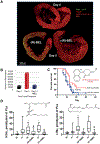
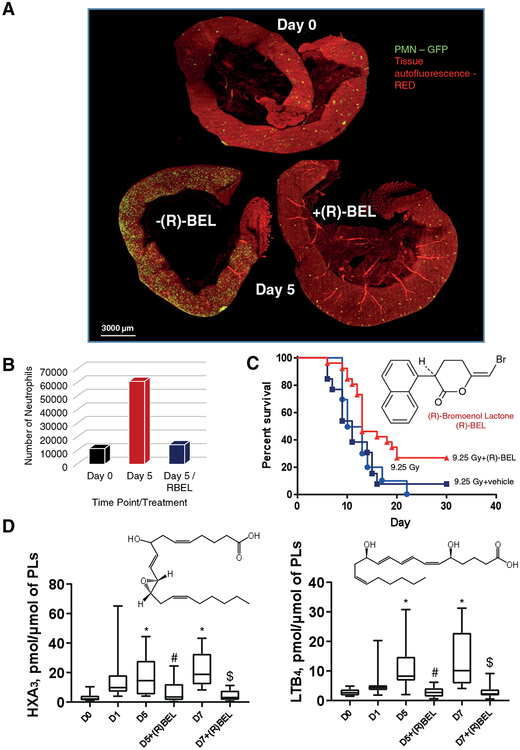
Description:In addition to the known prominent role of polyunsaturated (phospho)lipids as structural blocks of biomembranes, there is an emerging understanding of another important function of these molecules as a highly diversified signaling language utilized for intra- and extracellular communications. Technological developments in high-resolution mass spectrometry facilitated the development of a new branch of metabolomics, redox lipidomics. Analysis of lipid peroxidation reactions has already identified specific enzymatic mechanisms responsible for the biosynthesis of several unique signals in response to inflammation and regulated cell death programs. Obtaining comprehensive information about millions of signals encoded by oxidized phospholipids, represented by thousands of interactive reactions and pleiotropic (patho)physiological effects, is a daunting task. However, there is still reasonable hope that significant discoveries, of at least some of the important contributors to the overall overwhelmingly complex network of interactions triggered by inflammation, will lead to the discovery of new small molecule regulators and therapeutic modalities. For example, suppression of the production of AA-derived pro-inflammatory mediators, HXA| and LTB| by an iPLA| γ inhibitor, R-BEL, mitigated injury associated with the activation of pro-inflammatory processes in animals exposed to whole-body irradiation. Further, technological developments promise to make redox lipidomics a powerful approach in the arsenal of diagnostic and therapeutic instruments for personalized medicine of inflammatory diseases and conditions.
-
Subjects:
-
Keywords:
-
Source:J Leukoc Biol. 106(1):57-81
-
Pubmed ID:31071242
-
Pubmed Central ID:PMC6626990
-
Document Type:
-
Funding:R01 CA165065/CA/NCI NIH HHSUnited States/ ; U19 AI068021/AI/NIAID NIH HHSUnited States/ ; R37 NS061817/NS/NINDS NIH HHSUnited States/ ; R01 NS076511/NS/NINDS NIH HHSUnited States/ ; P01 HL114453/HL/NHLBI NIH HHSUnited States/ ; R01 HL096376/HL/NHLBI NIH HHSUnited States/ ; R01 HL098174/HL/NHLBI NIH HHSUnited States/ ; R01 NS061817/NS/NINDS NIH HHSUnited States/ ; CC999999/ImCDC/Intramural CDC HHSUnited States/
-
Volume:106
-
Issue:1
-
Download URL:
-
File Type:
 [PDF - 2.15 MB]
 -
Collection(s):
-
Main Document Checksum:urn:sha256:54958298cfa6841379fdeee8b56efa136d935f95c577792edd0eee990341cd64
Supporting Files


File Language:
English
 Was this page helpful?
 Found an issue?





CDC STACKS serves as an archival repository of CDC-published products including
scientific findings, journal articles, guidelines, recommendations, or other public health information authored or
co-authored by CDC or funded partners.
As a repository, CDC STACKS retains documents in their original published format to ensure public access to scientific information.
As a repository, CDC STACKS retains documents in their original published format to ensure public access to scientific information.
You May Also Like
COLLECTION
CDC Public Access