


A Detailed Exploration Into the Association of Prescribed Opioid Dosage and Overdose Deaths Among Patients With Chronic Pain
Supporting Files

-
May 2016
-
File Language:
English
Details
-
Alternative Title:Med Care
-
Personal Author:
-
Description:Background:
High opioid dosage has been associated with overdose, and clinical guidelines have cautioned against escalating dosages above 100 morphine-equivalent mg (MEM) based on the potential harm and the absence of evidence of benefit from high dosages. However, this 100 MEM threshold was chosen somewhat arbitrarily.
Objective:
To examine the association of prescribed opioid dosage as a continuous measure in relation to risk of unintentional opioid overdose to identify the range of dosages associated with risk of overdose at a detailed level.
Methods:
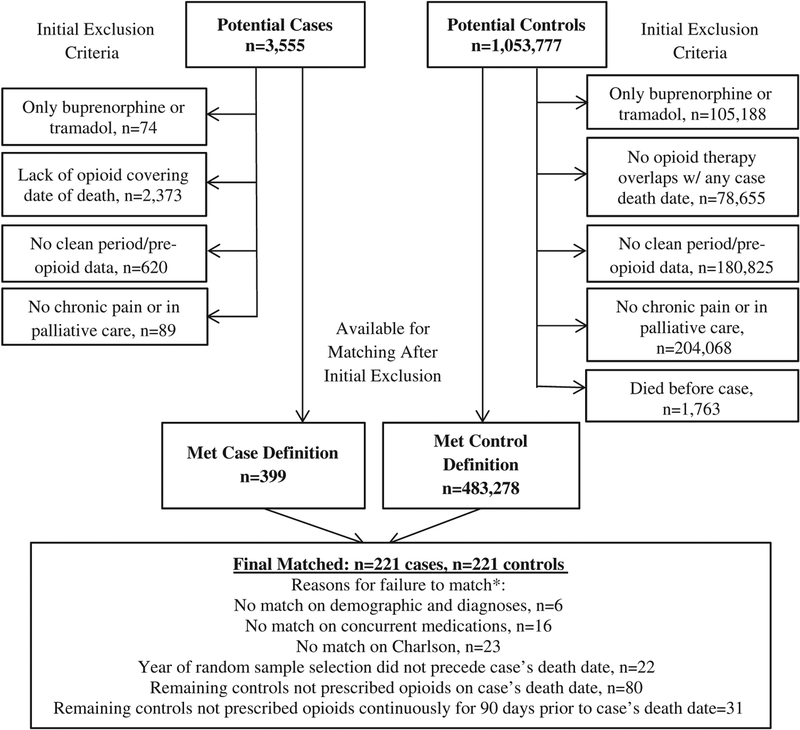
In this nested case-control study with risk-set sampling of controls, cases (opioid overdose decedents) and controls were identified from a population of patients of the Veterans Health Administration who were prescribed opioids and who have a chronic pain diagnosis. Unintentional fatal opioid analgesic overdose was measured from National Death Index records and prescribed opioid dosage from pharmacy records.
Results:
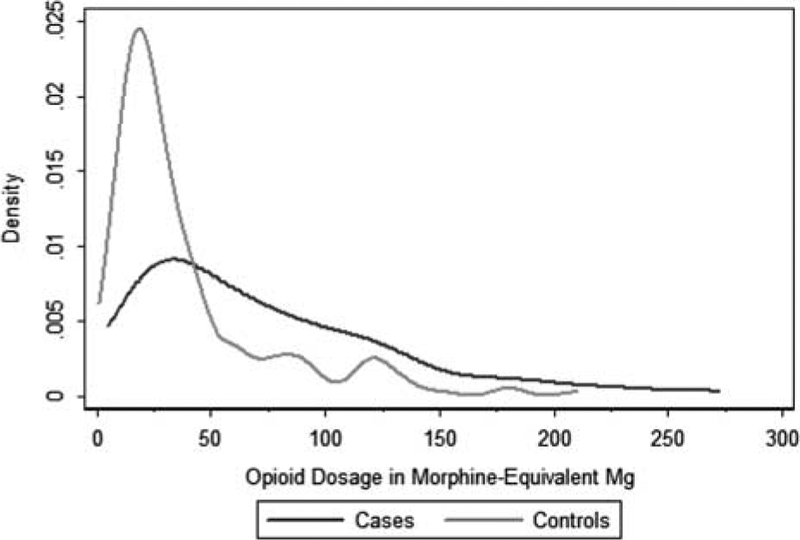
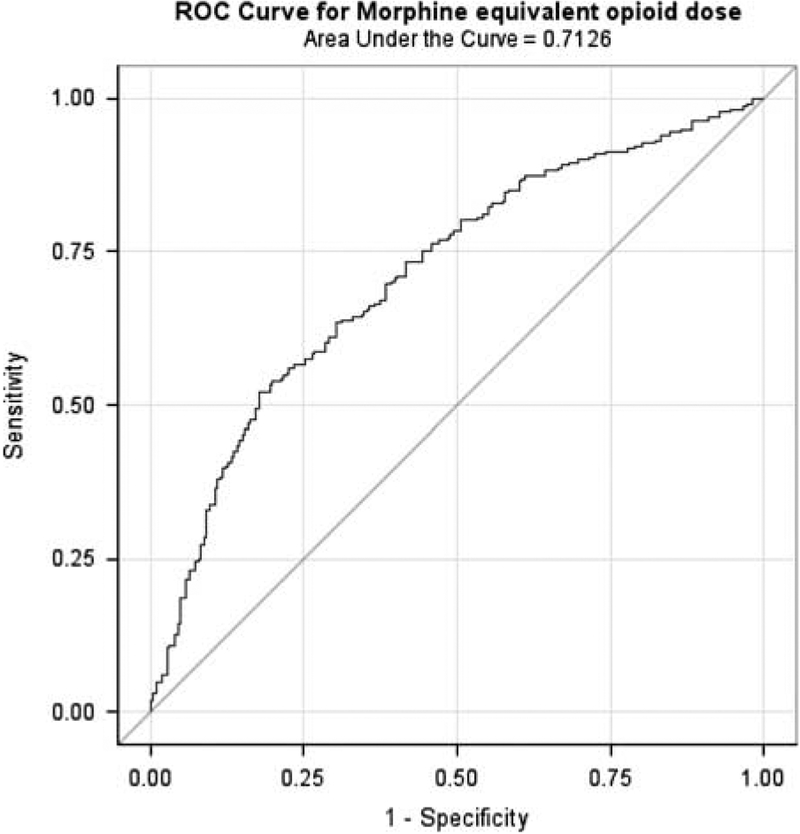
The average prescribed opioid dosage was higher (P < 0.001) for cases (mean = 98.1 MEM, SD = 112.7; median = 60, interquartile range, 30–120), than controls (mean = 47.7 MEM, SD = 65.2; median = 25, interquartile range, 15–45). In a ROC analysis, dosage was a moderately good “predictor” of opioid overdose death, indicating that, on average, overdose cases had a prescribed opioid dosage higher than 71% of controls.
Conclusions:
A clear cut-point in opioid dosage to distinguish between overdose cases and controls was not found. However, lowering the recommended dosage threshold below the 100 MEM used in many recent guidelines would affect proportionately few patients not at risk for overdose while potentially benefitting many of those at risk for overdose.
-
Subjects:
-
Source:Med Care. 54(5):435-441
-
Pubmed ID:26807540
-
Pubmed Central ID:PMC6626611
-
Document Type:
-
Funding:
-
Name as Subject:
-
Place as Subject:
-
Volume:54
-
Issue:5
-
Collection(s):
-
Main Document Checksum:urn:sha256:b4a7d9306d65d6087953fea9946e71f6c392ee901bbd942e43bcf39b364fec48
-
Download URL:
-
File Type:
 [PDF
- 888.84 KB
]
[PDF
- 888.84 KB
]
Supporting Files


File Language:
English
ON THIS PAGE


CDC STACKS serves as an archival repository of CDC-published products including
scientific findings,
journal articles, guidelines, recommendations, or other public health information authored or
co-authored by CDC or funded partners.
As a repository, CDC STACKS retains documents in their original published format to ensure public access to scientific information.
As a repository, CDC STACKS retains documents in their original published format to ensure public access to scientific information.
You May Also Like
COLLECTION
CDC Public Access