



Surveillance for incidence and etiology of early-onset neonatal sepsis in Soweto, South Africa
Supporting Files
Public Domain

-
April 10 2019
File Language:
English
Details
-
Alternative Title:PLoS One
-
Personal Author:Velaphi, Sithembiso C. ; Westercamp, Matthew ; Moleleki, Malefu ; Pondo, Tracy ; Dangor, Ziyaad ; Wolter, Nicole ; von Gottberg, Anne ; Shang, Nong ; Demirjian, Alicia ; Winchell, Jonas M. ; Diaz, Maureen H. ; Nakwa, Firdose ; Okudo, Grace ; Wadula, Jeannette ; Cutland, Clare ; Schrag, Stephanie J. ; Madhi, Shabir A.
-
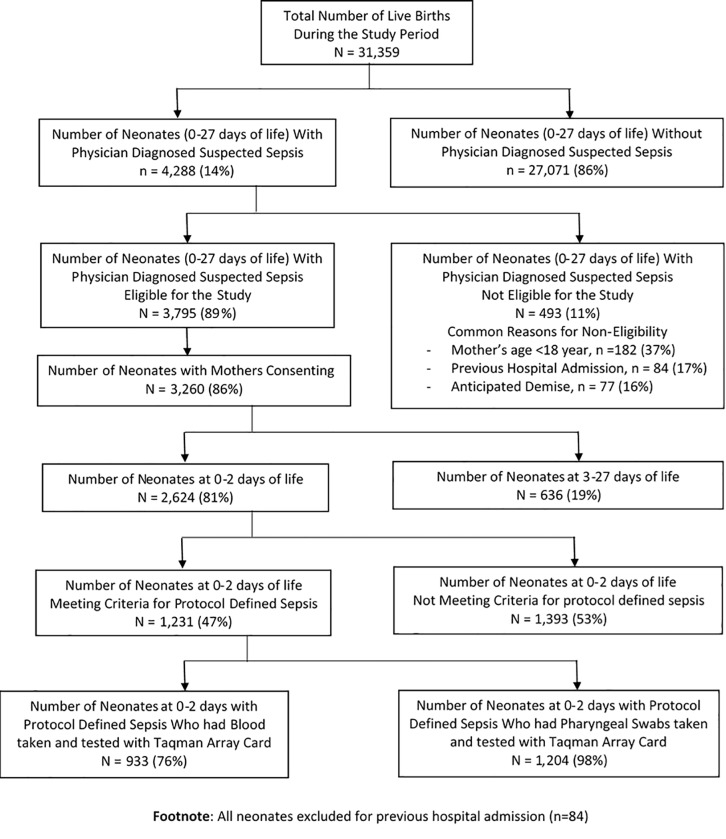
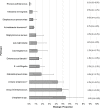
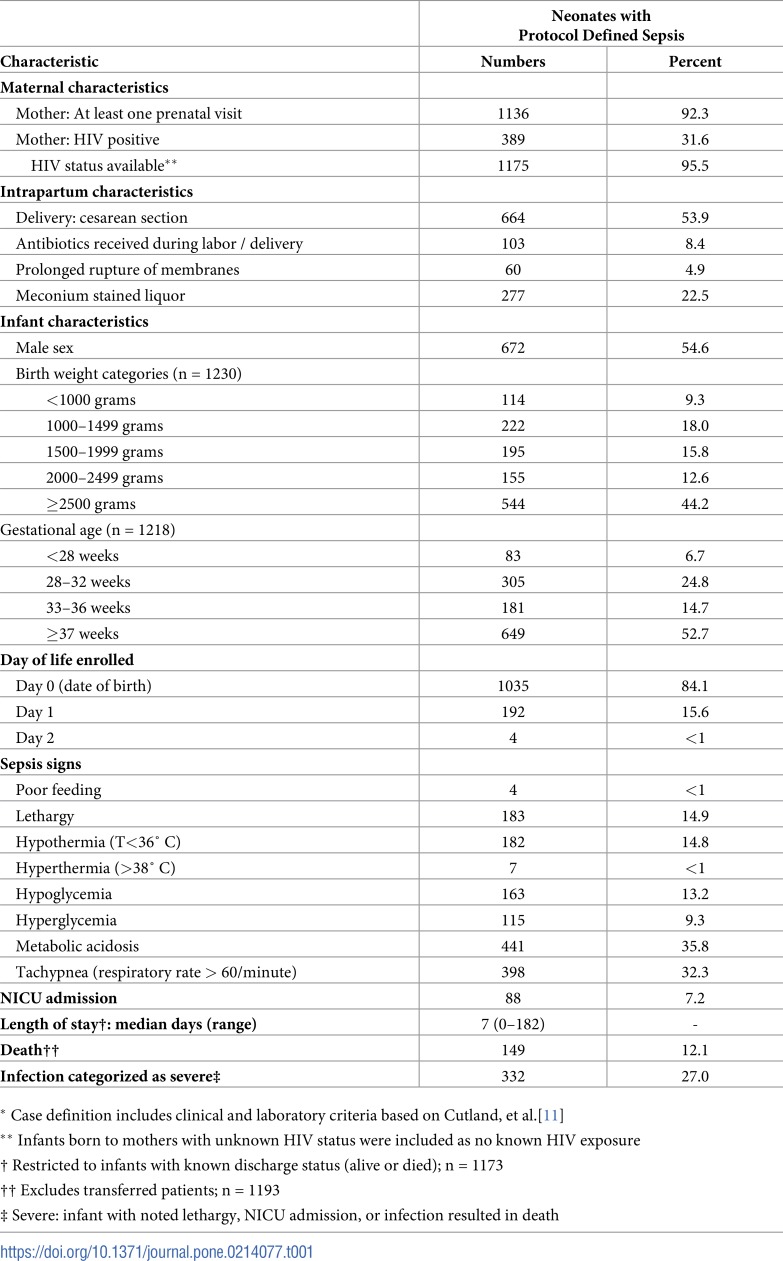
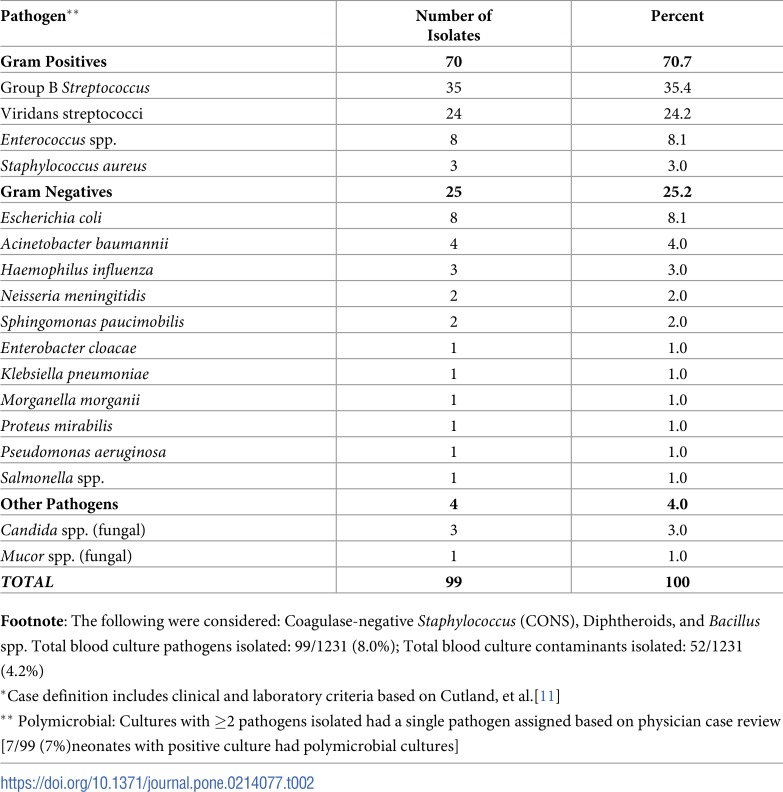
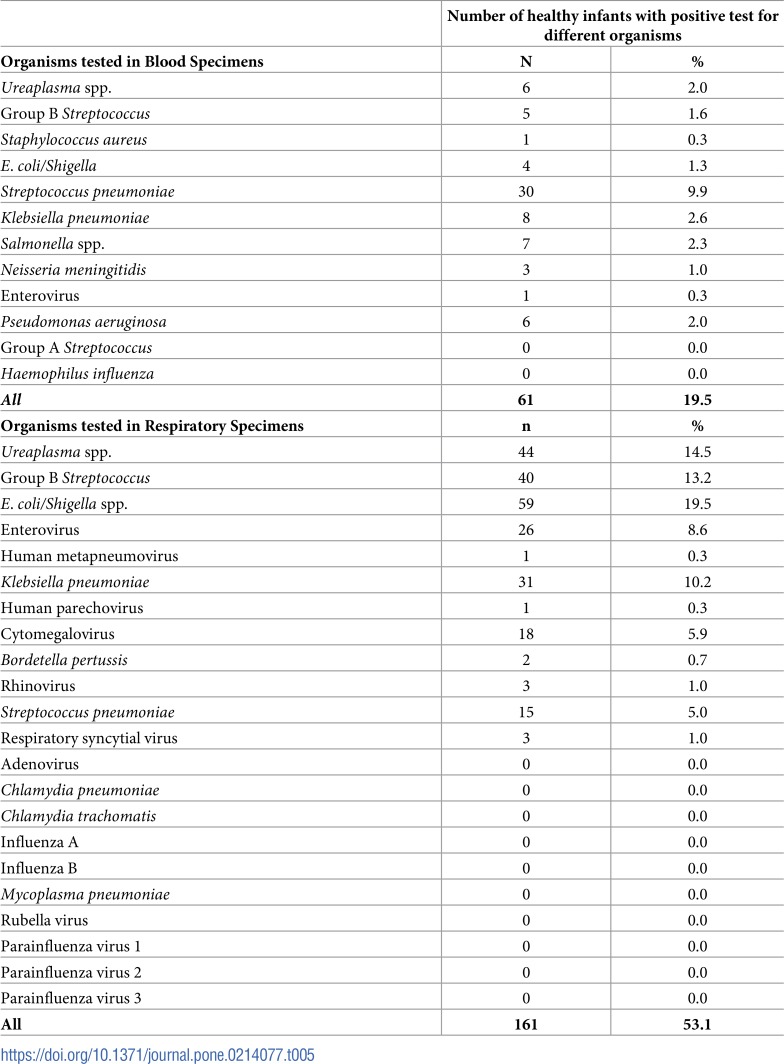
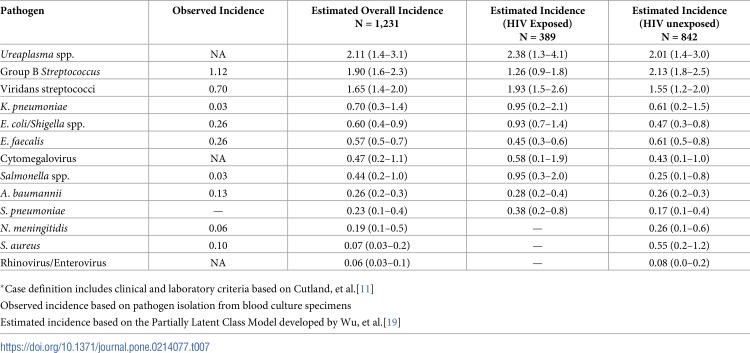
Description:Background ; Globally, over 400,000 neonatal deaths in 2015 were attributed to sepsis, however, the incidence and etiologies of these infections are largely unknown in low-middle income countries. We aimed to determine incidence and etiology of community-acquired early-onset (<72 hours age) sepsis (EOS) using culture and molecular diagnostics. ; Methods ; This was a prospective observational study, in which we conducted a surveillance for pathogens using a combination of blood culture and a polymerase chain reaction (PCR)-based test. Blood culture was performed on all neonates with suspected EOS. Among the subset fulfilling criteria for protocol-defined EOS, blood and nasopharyngeal (NP) respiratory swabs were tested by quantitative real-time reverse-transcriptase PCR using a Taqman Array Card (TAC) with 15 bacterial and 12 viral targets. Blood and NP samples from 312 healthy newborns were also tested by TAC to estimate background positivity rates. We used variant latent-class methods to attribute etiologies and calculate pathogen-specific proportions and incidence rates. ; Results ; We enrolled 2,624 neonates with suspected EOS and from these 1,231 newborns met criteria for protocol-defined EOS (incidence- 39.3/1,000 live-births). Using the partially latent-class modelling, only 26.7% cases with protocol-defined EOS had attributable etiology, and the largest pathogen proportion were Ureaplasma spp. (5.4%; 95%CI: 3.6–8.0) and group B Streptococcus (GBS) (4.8%; 95%CI: 4.1–5.8), and no etiology was attributable for 73.3% of cases. Blood cultures were positive in 99/1,231 (8.0%) with protocol-defined EOS (incidence- 3.2/1,000 live-births). Leading pathogens on blood culture included GBS (35%) and viridans streptococci (24%). Ureaplasma spp. was the most common organism identified on TAC among cases with protocol-defined EOS. ; Conclusion ; Using a combination of blood culture and a PCR-based test the common pathogens isolated in neonates with sepsis were Ureaplasma spp. and GBS. Despite documenting higher rates of protocol-defined EOS and using a combination of tests, the etiology for EOS remains elusive.
-
Subjects:
-
Source:PLoS One. 2019; 14(4)
-
Pubmed ID:30970036
-
Pubmed Central ID:PMC6457488
-
Document Type:
-
Place as Subject:
-
Volume:14
-
Issue:4
-
Download URL:
-
File Type:
 [PDF - 1.42 MB]
 -
Collection(s):
-
Main Document Checksum:urn:sha256:55b4264789ef38826e6991ddca4003aa10eb1862a4de265e5cb34c1a2e9c6b38
Supporting Files


File Language:
English
 Was this page helpful?
 Found an issue?






CDC STACKS serves as an archival repository of CDC-published products including
scientific findings, journal articles, guidelines, recommendations, or other public health information authored or
co-authored by CDC or funded partners.
As a repository, CDC STACKS retains documents in their original published format to ensure public access to scientific information.
As a repository, CDC STACKS retains documents in their original published format to ensure public access to scientific information.
You May Also Like
COLLECTION
CDC Public Access