



Stillbirth With Group B Streptococcus Disease Worldwide: Systematic Review and Meta-analyses
Supporting Files

-
Nov 06 2017
File Language:
English
Details
-
Alternative Title:The Burden of Group B Streptococcus Worldwide for Pregnant Women, Stillbirths, and Children
-
Personal Author:Seale, Anna C ; Blencowe, Hannah ; Bianchi-Jassir, Fiorella ; Embleton, Nicholas ; Bassat, Quique ; Ordi, Jaume ; Menéndez, Clara ; Cutland, Clare ; Briner, Carmen ; Berkley, James A ; Lawn, Joy E ; Baker, Carol J ; Bartlett, Linda ; Gravett, Michael G ; Heath, Paul T ; Ip, Margaret ; Le Doare, Kirsty ; Rubens, Craig E ; Saha, Samir K ; Schrag, Stephanie ; Meulen, Ajoke Sobanjo-ter ; Vekemans, Johan ; Madhi, Shabir A
-
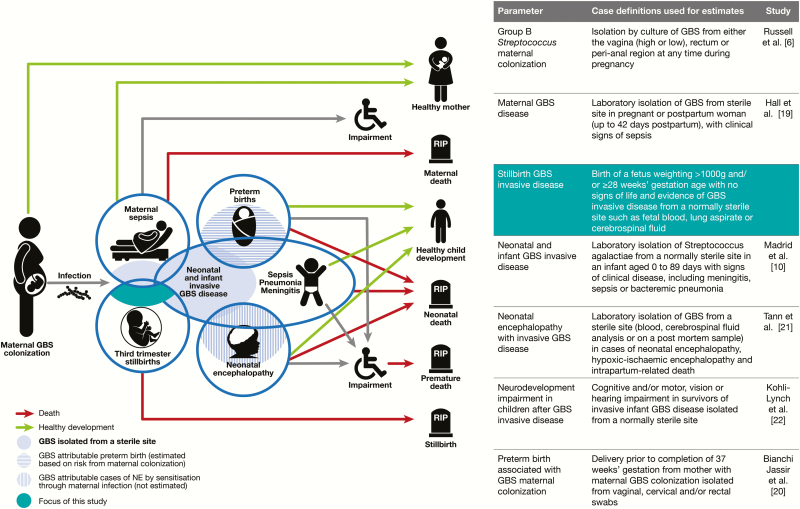
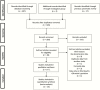
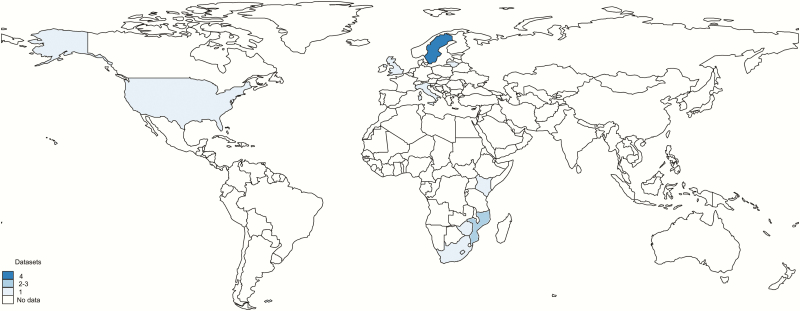
Description:Background ; There are an estimated 2.6 million stillbirths each year, many of which are due to infections, especially in low- and middle-income contexts. This paper, the eighth in a series on the burden of group B streptococcal (GBS) disease, aims to estimate the percentage of stillbirths associated with GBS disease. ; Methods ; We conducted systematic literature reviews (PubMed/Medline, Embase, Literatura Latino-Americana e do Caribe em Ciências da Saúde, World Health Organization Library Information System, and Scopus) and sought unpublished data from investigator groups. Studies were included if they reported original data on stillbirths (predominantly ≥28 weeks’ gestation or ≥1000 g, with GBS isolated from a sterile site) as a percentage of total stillbirths. We did meta-analyses to derive pooled estimates of the percentage of GBS-associated stillbirths, regionally and worldwide for recent datasets. ; Results ; We included 14 studies from any period, 5 with recent data (after 2000). There were no data from Asia. We estimated that 1% (95% confidence interval CI, 0–2%) of all stillbirths in developed countries and 4% (95% CI, 2%–6%) in Africa were associated with GBS. ; Conclusions ; GBS is likely an important cause of stillbirth, especially in Africa. However, data are limited in terms of geographic spread, with no data from Asia, and cases worldwide are probably underestimated due to incomplete case ascertainment. More data, using standardized, systematic methods, are critical, particularly from low- and middle-income contexts where the highest burden of stillbirths occurs. These data are essential to inform interventions, such as maternal GBS vaccination.
-
Subjects:
-
Source:Clin Infect Dis. 2017; 65(Suppl 2):S125-S132
-
Pubmed ID:29117322
-
Pubmed Central ID:PMC5850020
-
Document Type:
-
Funding:
-
Volume:65
-
Download URL:
-
File Type:
 [PDF - 5.52 MB]
 -
Collection(s):
-
Main Document Checksum:urn:sha-512:0563daf66e4c567126aa90d6adf2c38642ffd685663a1d16d400df764ab60bd02fc01023a4559faac69dc4941ec1e76e942ef41a347c73d30a5474d55c0d2fce
Supporting Files


File Language:
English
 Was this page helpful?
 Found an issue?




CDC STACKS serves as an archival repository of CDC-published products including
scientific findings, journal articles, guidelines, recommendations, or other public health information authored or
co-authored by CDC or funded partners.
As a repository, CDC STACKS retains documents in their original published format to ensure public access to scientific information.
As a repository, CDC STACKS retains documents in their original published format to ensure public access to scientific information.
You May Also Like
COLLECTION
CDC Public Access