



International Importations of Measles Virus into the United States during the Post-Elimination Era, 2001–2016
Supporting Files

-
4 19 2019
-
Available in CDC Stacks on April 19, 2020, 12:00 AM
File Language:
English
Details
-
Journal Article:J Infect Dis
-
Personal Author:
-
Description:Background
Although measles was declared eliminated from the United States in 2000, measles cases and outbreaks continue to occur, resulting from importations of the disease from countries where it remains endemic.
Methods
We describe the epidemiology of international importations of measles virus into the United States during the post-elimination era.
Results
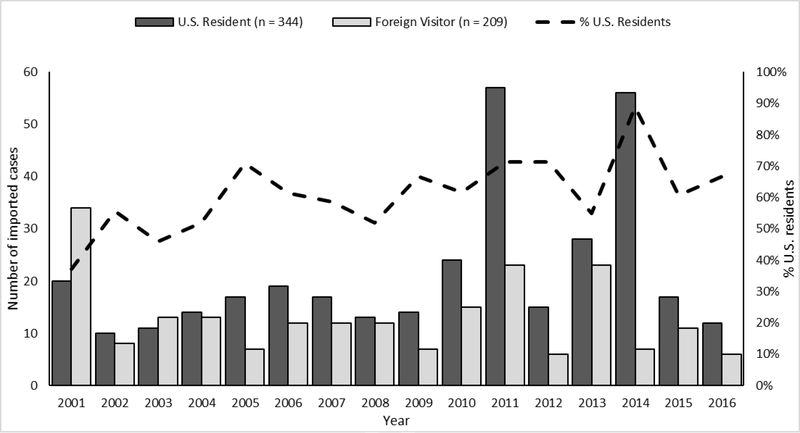
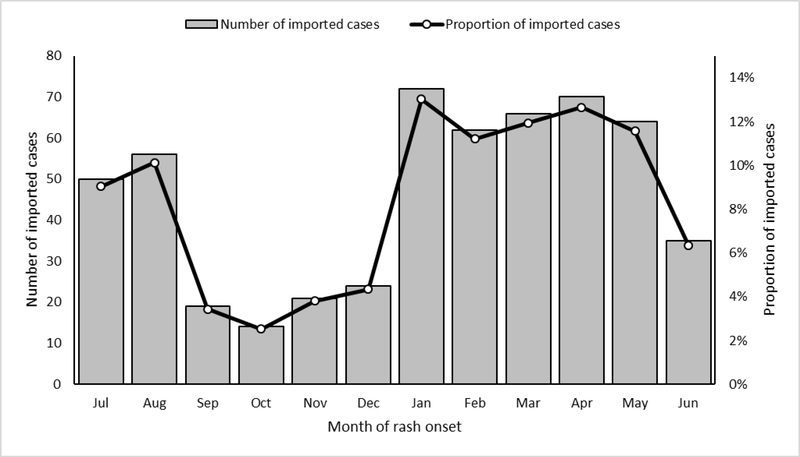
From 2001 to 2016, 553 imported measles cases were reported to the Centers for Disease Control and Prevention. A median of 28 importations occurred each year (range: 18–80). The median age of imported case-patients was 18 years (range: three months–75 years); 87% were unvaccinated or had an unknown vaccination status. U.S. residents (as opposed to foreign visitors) accounted for 62% of imported measles cases. Overall, 62% of all imported case-patients reported travel to countries in the Western Pacific and European Regions of the World Health Organization during their exposure periods. The number of measles importations from specific countries was related to the incidence of measles in and the volume of travel to and from the source country.
Conclusions
Our findings emphasize the importance of measles vaccination of U.S. residents aged ≥6 months before international travel according to Advisory Committee on Immunization Practices recommendations and supporting global measles elimination efforts. -
Subjects:
-
Keywords:
-
Source:J Infect Dis. 219(10):1616-1623
-
DOI:
-
Pubmed ID:30535027
-
Pubmed Central ID:PMC6474820
-
Document Type:
-
Funding:
-
Genre:
-
Volume:219
-
Issue:10
-
Download URL:
-
File Type:
 [PDF - 885.46 KB]
 -
Collection(s):
-
Main Document Checksum:urn:sha-512:2c022581d0d37671b6bd516802e1bb169d3d118c796892958f8ba4af27508742329ab7f40ba384bdef5628375c3db2a23ae5ad2aef3f753c3fba3edcfaf09109
Supporting Files


File Language:
English
 Was this page helpful?
 Found an issue?



CDC STACKS serves as an archival repository of CDC-published products including
scientific findings, journal articles, guidelines, recommendations, or other public health information authored or
co-authored by CDC or funded partners.
As a repository, CDC STACKS retains documents in their original published format to ensure public access to scientific information.
As a repository, CDC STACKS retains documents in their original published format to ensure public access to scientific information.
You May Also Like
COLLECTION
CDC Public Access