



Is there a delay in diagnosis of Duchenne muscular dystrophy among preterm born males?
Supporting Files

-
May 15 2018
-
Available in CDC Stacks on 2019-07-01T00:00:00Z
File Language:
English
Details
-
Alternative Title:J Child Neurol
-
Personal Author:
-
Corporate Authors:
-
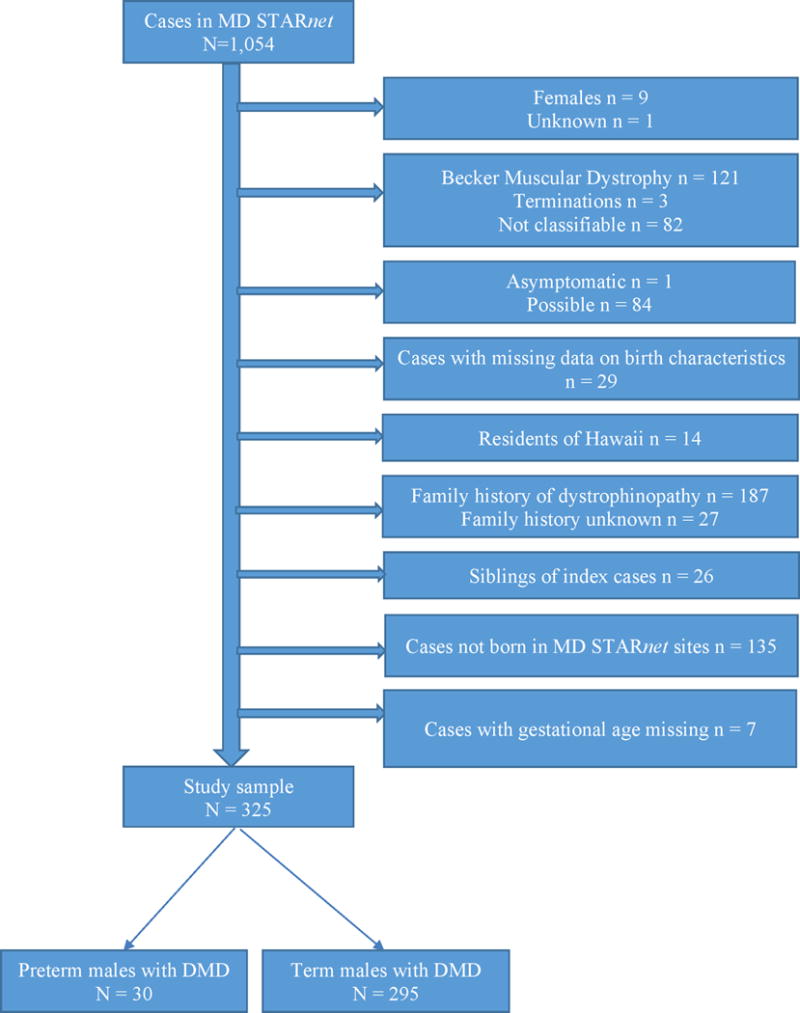
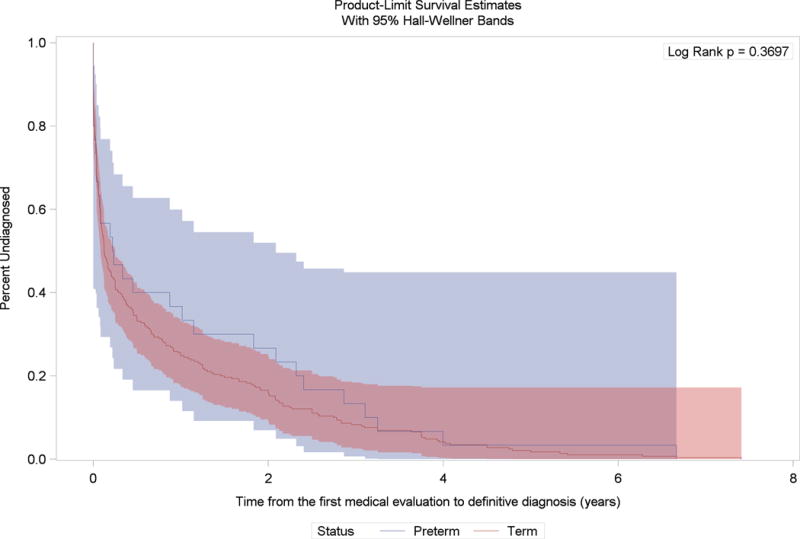
Description:The objective of this study was to investigate whether males who were born preterm took longer to receive a Duchenne muscular dystrophy diagnosis than term males. Data for males with Duchenne muscular dystrophy identified through a population-based surveillance system were analyzed using a Kaplan-Meier estimator. The first signs and symptoms were noted at a median age of 2 years in both groups. Median age when first signs and symptoms prompted medical evaluation was 2.59 years among preterm and 4.01 years among term males. Median age at definitive diagnosis was 4.25 years and 4.92 years for preterm and term males, respectively. Neither difference was statistically significant. Preterm males tended to be seen for their initial medical evaluation earlier than term males, though they were not diagnosed significantly earlier. It may take clinicians longer after the initial evaluation of preterm males to arrive at a Duchenne muscular dystrophy diagnosis.
-
Subjects:
-
Source:J Child Neurol. 33(8):537-545
-
Pubmed ID:29759004
-
Pubmed Central ID:PMC5995644
-
Document Type:
-
Funding:U01 DD001117/DD/NCBDD CDC HHS/United States ; U01 DD000187/DD/NCBDD CDC HHS/United States ; U01 DD001123/DD/NCBDD CDC HHS/United States ; U01 DD000189/DD/NCBDD CDC HHS/United States ; U01 DD000191/DD/NCBDD CDC HHS/United States ; U01 DD000190/DD/NCBDD CDC HHS/United States ; U01DD001117/ACL HHS/ACL HHS/United States
-
Volume:33
-
Issue:8
-
Download URL:
-
File Type:
 [PDF - 625.66 KB]
 -
Collection(s):
-
Main Document Checksum:urn:sha256:7c0d9daaf7cf8c9b6ac9684b5a935e837a47d3b3d7d12081331a4be558734a7b
Supporting Files


File Language:
English
 Was this page helpful?
 Found an issue?



CDC STACKS serves as an archival repository of CDC-published products including
scientific findings, journal articles, guidelines, recommendations, or other public health information authored or
co-authored by CDC or funded partners.
As a repository, CDC STACKS retains documents in their original published format to ensure public access to scientific information.
As a repository, CDC STACKS retains documents in their original published format to ensure public access to scientific information.
You May Also Like
COLLECTION
CDC Public Access