


Human Adenovirus Associated with Severe Respiratory Infection, Oregon, USA, 2013–2014
Supporting Files
Public Domain

-
Jun 2016
-
Details
-
Alternative Title:Emerg Infect Dis
-
Personal Author:
-
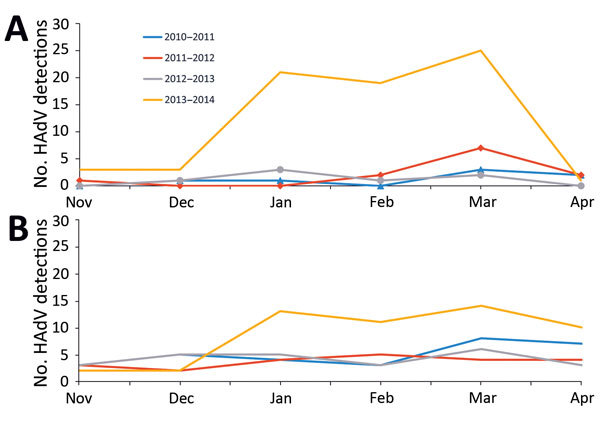
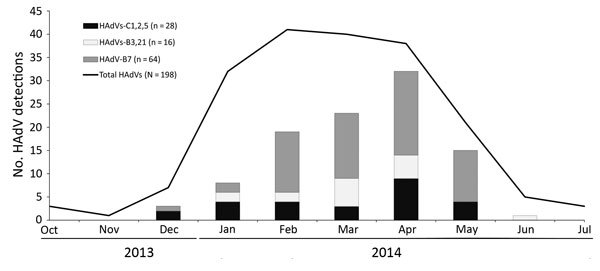
Description:Several human adenoviruses (HAdVs) can cause respiratory infections, some severe. HAdV-B7, which can cause severe respiratory disease, has not been recently reported in the United States but is reemerging in Asia. During October 2013-July 2014, Oregon health authorities identified 198 persons with respiratory symptoms and an HAdV-positive respiratory tract specimen. Among 136 (69%) hospitalized persons, 31% were admitted to the intensive care unit and 18% required mechanical ventilation; 5 patients died. Molecular typing of 109 specimens showed that most (59%) were HAdV-B7, followed by HAdVs-C1, -C2, -C5 (26%); HAdVs-B3, -B21 (15%); and HAdV-E4 (1%). Molecular analysis of 7 HAdV-B7 isolates identified the virus as genome type d, a strain previously identified only among strains circulating in Asia. Patients with HAdV-B7 were significantly more likely than those without HAdV-B7 to be adults and to have longer hospital stays. HAdV-B7 might be reemerging in the United States, and clinicians should consider HAdV in persons with severe respiratory infection.
-
Subjects:
-
Source:Emerg Infect Dis. 22(6):1044-1051.
-
Pubmed ID:27191834
-
Pubmed Central ID:PMC4880082
-
Document Type:
-
Volume:22
-
Issue:6
-
Collection(s):
-
Main Document Checksum:urn:sha256:26bfd62c5eac68d51eeee0338b4b692162df7ca0b0f72e430863af78fef754f5
-
Download URL:
-
File Type:
 [PDF
- 1.76 MB
]
[PDF
- 1.76 MB
]
Supporting Files


ON THIS PAGE






CDC STACKS serves as an archival repository of CDC-published products including
scientific findings,
journal articles, guidelines, recommendations, or other public health information authored or
co-authored by CDC or funded partners.
As a repository, CDC STACKS retains documents in their original published format to ensure public access to scientific information.
As a repository, CDC STACKS retains documents in their original published format to ensure public access to scientific information.
You May Also Like
COLLECTION
Emerging Infectious Diseases