



αβ T Cells and a Mixed Th1/Th17 Response are Important in Organic Dust-Induced Airway Disease
Supporting Files

-
Jul 24 2012
-
File Language:
English
Details
-
Alternative Title:Ann Allergy Asthma Immunol
-
Personal Author:
-
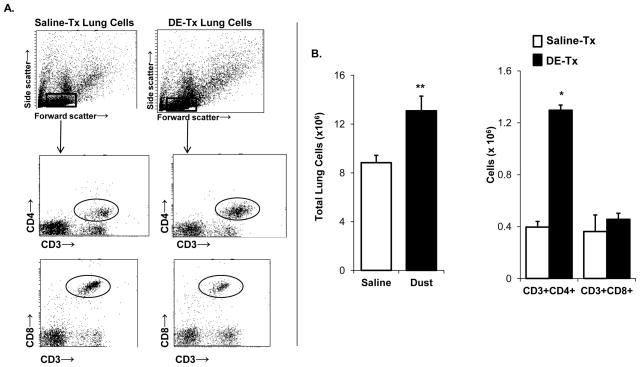
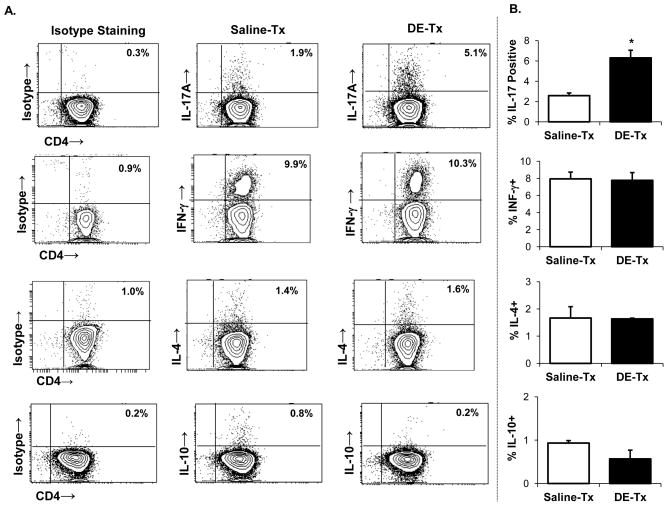
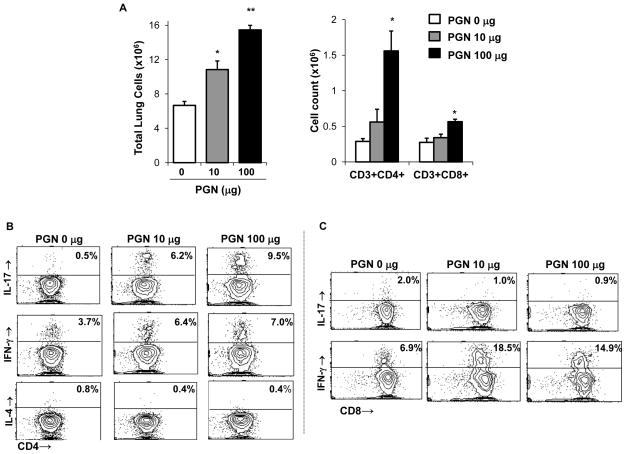
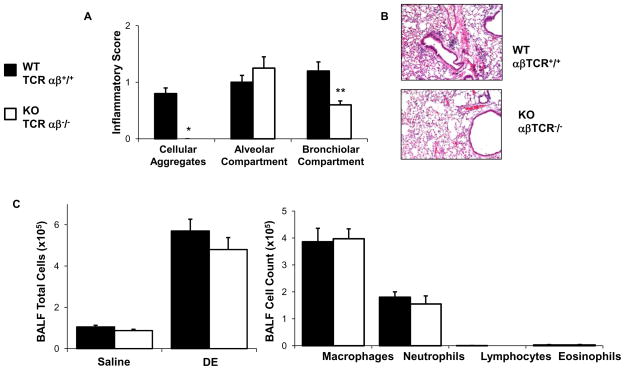
Description:Organic dust exposure in agricultural environments induces an inflammatory response that attenuates over time, yet repetitive dust exposures result in chronic lung diseases. Animal models resembling this chronic lung inflammatory response have been developed, yet the underlying cellular mechanisms are not well defined.|Because mice repetitively exposed to organic dust extracts (DE) display increased CD3+ T cell lung infiltrates, we sought to determine the phenotype and importance of these cells.|Mice received swine confinement DE repetitively for 3 weeks by established intranasal inhalation protocol. Studies were conducted with peptidoglycan (PGN) because it is a major DE component in large animal farming environments and has shared similar biologic effects with DE. Enumeration of T cells and intracellular cytokine profiles were conducted by flow cytometry techniques. Whole lung homogenate cytokines were analyzed by multiplex immunoassay. T cell receptor (TCR) αβ knockouts were used to determine the functional importance of αβ-expressing T cells.|DE increased lung-associated CD3+CD4+ T cells and interleukin (IL)-17 (but not IL-4, interferon [IFN]-γ, IL-10) producing CD4+ T cells. PGN treatment resulted in increased IL-17 and IFN-γ producing CD4+ T cells and IFN-γ producing CD8+ T cells. Both DE and PGN augmented expression of cytokines associated with Th1 and Th17 polarization in lung homogenates. DE-induced lung mononuclear aggregates and bronchiolar compartment inflammation were significantly reduced in TCR knockout animals; however, neutrophil influx and alveolar compartment inflammation were not affected.|Studies demonstrated that DE and PGN exposure promote a Th1/Th17 lung microenvironment and that αβ-expressing T cells are important in mediating DE-induced lung pathologic conditions.
-
Subjects:
-
Source:Ann Allergy Asthma Immunol. 109(4):266-273.e2.
-
Pubmed ID:23010233
-
Pubmed Central ID:PMC4019222
-
Document Type:
-
Funding:1R01OH008539-01/OH/NIOSH CDC HHS/United States ; 3R01NS040730/NS/NINDS NIH HHS/United States ; 5U50 OH008085/OH/NIOSH CDC HHS/United States ; ES015522-03S1/ES/NIEHS NIH HHS/United States ; K08 ES015522/ES/NIEHS NIH HHS/United States ; K08 ES015522-01/ES/NIEHS NIH HHS/United States ; R01 ES019325/ES/NIEHS NIH HHS/United States ; R01 NS040730/NS/NINDS NIH HHS/United States
-
Volume:109
-
Issue:4
-
Collection(s):
-
Main Document Checksum:urn:sha256:be03c8920e6be4dc6690af35e690462f60160b9953a512a63a4c64342e08337a
-
Download URL:
-
File Type:
 [PDF
- 933.22 KB
]
[PDF
- 933.22 KB
]
Supporting Files


File Language:
English
 Was this page helpful?
 Found an issue?





CDC STACKS serves as an archival repository of CDC-published products including
scientific findings,
journal articles, guidelines, recommendations, or other public health information authored or
co-authored by CDC or funded partners.
As a repository, CDC STACKS retains documents in their original published format to ensure public access to scientific information.
As a repository, CDC STACKS retains documents in their original published format to ensure public access to scientific information.
You May Also Like
COLLECTION
CDC Public Access