


Estimating the geographic distribution of human Tanapox and potential reservoirs using ecological niche modeling
Supporting Files
Public Domain

-
Sep 25 2014
-
File Language:
English
Details
-
Alternative Title:Int J Health Geogr
-
Personal Author:
-
Description:Background
Tanapox virus is a zoonotic infection that causes mild febrile illness and one to several nodular skin lesions. The disease is endemic in parts of Africa. The principal reservoir for the virus that causes Tanapox is unknown, but has been hypothesized to be a non-human primate. This study employs ecological niche modeling (ENM) to determine areas of tropical Africa suitable for the occurrence of human Tanapox and a list of hypothetical reservoirs. The resultant niche model will be a useful tool to guide medical surveillance activities in the region.
Methods
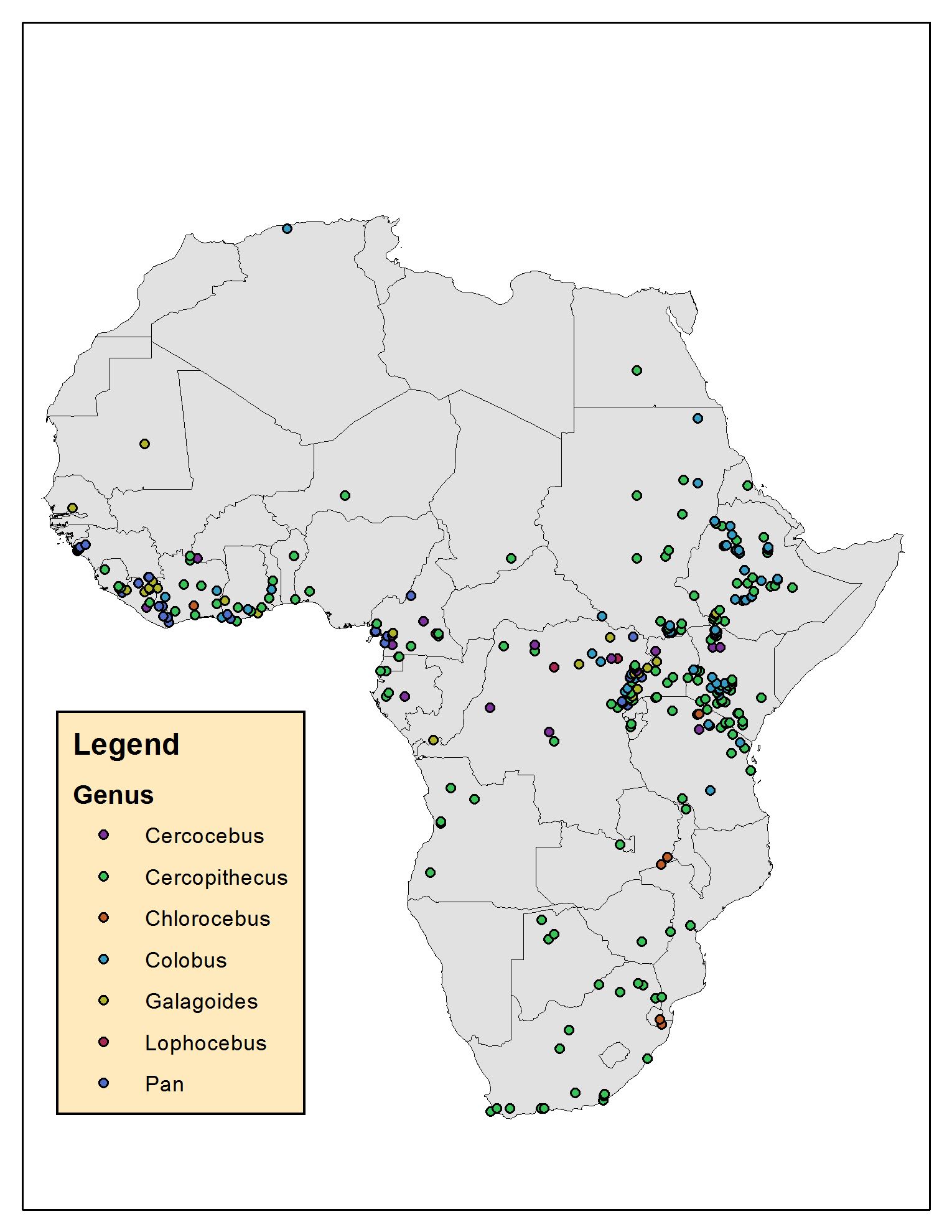
This study uses the Desktop GARP software to predict regions where human Tanapox might be expected to occur based on historical human case locations and environmental data. Additional modeling of primate species, using occurrence data from museum records was performed to determine suitable disease reservoirs.
Results
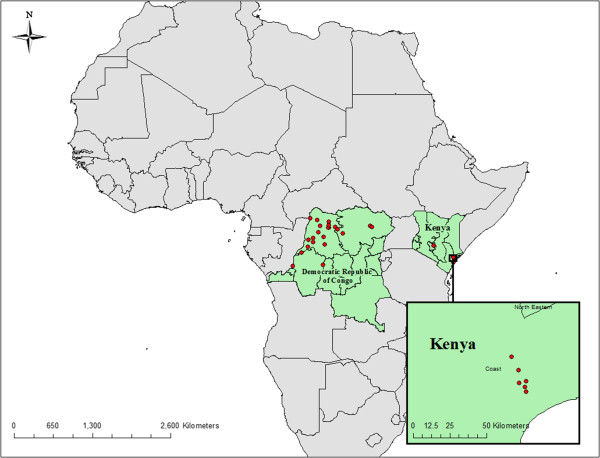
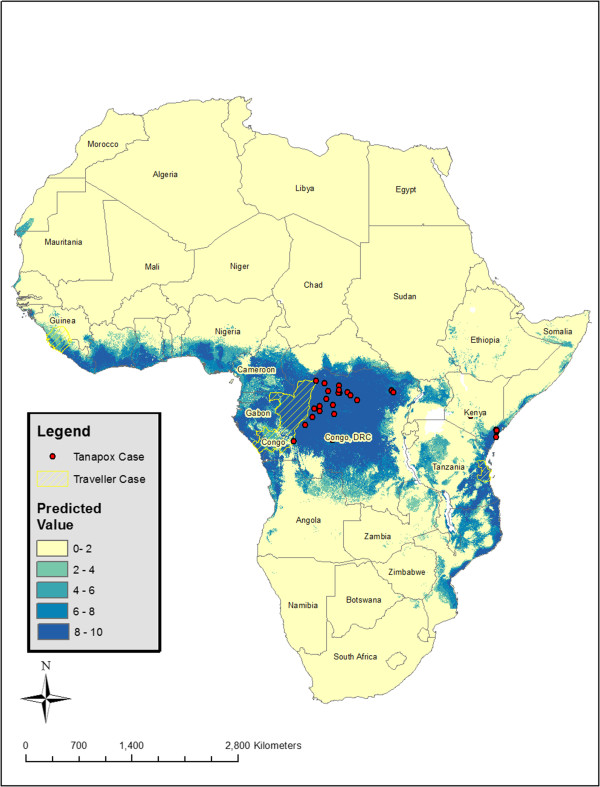
The final ENM predicts a potential distribution of Tanapox over much of equatorial Africa, exceeding the borders of Kenya and Democratic Republic of Congo (DRC) where it has been historically reported. Five genera of non-human primates were found to be potential reservoir taxa.
Conclusions
Validity testing suggests the model created here is robust (p < 0.04). Several genera of primates were identified as having ENMs overlapping with that of Tanapox and are suggested as potential reservoirs, mainly members of the Genus Cercopithecus. The ENM modeling technique has several limitations and results should be interpreted with caution. This study may increase knowledge and engage further research in this neglected disease.
Electronic supplementary material
The online version of this article (doi:10.1186/1476-072X-13-34) contains supplementary material, which is available to authorized users.
-
Subjects:
-
Source:Int J Health Geogr. 13(1).
-
Document Type:
-
Volume:13
-
Issue:1
-
Collection(s):
-
Main Document Checksum:urn:sha256:8e7bea1b2126ddc3dbf0ce285cc47f9b83e815c672d61ebf91f1bc3f93e929cc
-
Download URL:
-
File Type:
 [PDF
- 2.09 MB
]
[PDF
- 2.09 MB
]
Supporting Files


File Language:
English
ON THIS PAGE




CDC STACKS serves as an archival repository of CDC-published products including
scientific findings,
journal articles, guidelines, recommendations, or other public health information authored or
co-authored by CDC or funded partners.
As a repository, CDC STACKS retains documents in their original published format to ensure public access to scientific information.
As a repository, CDC STACKS retains documents in their original published format to ensure public access to scientific information.
You May Also Like
COLLECTION
CDC Public Access