



Characterization of Eptesipoxvirus, a novel poxvirus from a microchiropteran bat
Supporting Files

-
2017 ; 12-2017
-
Available in CDC Stacks on 2019-05-08T00:00:00Z
File Language:
English
Details
-
Alternative Title:Virus Genes
-
Personal Author:
-
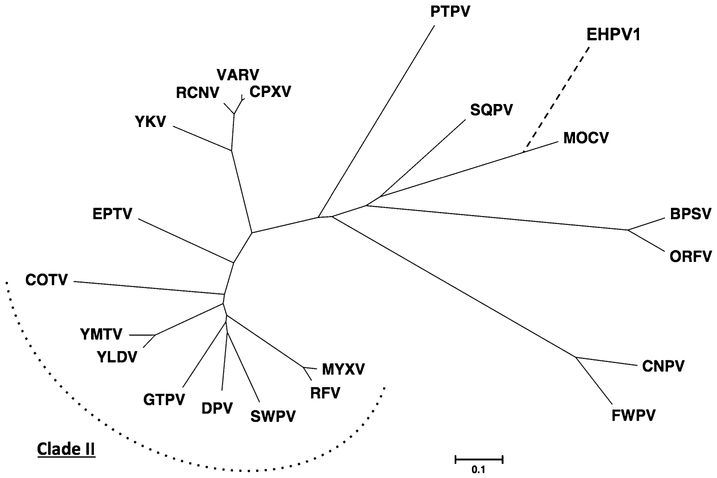
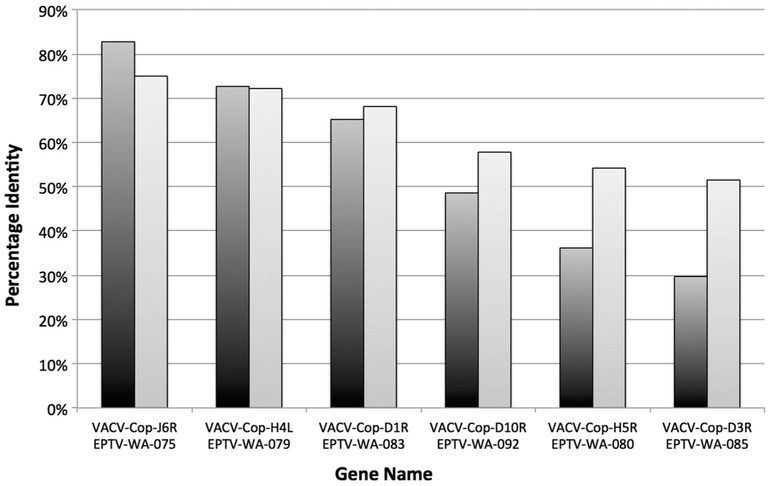
Description:The genome of Eptesipoxvirus (EPTV) is the first poxvirus genome isolated from a microbat. The 176,688 nt sequence, which is believed to encompass the complete coding region of the virus, is 67% A+T and is predicted to encode 191 genes. 11 of these genes have no counterpart in GenBank and are therefore unique to EPTV. The presence of a distantly related ortholog of Vaccinia virus F5L in EPTV uncovered a link with fragmented F5L orthologs in Molluscum contagiosum virus/squirrelpox and clade II viruses. Consistent with the unique position of EPTV approximately mid-point between the orthopoxviruses and the clade II viruses, EPTV has 11 genes that are specific to the orthopoxviruses and 13 genes that are typical, if not exclusive, to the clade II poxviruses. This mosaic nature of EPTV blurs the distinction between the old description of the orthopoxvirus and clade II groups. Genome annotation and characterization failed to find any common virulence genes shared with the other poxvirus isolated from bat (pteropoxvirus); however, EPTV encodes 3 genes that may have been transferred to or from deerpox and squirrelpox viruses; 2 of these, a putative endothelin-like protein and a MHC class I-like protein are likely to have immunomodulatory roles.
-
Subjects:
-
Keywords:
-
Source:Virus Genes. 53(6):856-867
-
Pubmed ID:28685222
-
Pubmed Central ID:PMC6504846
-
Document Type:
-
Funding:
-
Volume:53
-
Issue:6
-
Download URL:
-
File Type:
 [PDF - 522.68 KB]
 -
Collection(s):
-
Main Document Checksum:urn:sha-512:d5e14daed9b865bee4aec1617125786da1878c10ba140fb5806f10f362fe42d8fcacbee9c0606f72d514d7beb3e4b04594e5ab364fdf68879350b09a67c08843

Supporting Files


File Language:
English
 Was this page helpful?
 Found an issue?




CDC STACKS serves as an archival repository of CDC-published products including
scientific findings, journal articles, guidelines, recommendations, or other public health information authored or
co-authored by CDC or funded partners.
As a repository, CDC STACKS retains documents in their original published format to ensure public access to scientific information.
As a repository, CDC STACKS retains documents in their original published format to ensure public access to scientific information.
You May Also Like
COLLECTION
CDC Public Access