



Early Warning System for West Nile Virus Risk Areas, California, USA
Supporting Files

-
Aug 2011
File Language:
English
Details
-
Alternative Title:Emerg Infect Dis
-
Personal Author:
-
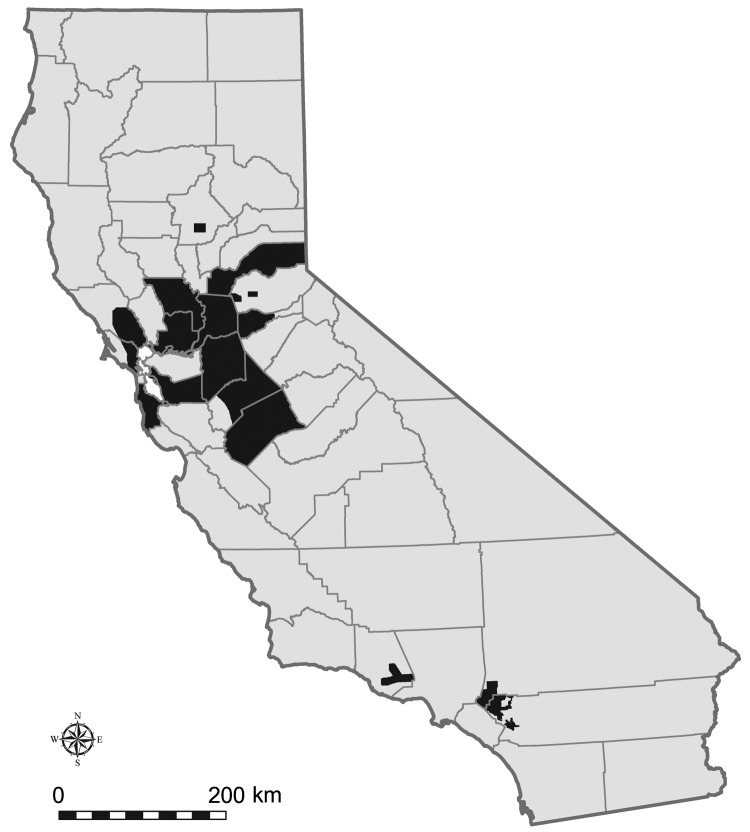
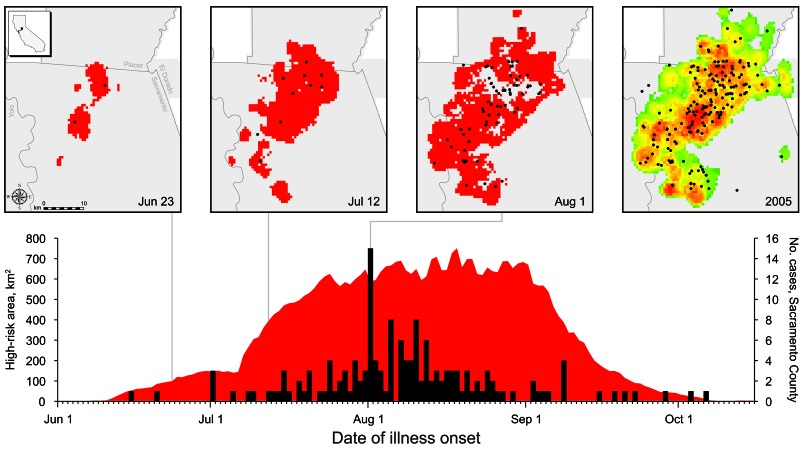
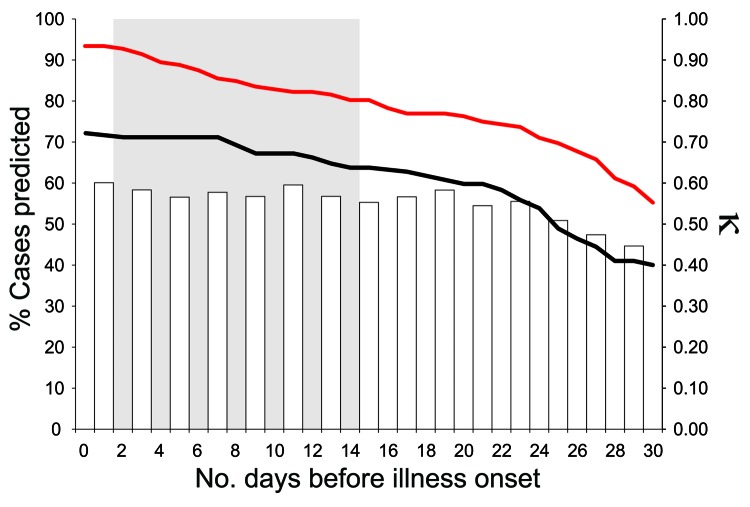
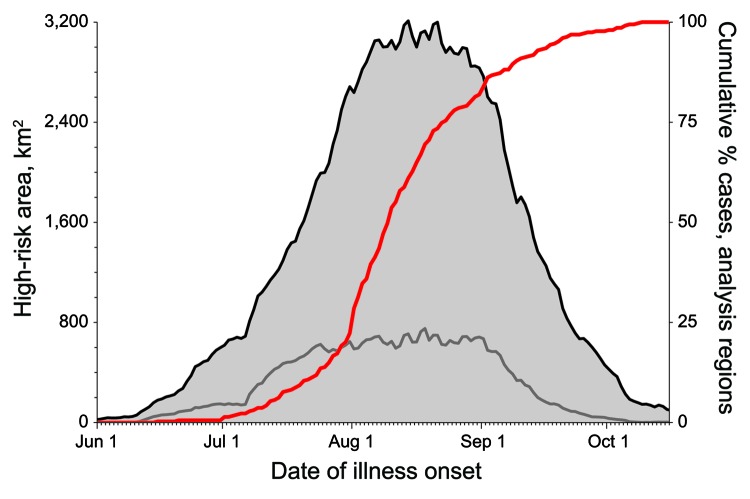
Description:The Dynamic Continuous-Area Space-Time (DYCAST) system is a biologically based spatiotemporal model that uses public reports of dead birds to identify areas at high risk for West Nile virus (WNV) transmission to humans. In 2005, during a statewide epidemic of WNV (880 cases), the California Department of Public Health prospectively implemented DYCAST over 32,517 km2 in California. Daily risk maps were made available online and used by local agencies to target public education campaigns, surveillance, and mosquito control. DYCAST had 80.8% sensitivity and 90.6% specificity for predicting human cases, and k analysis indicated moderate strength of chance-adjusted agreement for >4 weeks. High-risk grid cells (populations) were identified an average of 37.2 days before onset of human illness; relative risk for disease was >39× higher than for low-risk cells. Although prediction rates declined in subsequent years, results indicate DYCAST was a timely and effective early warning system during the severe 2005 epidemic.
-
Subjects:
-
Source:Emerg Infect Dis. 17(8):1445-1454.
-
Document Type:
-
Funding:
-
Place as Subject:
-
Location:
-
Volume:17
-
Issue:8
-
Download URL:
-
File Type:
 [PDF - 441.95 KB]
 -
Collection(s):
-
Main Document Checksum:urn:sha256:c3f47079b7b1a6eefeac95066fc974642cd5f5a2d58746b0bc0ca9814a941144
Supporting Files


File Language:
English
 Was this page helpful?
 Found an issue?





CDC STACKS serves as an archival repository of CDC-published products including
scientific findings, journal articles, guidelines, recommendations, or other public health information authored or
co-authored by CDC or funded partners.
As a repository, CDC STACKS retains documents in their original published format to ensure public access to scientific information.
As a repository, CDC STACKS retains documents in their original published format to ensure public access to scientific information.
You May Also Like
COLLECTION
Emerging Infectious Diseases