



Emergence of Unusual G6P[6] Rotaviruses in Children, Burkina Faso, 2009–2010
Supporting Files
Public Domain

-
Apr 2012
File Language:
English
Details
-
Alternative Title:Emerg Infect Dis
-
Personal Author:
-
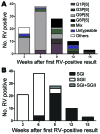
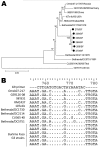
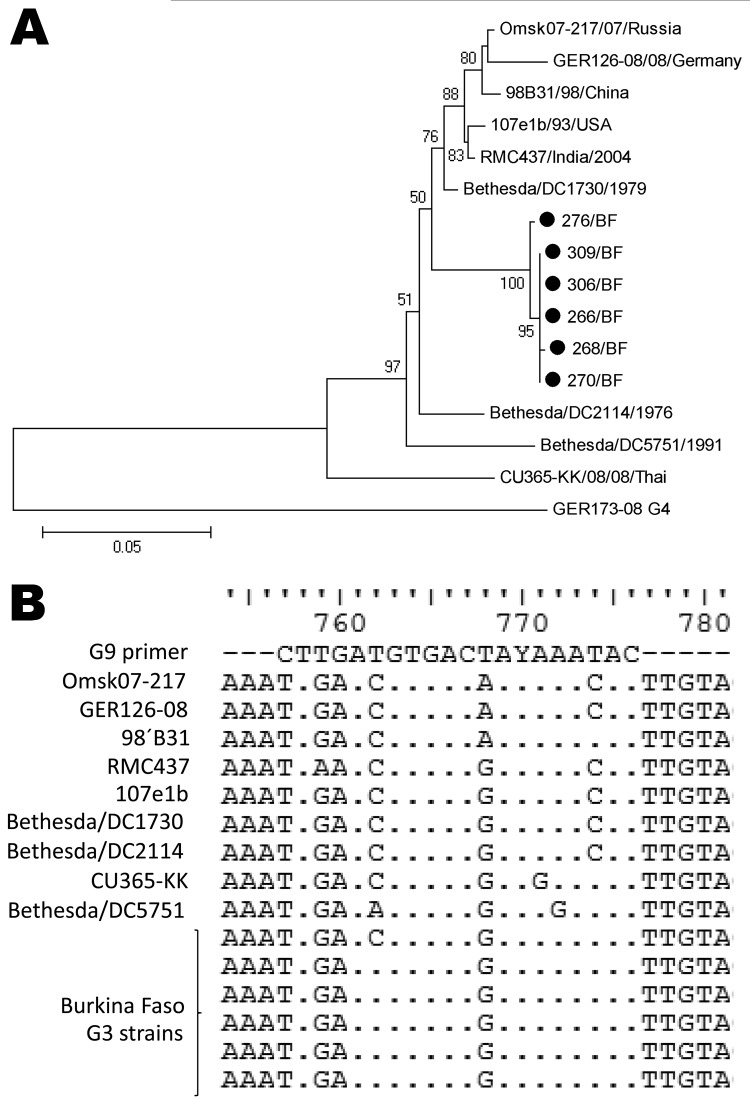
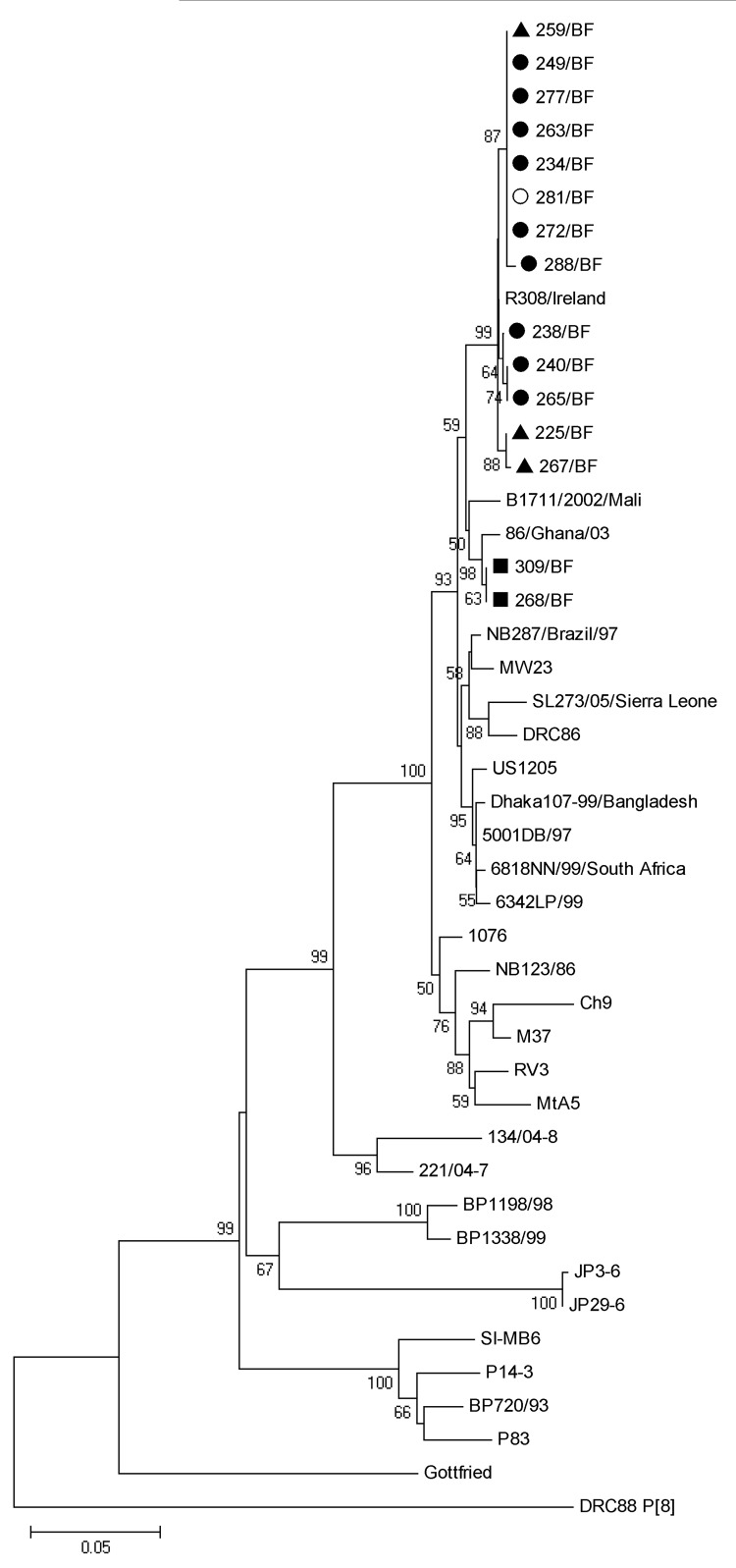
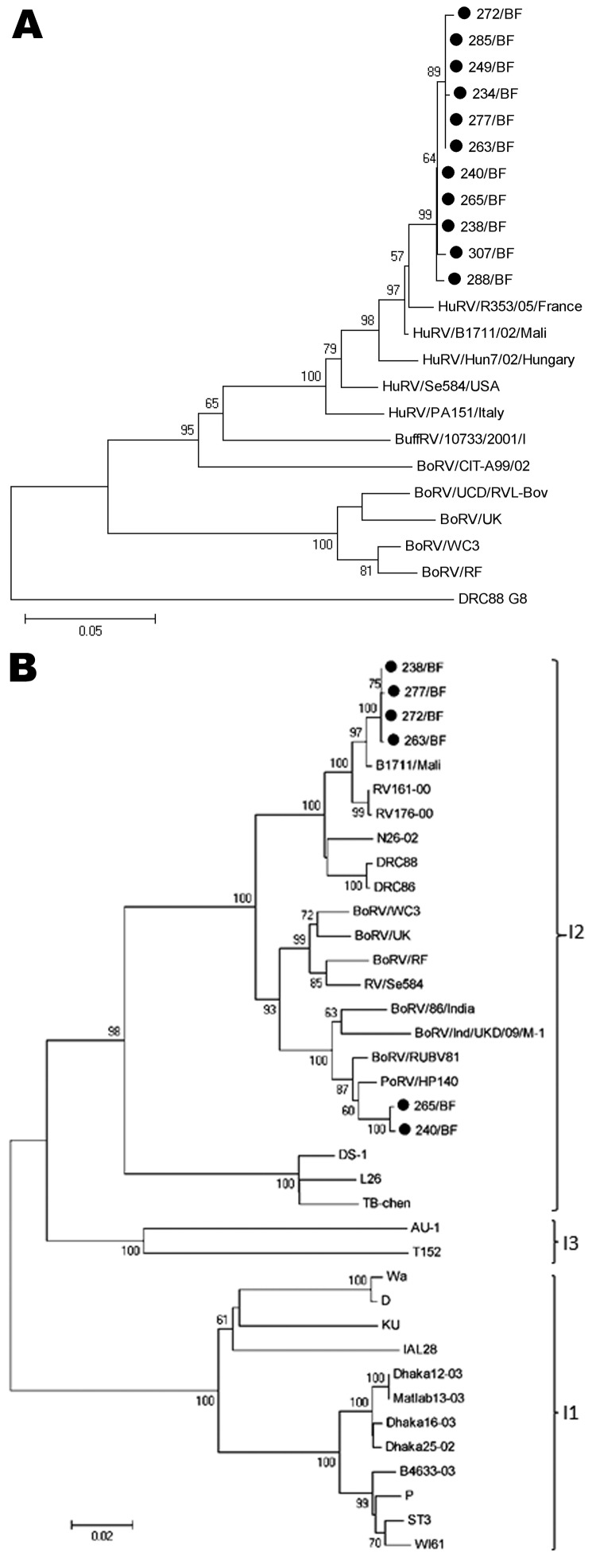
Description:To obtain more information about rotavirus (ROTAV) genotypes in Burkina Faso, we characterized 100 ROTAVs isolated from fecal samples of children with acute gastroenteritis in the capital city of Ouagadougou, during December 2009-March 2010. Of note, 13% of the ROTAV-positive samples, including those with mixed infections, were positive for the unusual G6 genotype ROTAV strain. The genotypes identified were G9P8, G6P6, G1P6, G3P6, G1P8, and G2P4. G9P8 subgroup (SG)II strains dominated during the beginning of the ROTAV season, but later in the season, other G types associated with P6 and SGI specificity emerged. This emergence was related to a shift in the overall age of infected children; ROTAV SGII infected younger children and induced more severe symptoms. The finding of a high incidence of G6P6 strains highlights the need for long-term surveillance of ROTAV strains in Burkina Faso, especially when ROTAV vaccination is being considered in several African countries.
-
Subjects:
- Research
- rotavirus
- G6P6 rotaviruses
- genotypes
- G genotype
- P genotype
- acute gastroenteritis
- emergence
- children
- surveillance
- viruses
- Base Sequence
- Child, Preschool
- Diarrhea
- Gastroenteritis
- Genes, Viral
- Genotype
- Humans
- Incidence
- Models, Genetic
- Molecular Sequence Data
- Molecular Typing
- Multiplex Polymerase Chain Reaction
- Phylogeny
- Reference Standards
- Rotavirus
- Rotavirus Infections
- Sequence Analysis, DNA
-
Source:Emerg Infect Dis. 18(4):589-597.
-
Document Type:
-
Place as Subject:
-
Location:
-
Volume:18
-
Issue:4
-
Download URL:
-
File Type:
 [PDF - 317.90 KB]
 -
Collection(s):
-
Main Document Checksum:urn:sha256:0bd5f126fa4e2350a8168a9409a15ab6e4533d89bda14013c2f7a73d1b4e83e6
Supporting Files


File Language:
English
 Was this page helpful?
 Found an issue?


CDC STACKS serves as an archival repository of CDC-published products including
scientific findings, journal articles, guidelines, recommendations, or other public health information authored or
co-authored by CDC or funded partners.
As a repository, CDC STACKS retains documents in their original published format to ensure public access to scientific information.
As a repository, CDC STACKS retains documents in their original published format to ensure public access to scientific information.
You May Also Like
COLLECTION
Emerging Infectious Diseases