



The South to North Variation of Norovirus Epidemics from 2006–07 to 2008–09 in Japan
Supporting Files
Public Domain

-
Aug 19 2013
File Language:
English
Details
-
Journal Article:PLoS One
-
Personal Author:
-
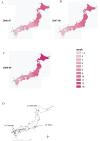
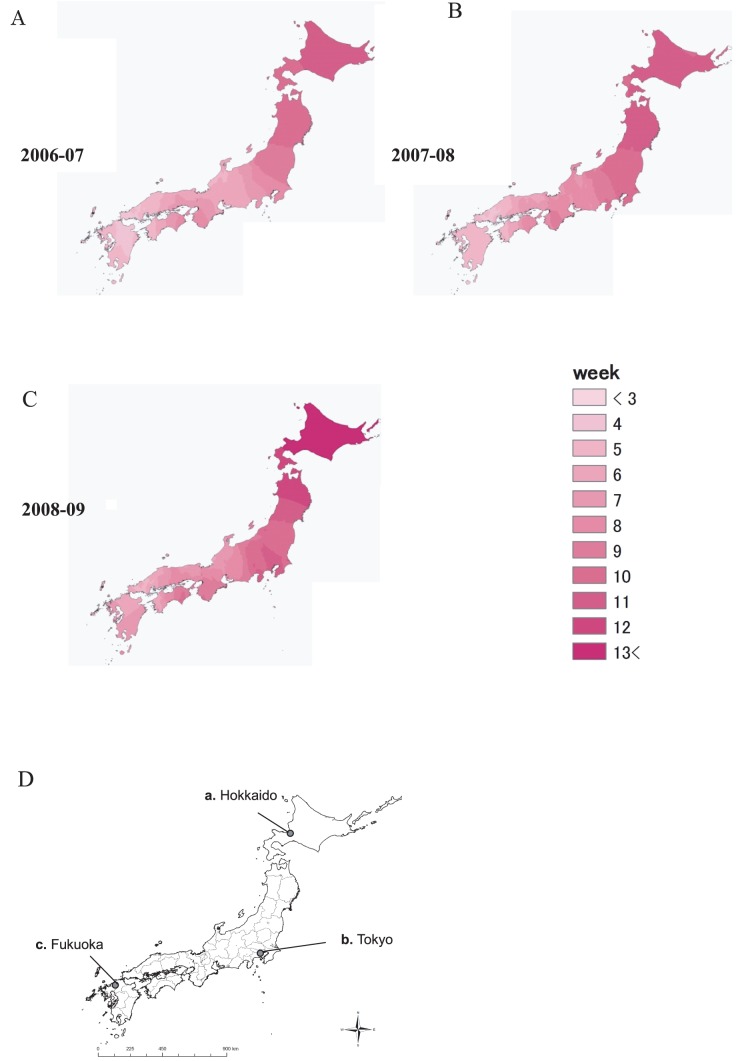
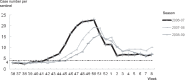
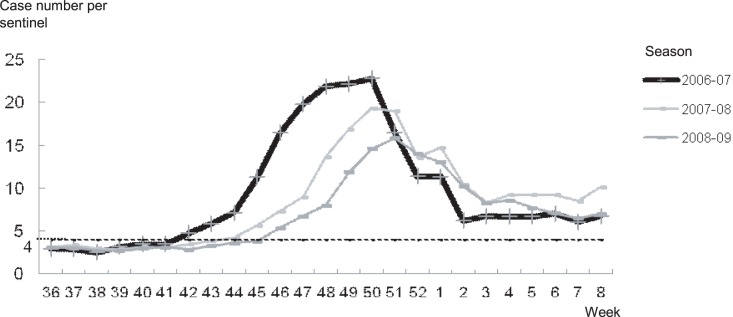
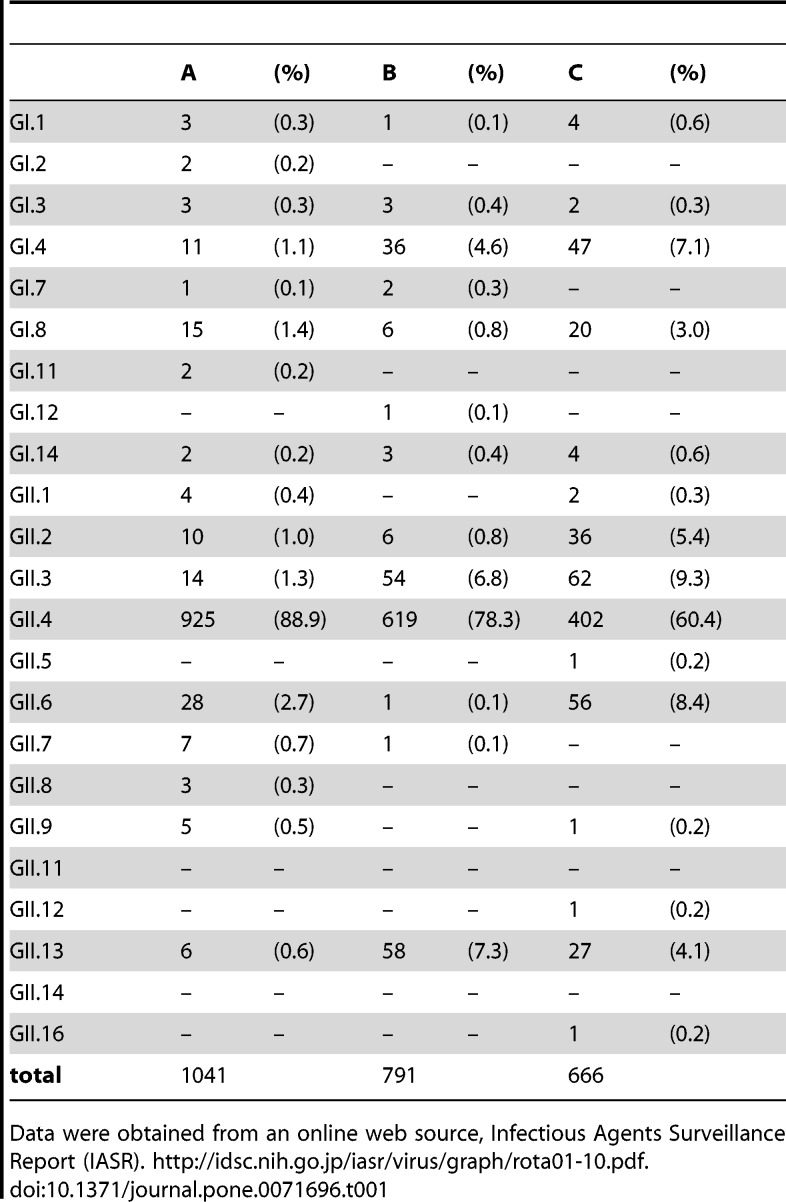
Description:Background ; Norovirus (NoV) is a major cause of gastroenteritis during the autumn and winter seasons in Japan as well as in other temperate climate regions. Most outbreaks are thought to occur by secondary attacks through person-to-person infection by fecal-oral route. Severe cases are found in young children or patients with chronic diseases. Clarifying the patterns of epidemic diffusion is important for considering effective monitoring and surveillance as well as possible prevention. ; Methods ; We considered the predominant viral genotype from the laboratory result obtained from Infectious Agents Surveillance Report (IASR) of National Institute of Infectious Diseases (NIID). We investigated the increase of NoV cases nationwide for the 2006–07 to 2008–09 seasons using sentinel gastroenteritis data collected from about 3000 pediatric clinics on National Epidemiological Surveillance of Infectious Diseases (NESID) acquired from the kriging method in the geographic information system (GIS). ; Results ; During these three seasons, the majority of the detected virus was GII.4, which ranged from 60.4 to 88.9%. The number of cases (per sentinel site) at the peak week was 22.81 in the 2006–07 season and it decreased in the following seasons. NoV cases began to increase earlier in the southern areas and gradually extended into the northern areas, similarly, over the seasons. The average period from when the increase of cases was detected in the southern area to when it reached the northern area was 12.7 weeks. ; Conclusion ; The decrease of the number of sentinel cases at the peak week may suggest the development of herd immunity after a period of high prevalence. Although the NoV epidemic is thought to be associated with cold weather, its cases first increased in the southern area with relatively warm temperature, indicating there are other climate factors involved. Geographic study using the sentinel data could enhance the monitoring and surveillance of and preparedness against epidemics.
-
Subjects:
-
Pubmed ID:23990975
-
Document Type:
-
Genre:
-
Place as Subject:
-
Volume:8
-
Issue:8
-
Citation:PLoS One. 2013; 8(8).
-
Download URL:
-
File Type:
 [PDF - 298.26 KB]
 -
Collection(s):
-
Main Document Checksum:urn:sha-512:79f27d230895474a63742d6887f662fd8317151676064431fae272f2acc225eea768f62128ffc0c8319da6de2c6ebdbd0c7ab04b67ce093780d91c119fd4b29a
Supporting Files


File Language:
English
 Was this page helpful?
 Found an issue?

CDC STACKS serves as an archival repository of CDC-published products including
scientific findings, journal articles, guidelines, recommendations, or other public health information authored or
co-authored by CDC or funded partners.
As a repository, CDC STACKS retains documents in their original published format to ensure public access to scientific information.
As a repository, CDC STACKS retains documents in their original published format to ensure public access to scientific information.
You May Also Like
COLLECTION
CDC Public Access