



Spike Protein Fusion Peptide and Feline Coronavirus Virulence
Supporting Files
Public Domain

-
Jul 2012
File Language:
English
Details
-
Alternative Title:Emerg Infect Dis
-
Personal Author:
-
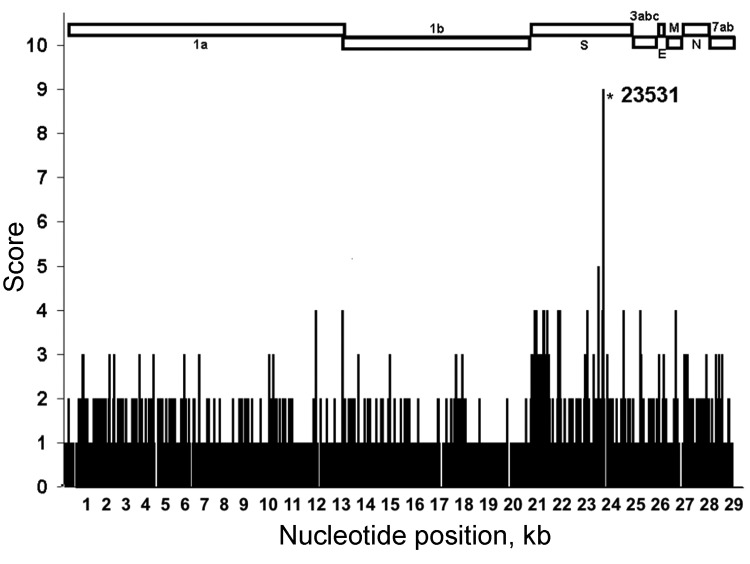
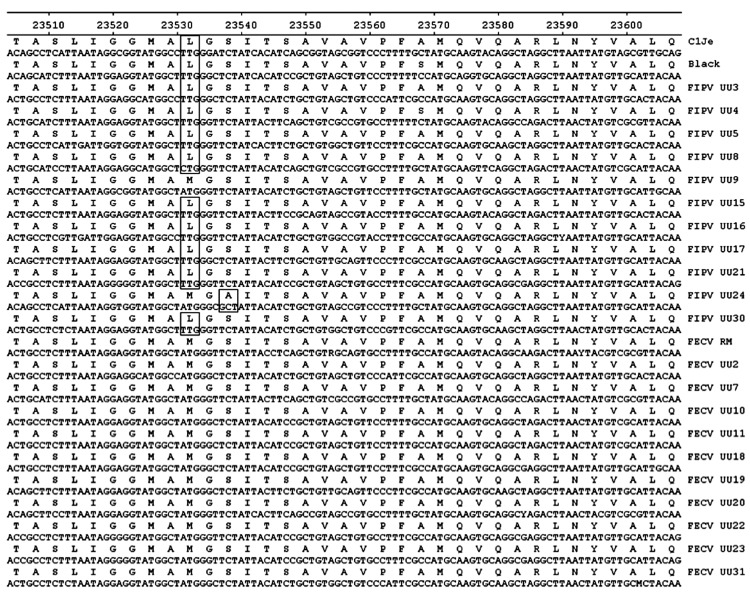
Description:Coronaviruses are well known for their potential to change their host or tissue tropism, resulting in unpredictable new diseases and changes in pathogenicity; severe acute respiratory syndrome and feline coronaviruses, respectively, are the most recognized examples. Feline coronaviruses occur as 2 pathotypes: nonvirulent feline enteric coronaviruses (FECVs), which replicate in intestinal epithelium cells, and lethal feline infectious peritonitis viruses (FIPVs), which replicate in macrophages. Evidence indicates that FIPV originates from FECV by mutation, but consistent distinguishing differences have not been established. We sequenced the full genome of 11 viruses of each pathotype and then focused on the single most distinctive site by additionally sequencing hundreds of viruses in that region. As a result, we identified 2 alternative amino acid differences in the putative fusion peptide of the spike protein that together distinguish FIPV from FECV in >95% of cases. By these and perhaps other mutations, the virus apparently acquires its macrophage tropism and spreads systemically.
-
Subjects:
- Amino Acid Sequence
- Animals
- Base Sequence
- Cats
- Coronavirus Infections
- Coronavirus, Feline
- Feline Infectious Peritonitis
- Genome, Viral
- Membrane Glycoproteins
- Molecular Sequence Data
- Mutation
- Peptides
- Recombinant Fusion Proteins
- Sequence Alignment
- Sequence Analysis, DNA
- Spike Glycoprotein, Coronavirus
- Viral Envelope Proteins
- Virulence
-
Source:Emerg Infect Dis. 18(7):1089-1095.
-
Document Type:
-
Volume:18
-
Issue:7
-
Download URL:
-
File Type:
 [PDF - 478.77 KB]
 -
Collection(s):
-
Main Document Checksum:urn:sha256:2f931a39563ca9311929a16c336ba356fbe993d04ea92cd60df9b52be21d08ae
Supporting Files


File Language:
English
 Was this page helpful?
 Found an issue?



CDC STACKS serves as an archival repository of CDC-published products including
scientific findings, journal articles, guidelines, recommendations, or other public health information authored or
co-authored by CDC or funded partners.
As a repository, CDC STACKS retains documents in their original published format to ensure public access to scientific information.
As a repository, CDC STACKS retains documents in their original published format to ensure public access to scientific information.
You May Also Like
COLLECTION
Emerging Infectious Diseases