



Influenza Outbreaks during World Youth Day 2008 Mass Gathering
Supporting Files
Public Domain

-
May 2010
File Language:
English
Details
-
Alternative Title:Emerg Infect Dis
-
Personal Author:
-
Corporate Authors:
-
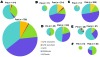
Description:Influenza outbreaks during mass gatherings have been rarely described, and detailed virologic assessment is lacking. An influenza outbreak occurred during World Youth Day in Sydney, Australia, July 2008 (WYD2008). We assessed epidemiologic data and respiratory samples collected from attendees who sought treatment for influenza-like illness at emergency clinics in Sydney during this outbreak. Isolated influenza viruses were compared with seasonal influenza viruses from the 2008 influenza season. From 100 infected attendees, numerous strains were identified: oseltamivir-resistant influenza A (H1N1) viruses, oseltamivir-sensitive influenza A (H1N1) viruses, influenza A (H3N2) viruses, and strains from both influenza B lineages (B/Florida/4/2006-like and B/Malaysia/2506/2004-like). Novel viruses were introduced, and pre-WYD2008 seasonal viruses were amplified. Viruses isolated at mass gatherings can have substantial, complex, and unpredictable effects on community influenza activity. Greater flexibility by public health authorities and hospitals is required to appropriately manage and contain these outbreaks.
-
Subjects:
- Adolescent
- Adult
- Aged
- Child
- Disease Outbreaks
- Female
- Hemagglutinin Glycoproteins, Influenza Virus
- Holidays
- Humans
- Influenza A Virus, H1N1 Subtype
- Influenza A Virus, H3N2 Subtype
- Influenza B Virus
- Influenza, Human
- Male
- Middle Aged
- Neuraminidase
- Orthomyxoviridae
- Phylogeny
- Public Health
- Respiratory System
- Young Adult
-
Source:Emerg Infect Dis. 16(5):809-815.
-
Document Type:
-
Place as Subject:
-
Volume:16
-
Issue:5
-
Download URL:
-
File Type:
 [PDF - 304.10 KB]
 -
Collection(s):
-
Main Document Checksum:urn:sha256:1f00ec1c67b247d1457df4694e8c7b7c7b90b95bba9b108489fec93547f7e6b2
Supporting Files


File Language:
English
 Was this page helpful?
 Found an issue?






CDC STACKS serves as an archival repository of CDC-published products including
scientific findings, journal articles, guidelines, recommendations, or other public health information authored or
co-authored by CDC or funded partners.
As a repository, CDC STACKS retains documents in their original published format to ensure public access to scientific information.
As a repository, CDC STACKS retains documents in their original published format to ensure public access to scientific information.
You May Also Like
COLLECTION
Emerging Infectious Diseases