



Receipt of Guideline-Concordant Care is Associated with Improved Survival in Patients with Osteosarcoma in California: a Population-Based Analysis
Supporting Files

-
8-2024
File Language:
English
Details
-
Alternative Title:JCO Oncol Pract
-
Personal Author:Abrahão, Renata
 ;
Keegan, Theresa H.M.
;
Maguire, Frances B.
;
Li, Qian
;
Malogolowkin, Marcio H.
;
Wong, Samantha
;
Thorpe, Steven W.
;
Carr-Asher, Janai R.
;
Midboe, Amanda M.
;
Randall, Lor L.
;
Alvarez, Elysia M.
;
Keegan, Theresa H.M.
;
Maguire, Frances B.
;
Li, Qian
;
Malogolowkin, Marcio H.
;
Wong, Samantha
;
Thorpe, Steven W.
;
Carr-Asher, Janai R.
;
Midboe, Amanda M.
;
Randall, Lor L.
;
Alvarez, Elysia M.
-
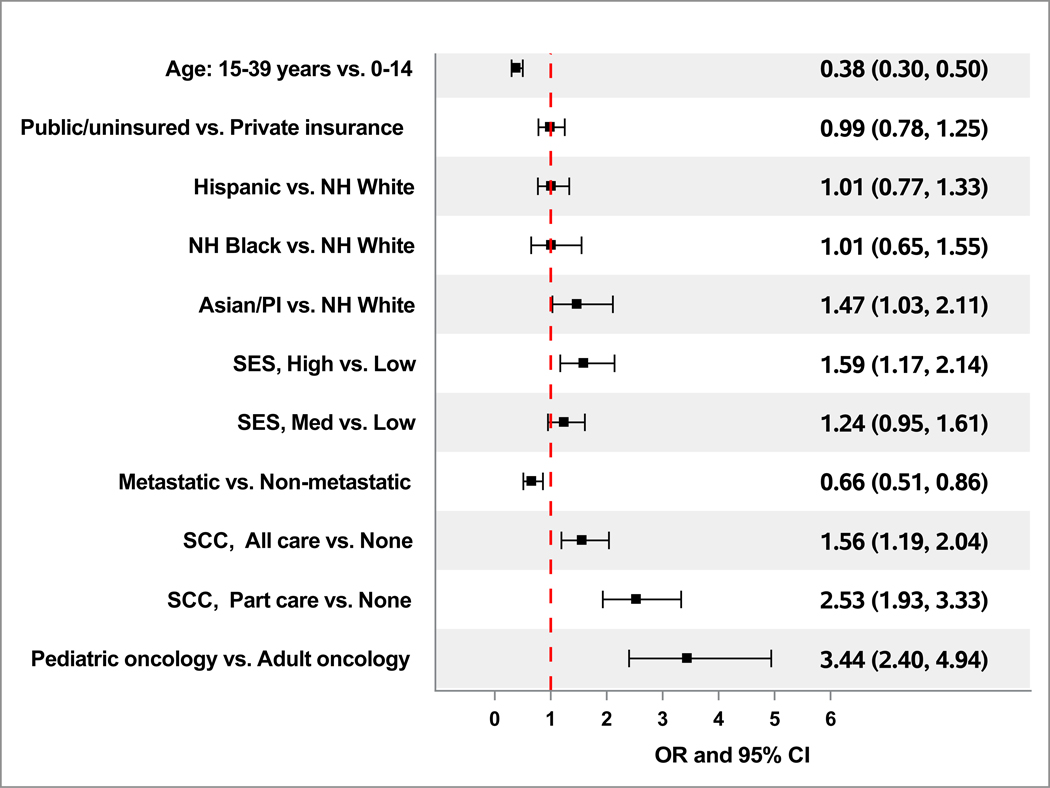
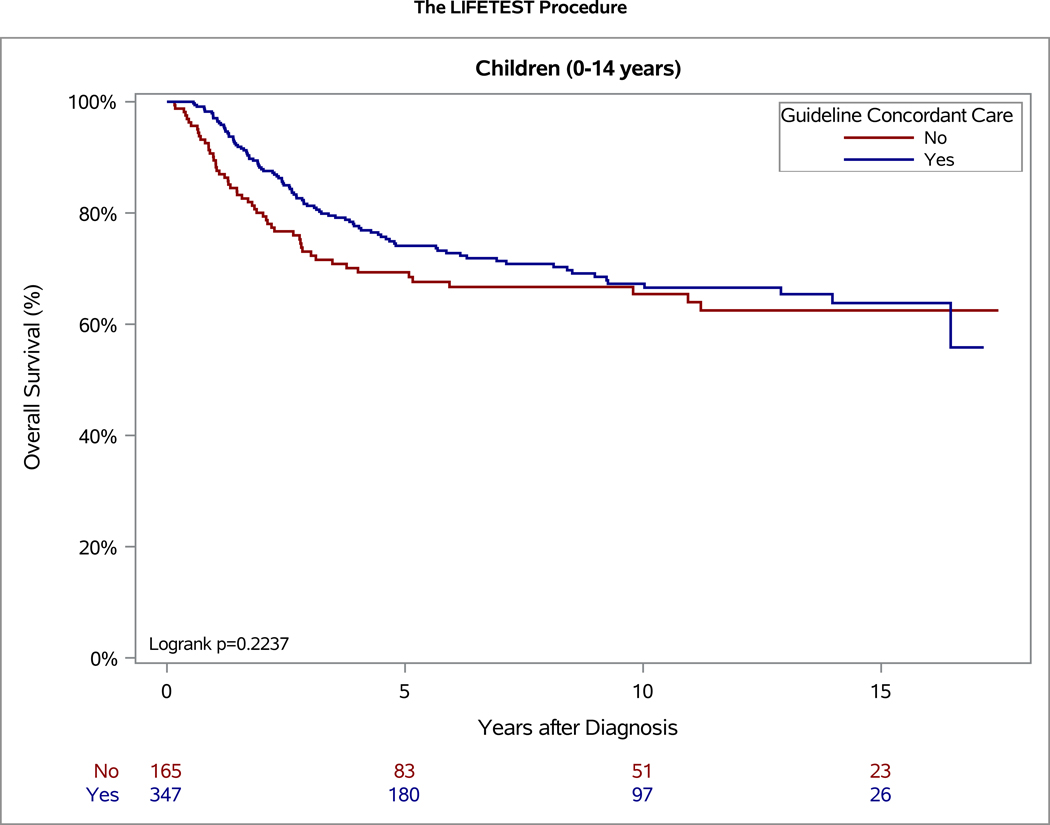
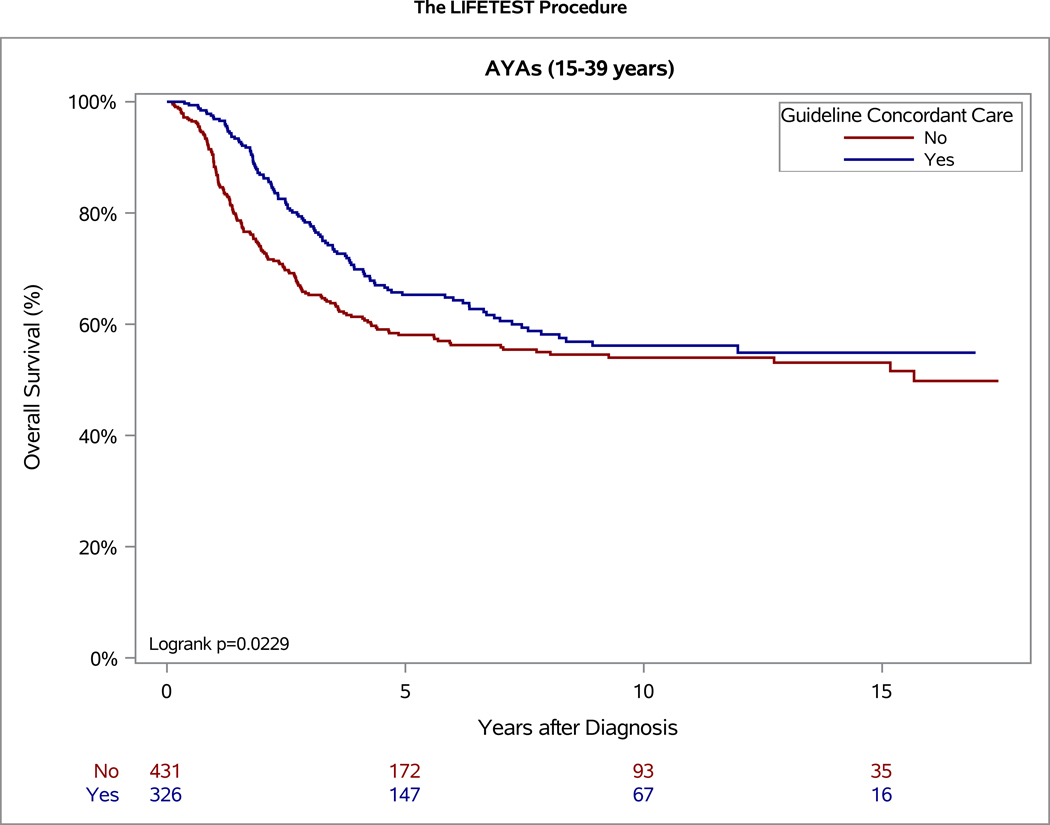
Description:PURPOSE ; To examine the relationship between guideline-concordant care (GCC) based on national clinical practice guidelines and survival in children (0–14 years), adolescents and young adults (AYAs, 15–39 years), and adults (≥40 years) with osteosarcoma; and to identify sociodemographic and clinical factors associated with receipt of GCC and survival. ; METHODS ; We used data from the California Cancer Registry (CCR) on patients diagnosed with osteosarcoma during 2004–2019, with detailed treatment information extracted from the CCR text fields, including chemotherapy regimens. Multivariable logistic and Cox proportional hazard regression were used for statistical analyses. ; RESULTS ; Of 1,716 patients, only 47% received GCC, with variation by age at diagnosis: 67% of children, 43% of AYAs, and 30% of adults. In multivariable models, patients who received part or all care (vs none) at specialized cancer centers were more likely to receive GCC. AYAs and adults were less likely to receive GCC than children ((Odds Ratio (OR)=0.38, 95% Confidence Interval (CI) 0.30–0.50 and OR=0.40, CI 0.28–0.56, respectively). In a model excluding adults, patients treated by pediatric (vs medical) oncologists were more likely to receive GCC (OR=3.44, CI 2.40–4.94). Patients with metastatic osteosarcoma at diagnosis who did not receive GCC had a greater hazard of death (Hazard Ratio (HR)=2.02, CI 1.55–2.63), but no statistical differences were found in those diagnosed at earlier stages (HR=1.15, CI 0.92–1.43). ; CONCLUSIONS ; GCC was associated with improved survival in patients with metastatic osteosarcoma in California. However, we found disparities in the delivery of GCC, highlighting the need for target interventions to improve delivery of GCC in this patient population.
-
Subjects:
-
Keywords:
-
Source:JCO Oncol Pract. 20(8):1064-1074
-
DOI:
-
Pubmed ID:38381995
-
Pubmed Central ID:PMC11747934
-
Document Type:
-
Funding:HHSN261201800009C/CA/NCI NIH HHSUnited States/ ; NU58DP006344/DP/NCCDPHP CDC HHSUnited States/ ; HHSN261201800015I/CA/NCI NIH HHSUnited States/ ; HHSN261201800032I/CA/NCI NIH HHSUnited States/ ; HHSN261201800015C/CA/NCI NIH HHSUnited States/ ; HHSN261201800009I/CA/NCI NIH HHSUnited States/ ; HHSN261201800032C/CA/NCI NIH HHSUnited States/ ; P30 CA093373/CA/NCI NIH HHSUnited States/
-
Volume:20
-
Issue:8
-
Download URL:
-
File Type:
 [PDF - 702.97 KB]
 -
Collection(s):
-
Main Document Checksum:urn:sha-512:f657397b1fe88e1ba2532eb56d4a23fa373226b832f001532a092153505290eaea1c220dd0ceebf1cd2e11d0feac36755349bb06d05ff3a678cdbac1f6611cbb
Supporting Files


File Language:
English
 Was this page helpful?
 Found an issue?

CDC STACKS serves as an archival repository of CDC-published products including
scientific findings, journal articles, guidelines, recommendations, or other public health information authored or
co-authored by CDC or funded partners.
As a repository, CDC STACKS retains documents in their original published format to ensure public access to scientific information.
As a repository, CDC STACKS retains documents in their original published format to ensure public access to scientific information.
You May Also Like
COLLECTION
CDC Public Access