



Bacterial Phenotype Variants in Group B Streptococcal Toxic Shock Syndrome1
Supporting Files
Public Domain

-
Feb 2009
Details
-
Alternative Title:Emerg Infect Dis
-
Personal Author:
-
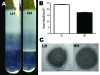
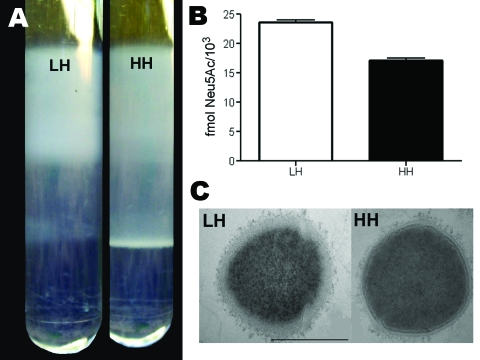
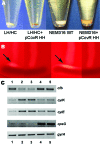
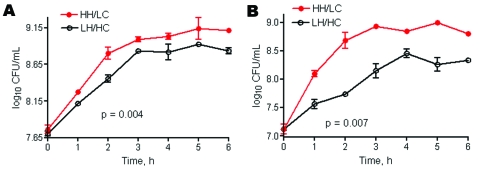
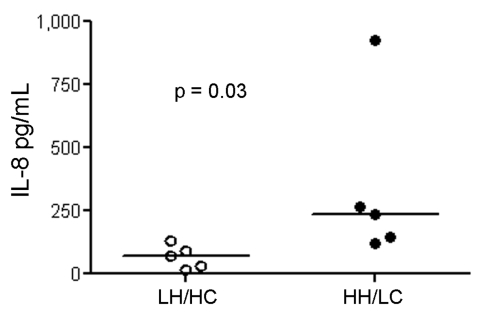
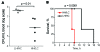
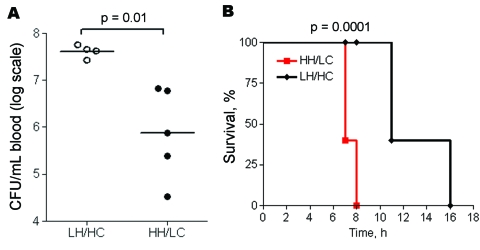
Description:We conducted genetic and functional analyses of isolates from a patient with group B streptococcal (GBS) necrotizing fasciitis and toxic shock syndrome. Tissue cultures simultaneously showed colonies with high hemolysis (HH) and low hemolysis (LH). Conversely, the HH and LH variants exhibited low capsule (LC) and high capsule (HC) expression, respectively. Molecular analysis demonstrated that the 2 GBS variants were of the same clonal origin. Genetic analysis found a 3-bp deletion in the covR gene of the HH/LC variant. Functionally, this isolate was associated with an increased growth rate in vitro and with higher interleukin-8 induction. However, in whole blood, opsonophagocytic and intracellular killing assays, the LH/HC phenotype demonstrated higher resistance to host phagocytic killing. In a murine model, LH/HC resulted in higher levels of bacteremia and increased host mortality rate. These findings demonstrate differences in GBS isolates of the same clonal origin but varying phenotypes.
-
Subjects:
- Research
- Group B streptococci
- toxic shock syndrome
- carotenoid pigment
- beta-hemolysin
- research
- Animals
- Bacterial Capsules
- Bacterial Proteins
- Fasciitis, Necrotizing
- Genetic Variation
- Hemolysis
- Humans
- Male
- Mice
- Middle Aged
- Neutrophils
- Opsonin Proteins
- Phagocytosis
- Phenotype
- Repressor Proteins
- Shock, Septic
- Streptococcal Infections
- Streptococcus agalactiae
-
Source:Emerg Infect Dis. 15(2):223-232.
-
Document Type:
-
Volume:15
-
Issue:2
-
Download URL:
-
File Type:
 [PDF - 570.75 KB]
 -
Collection(s):
-
Main Document Checksum:urn:sha256:209a7551acb32bddb3f43b0bb9972c573f2768fa380dff9b99734f30f271b978
Supporting Files


 Was this page helpful?
 Found an issue?





CDC STACKS serves as an archival repository of CDC-published products including
scientific findings, journal articles, guidelines, recommendations, or other public health information authored or
co-authored by CDC or funded partners.
As a repository, CDC STACKS retains documents in their original published format to ensure public access to scientific information.
As a repository, CDC STACKS retains documents in their original published format to ensure public access to scientific information.
You May Also Like
COLLECTION
Emerging Infectious Diseases