



Non-A Hepatitis B Virus Genotypes in Antenatal Clinics, United Kingdom
Supporting Files
Public Domain

-
Nov 2007
Details
-
Alternative Title:Emerg Infect Dis
-
Personal Author:
-
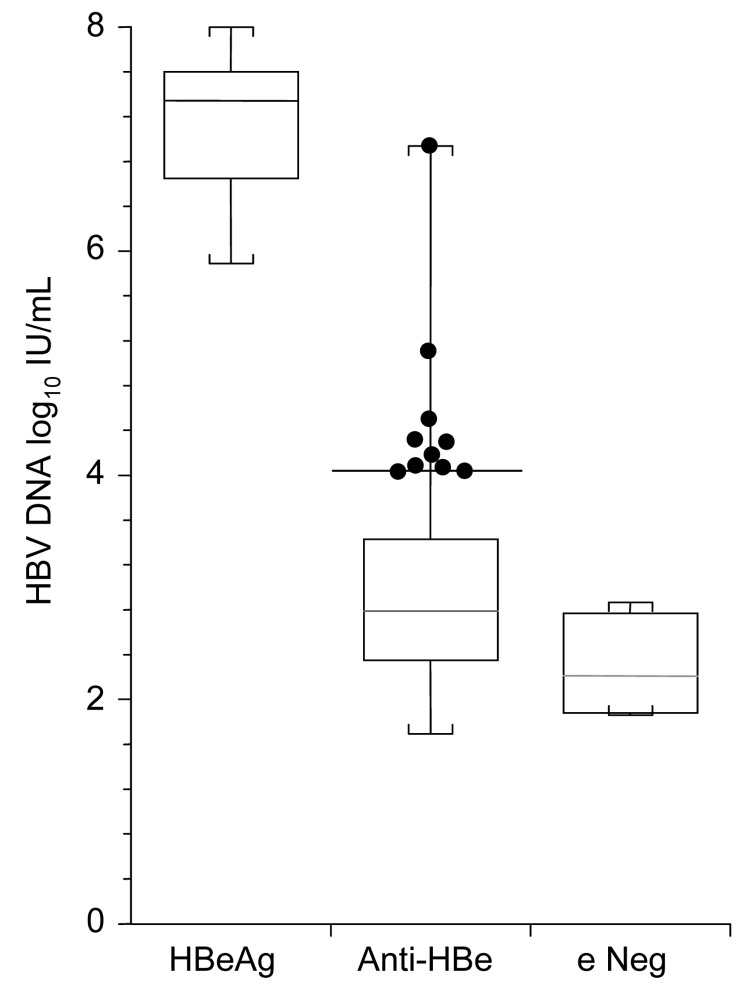
Description:In the United Kingdom, the National Screening Programme for identification of hepatitits B virus (HBV) infection in pregnant women uses HBV e antigen (HBeAg) and antibody to HBeAg (anti-HBe) as markers of infectivity to determine use of immunoglobulin for hepatitis B. Serum samples from 114 HBV-infected women were analyzed. Viral loads correlated with HBeAg/anti-HBe status and viral genotypes. Among 95 mothers whose serum contained anti-HBe, viral loads ranged between undetectable and 8.6 x 10(6) IU/mL (median 228 IU/mL). Ten (10.5%) of these mothers had plasma viral loads >10(4) IU/mL; 6 were infected with genotype E and one each with genotypes A, B, C, and D. All viruses had precore stop codon or basal core promoter mutations. Preponderance of genotypes other than A among antenatal mothers in the United Kingdom reflects increasing globalization and trends in immigration. HBeAg serostatus is no longer sufficiently accurate for inferring potential infectivity of pregnant HBV carriers.
-
Subjects:
- Research
- Hepatitis B virus
- hepatitis B virus DNA
- hepatitis B virus e antigen
- antibody to hepatitis B virus e protein
- precore mutations
- basal core promoter
- HBV genotypes
- pregnancy
- research
- DNA, Viral
- Female
- Genotype
- Great Britain
- Hepatitis B
- Hepatitis B Antibodies
- Hepatitis B e Antigens
- Humans
- Infant, Newborn
- Phylogeny
- Polymerase Chain Reaction
- Pregnancy
- Pregnancy Complications, Infectious
- Viral Load
-
Source:Emerg Infect Dis. 13(11):1689-1693.
-
Document Type:
-
Volume:13
-
Issue:11
-
Download URL:
-
File Type:
 [PDF - 239.96 KB]
 -
Collection(s):
-
Main Document Checksum:urn:sha256:96d2d3551a39e05090d7435e619310b1ae5c52bf5bab1c49f72eb9099aee9ae9
Supporting Files


 Was this page helpful?
 Found an issue?


CDC STACKS serves as an archival repository of CDC-published products including
scientific findings, journal articles, guidelines, recommendations, or other public health information authored or
co-authored by CDC or funded partners.
As a repository, CDC STACKS retains documents in their original published format to ensure public access to scientific information.
As a repository, CDC STACKS retains documents in their original published format to ensure public access to scientific information.
You May Also Like
COLLECTION
Emerging Infectious Diseases