



Histologic Features and Immunodetection of African Tick-bite Fever Eschar
Supporting Files
Public Domain

-
Sep 2006
Details
-
Alternative Title:Emerg Infect Dis
-
Personal Author:
-
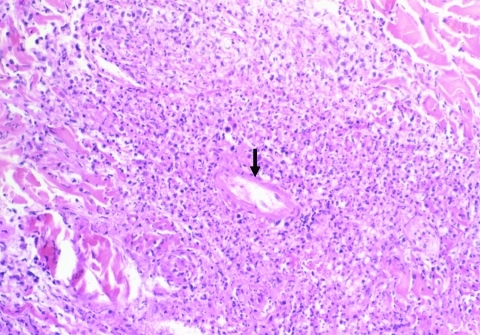
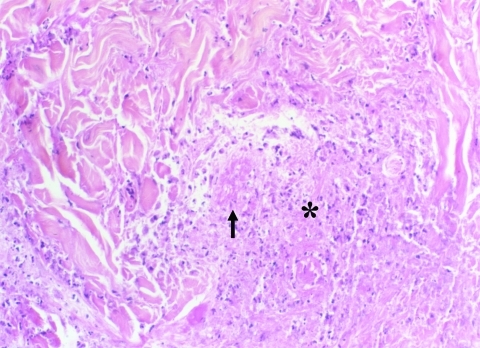
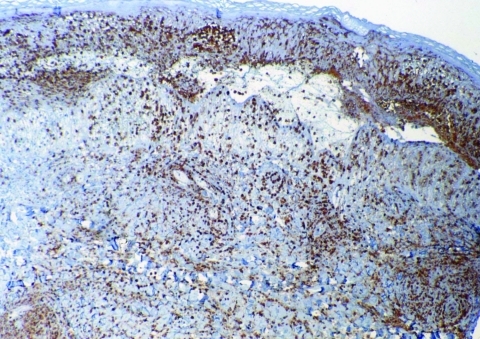
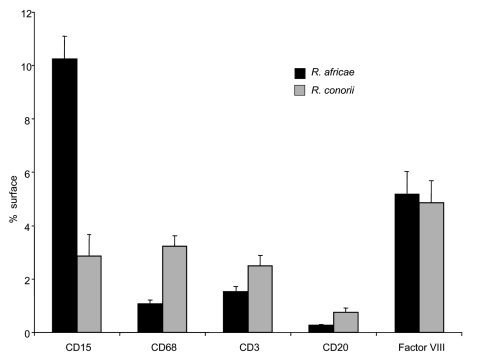
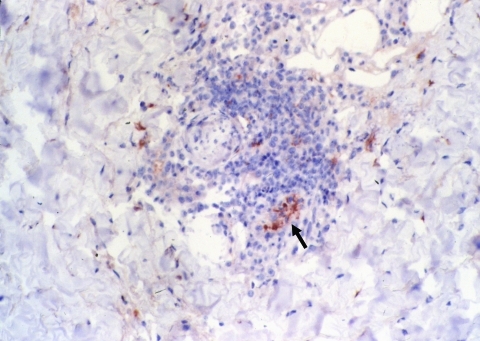
Description:African tick-bite fever (ATBF) is a rickettsiosis caused by Rickettsia africae. We describe histologic features and immunodetection of R. africae in cutaneous inoculation eschars from 8 patients with ATBF, which was diagnosed by culture or association of positive PCR detection and positive serologic results. We used quantitative image analysis to compare the pattern of inflammation of these eschars with those from Mediterranean spotted fever. We evaluated the diagnostic value of immunohistochemical techniques by using a monoclonal antibody to R. africae. ATBF eschars were histologically characterized by inflammation of vessels composed mainly of significantly more polymorphonuclear leukocytes than are found in cases of Mediterranean spotted fever (p < 0.05). Small amounts R. africae antigens were demonstrated by immunohistochemical examination in 6 of 8 patients with ATBF. Neutrophils in ATBF are a notable component of the host reaction, perhaps because ATBF is a milder disease than the other rickettsioses. Immunohistochemical detection of rickettsial antigens may be useful in diagnosing ATBF.
-
Subjects:
-
Source:Emerg Infect Dis. 12(9):1332-1337.
-
Document Type:
-
Volume:12
-
Issue:9
-
Download URL:
-
File Type:
 [PDF - 438.29 KB]
 -
Collection(s):
-
Main Document Checksum:urn:sha256:ab254f53dfc1cb858e0a7dc9fb783f7518908b1100b18a918ca0960e2f4acc4e
Supporting Files


 Was this page helpful?
 Found an issue?



CDC STACKS serves as an archival repository of CDC-published products including
scientific findings, journal articles, guidelines, recommendations, or other public health information authored or
co-authored by CDC or funded partners.
As a repository, CDC STACKS retains documents in their original published format to ensure public access to scientific information.
As a repository, CDC STACKS retains documents in their original published format to ensure public access to scientific information.
You May Also Like
COLLECTION
Emerging Infectious Diseases