



A Population-Based Study of the Utility of Screening for Tics and the Relative Contribution of Tics and Psychiatric Comorbidity to Academic and Social Impairment in Adolescents
Supporting Files

-
2023 ; 2023
-
Available in CDC Stacks on 2024-06-14T00:00:00Z

File Language:
English
Details
-
Alternative Title:Evid Based Pract Child Adolesc Ment Health
-
Personal Author:
-
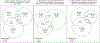
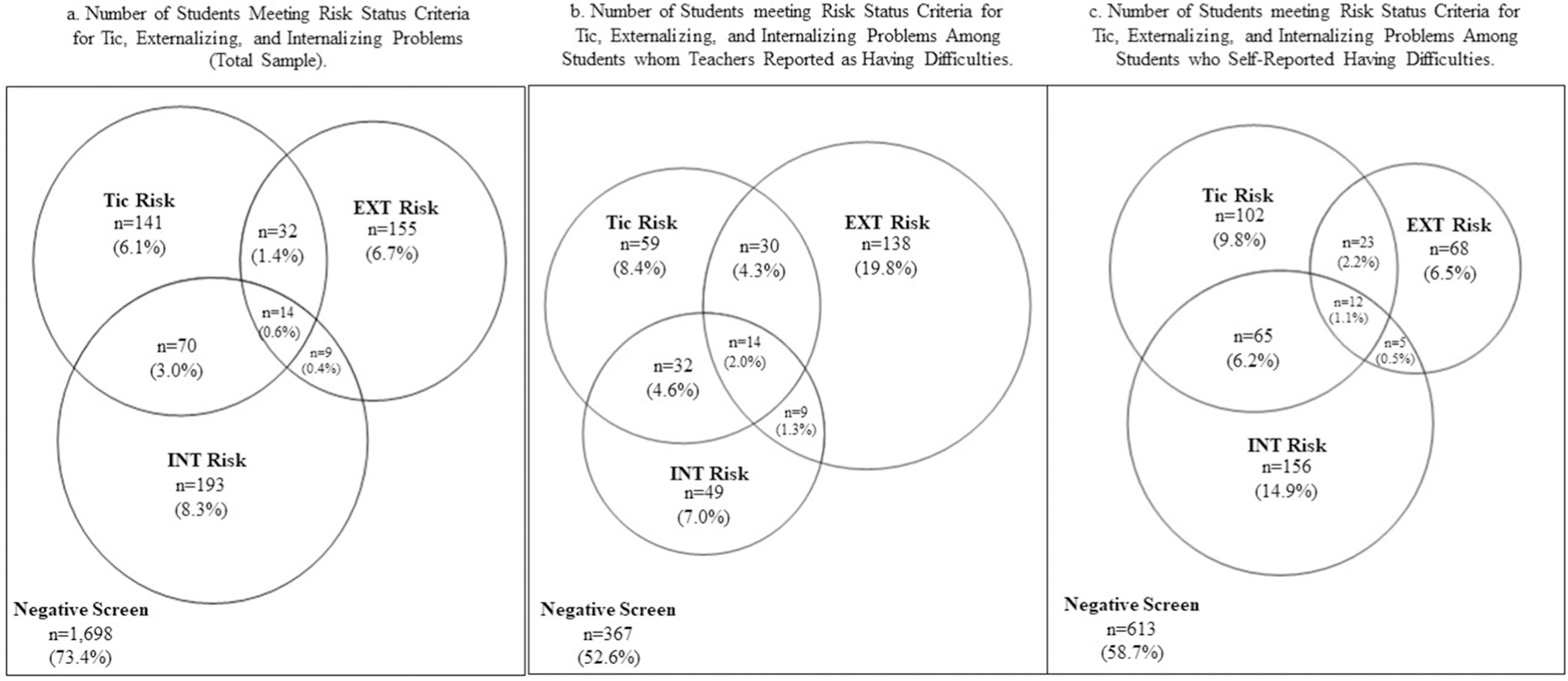
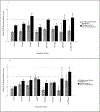
Description:This study examined the performance of a brief screening tool for tics in adolescents. Academic and social impairment in students by tic screen status and emotional/behavioral problem status were examined. Data were collected as part of an epidemiologic study, the Project to Learn about Youth - Mental Health. Participants were 2,312 secondary school students at the Ohio site (47.4% female; 94.4% non-Hispanic white) and their teachers. Students completed 6 items from the Motor tic, Obsessions and compulsions, Vocal tic Evaluation Survey (MOVES-6) and the Strengths and Difficulties Questionnaire (SDQ). Teachers completed the Proxy Report Questionnaire for tics and SDQ. Based on responses to the MOVES-6, 11.1% of students screened positive for tics. Internal consistency was adequate (α = 0.76); inter-rater consistency between teachers and students was low (0.03). Based on student self-report, those who screened positive for tics self-reported more academic and social impairment than students who screened negative for tics; teacher-report of impairment was similar between those with a positive or negative tic screen. Students who screened positive for tics | reported internalizing difficulties reported more academic and social impairment than students with only a positive tic screen. Teachers perceived those screening positive for tics | externalizing difficulties as the most socially impaired. In conclusion, a positive self-reported tic screen was associated with self-reported academic and social impairment. Findings reveal the independent contribution of tics to impairment, even when internalizing and externalizing problems are present, and the potential utility of a school-based screening for tics in adolescents.
-
Source:Evid Based Pract Child Adolesc Ment Health. 9(2):192-204
-
Pubmed ID:38883230
-
Pubmed Central ID:PMC11177595
-
Document Type:
-
Funding:
-
Volume:9
-
Issue:2
-
Download URL:
-
File Type:
 [PDF - 670.27 KB]
 -
Collection(s):
-
Main Document Checksum:urn:sha256:8b44dcb2de041f4549db53261097505bf536e1b6c232f546e16c16af4a6ffe85
Supporting Files


File Language:
English
 Was this page helpful?
 Found an issue?


CDC STACKS serves as an archival repository of CDC-published products including
scientific findings, journal articles, guidelines, recommendations, or other public health information authored or
co-authored by CDC or funded partners.
As a repository, CDC STACKS retains documents in their original published format to ensure public access to scientific information.
As a repository, CDC STACKS retains documents in their original published format to ensure public access to scientific information.