


Use of the CUSUM and Shewhart control chart methods to identify changes of public health significance using childhood blood lead surveillance data
Supporting Files

-
4-2020
-
File Language:
English
Details
-
Alternative Title:Environ Epidemiol
-
Personal Author:
-
Description:Background:
Local, state, and national childhood blood lead surveillance is based on healthcare providers and clinical laboratories reporting test results to public health departments. Increased interest in detecting blood lead level (BLL) patterns and changes of potential public health significance in a timely manner has highlighted the need for surveillance systems to rapidly detect and investigate these events.
Objective:
Decrease the time to detect changes in surveillance patterns by using an alerting algorithm developed and assessed through historical child blood lead surveillance data analysis.
Methods:
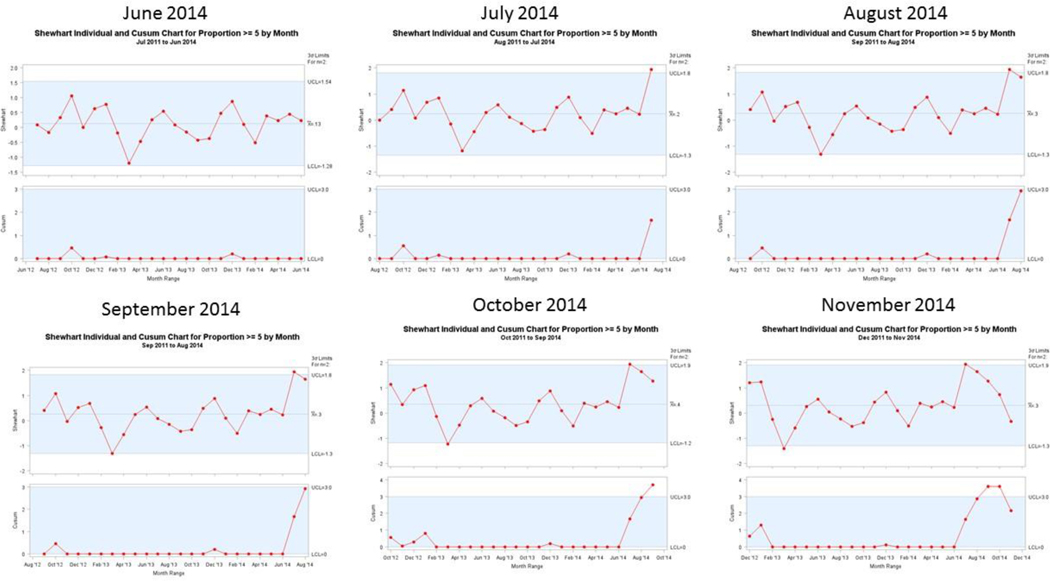
We applied geographic and temporal data-aggregation strategies on childhood blood lead surveillance data and developed a novel alerting algorithm. The alerting algorithm employed a modified cumulative summary/Shewhart algorithm, initially applied on 113 months of data from two jurisdictions with a known increase in the proportion of children <6 years of age with BLLs =>5 µg/dl.
Results:
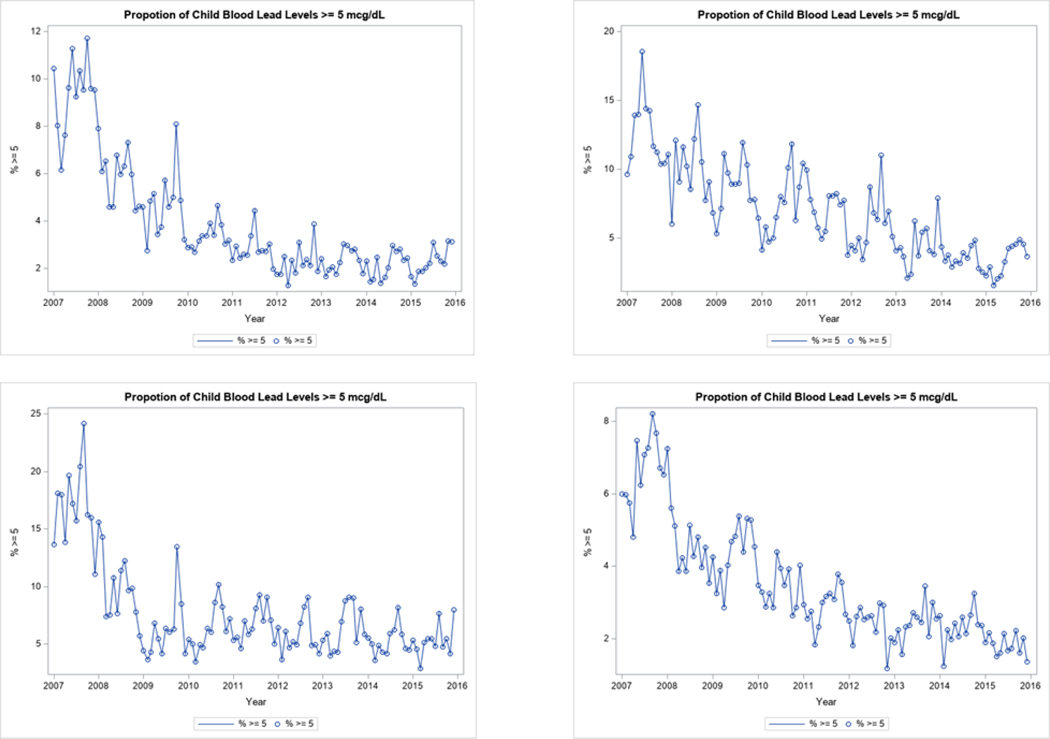
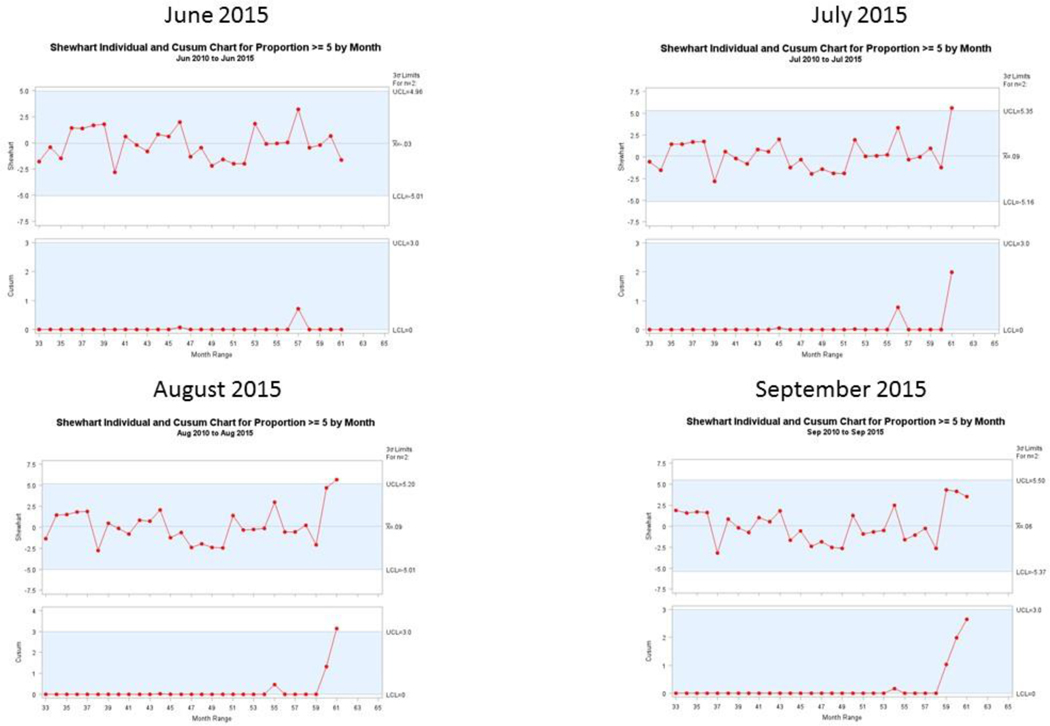
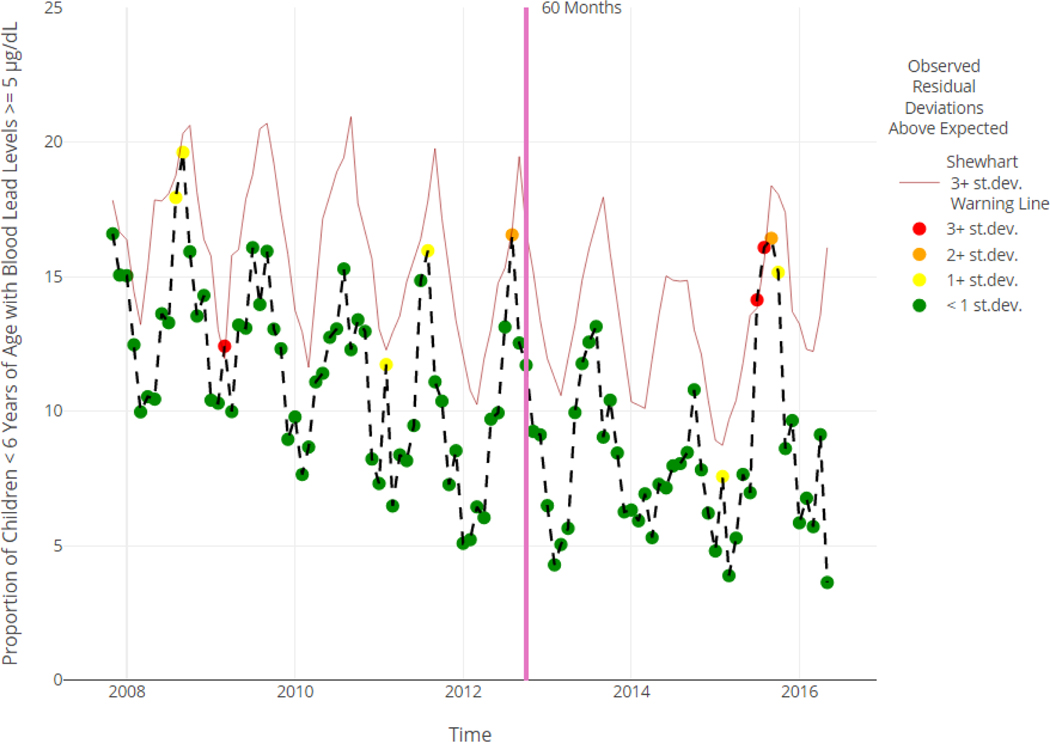
Alert signals retrospectively identified time periods in two jurisdictions where a known change in the proportion of children <6 years of age with BLLs >=5 µg/dl occurred. Additionally, we identified alert signals among six of the 18 (33%) randomly selected counties assessed where no previously known or suspected pattern changes existed.
Conclusion:
The modified cumulative summary/Shewhart algorithm provides a framework for enhanced blood lead surveillance by identifying changes in the proportion of children with BLLs >=5 µg/dl. The algorithm has the potential to alert public health officials to changes requiring further important public health investigation.
-
Keywords:
-
Source:Environ Epidemiol. 4(2)
-
Pubmed ID:32607462
-
Pubmed Central ID:PMC7319227
-
Document Type:
-
Funding:
-
Volume:4
-
Issue:2
-
Collection(s):
-
Main Document Checksum:urn:sha-512:dd72544686aa40641b56c556d05ebfd78c37d8755cd2356b1e491866a42d5d9bd21e70baa8014c8bda3cb81efb4e1197d5ba225d3ced08e8d2c0ba1e248b38e6
-
Download URL:
-
File Type:
 [PDF
- 687.92 KB
]
[PDF
- 687.92 KB
]
Supporting Files


File Language:
English
ON THIS PAGE

CDC STACKS serves as an archival repository of CDC-published products including
scientific findings,
journal articles, guidelines, recommendations, or other public health information authored or
co-authored by CDC or funded partners.
As a repository, CDC STACKS retains documents in their original published format to ensure public access to scientific information.
As a repository, CDC STACKS retains documents in their original published format to ensure public access to scientific information.
You May Also Like
COLLECTION
CDC Public Access