


Tobacco Smoke is a Major Source of Aromatic Amine Exposure in U.S. Adults: 2013–2014 National Health and Nutrition Examination Survey (NHANES)
Supporting Files

-
5 17 2023
-
File Language:
English
Details
-
Alternative Title:Cancer Epidemiol Biomarkers Prev
-
Personal Author:
-
Description:Background:
Cigarette smoking increases the risk of cancer, cardiovascular diseases, and premature death. Aromatic amines (AAs) are found in cigarette smoke and are well-established human bladder carcinogens.
Methods:
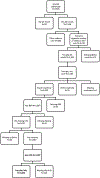
We measured and compared total urinary levels of 1-aminonaphthalene (1AMN), 2-aminonaphthalene (2AMN), and 4-aminobiphenyl (4ABP) in adults who smoked cigarettes exclusively and in adult nonusers of tobacco products from a nationally representative sample of non-institutionalized U.S. population in the 2013–2014 National Health and Nutrition Examination Survey.
Results:
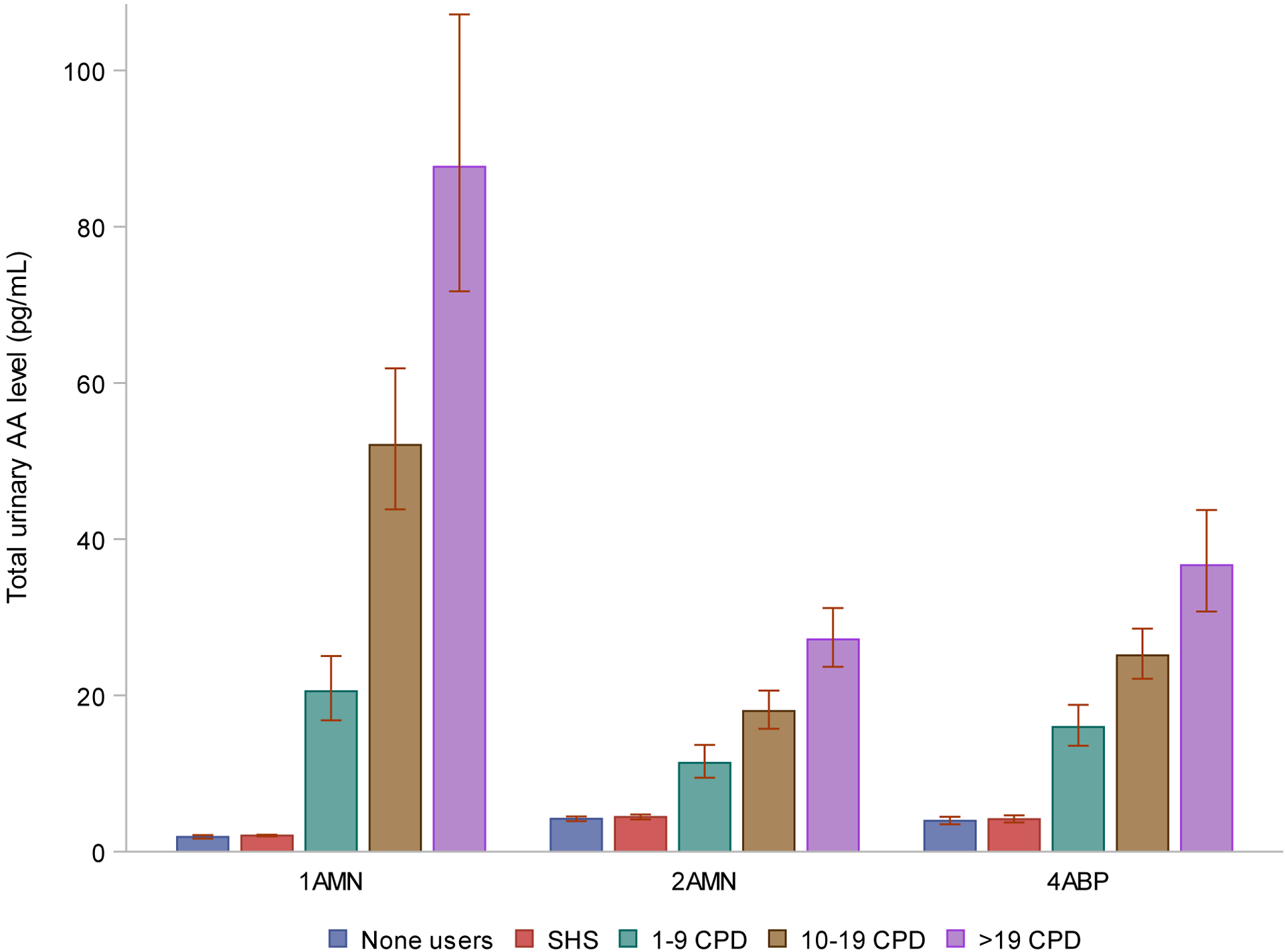
Sample-weighted geometric mean concentrations of AAs in adults who smoked cigarettes exclusively compared to adult nonusers were 30 times higher for 1AMN and 4–6 times higher for 2AMN and 4ABP. We evaluated the association of tobacco-smoke exposure with urinary AAs using sample-weighted multiple linear regression models to control for age, sex, race/ethnicity, diet, and urinary creatinine. Secondhand smoke exposure status was categorized using serum cotinine (SCOT) among adult nonusers (SCOT≤10 ng/mL). The exposure for adults who smoked cigarettes exclusively (SCOT>10 ng/mL) was categorized based on the average number of self-reported cigarettes smoked per day (CPD) in the five days prior to urine collection. The regression models show AAs concentration increased with increasing CPD (p<0.001). Dietary-intake variables derived from the 24-hours recall questionnaire were not consistently significant predictors of urinary AAs.
Conclusions:
This is the first characterized total urinary AA concentrations of the U.S. adult non-institutionalized population. Our analyses show that smoking status is a major contributor to AA exposures.
Impact:
These data provide a crucial baseline for exposure to three AAs in U.S. non-institutionalized adults.
-
Keywords:
-
Source:Cancer Epidemiol Biomarkers Prev. :OF1-OF9
-
Pubmed ID:37195136
-
Pubmed Central ID:PMC10654254
-
Document Type:
-
Funding:
-
Collection(s):
-
Main Document Checksum:urn:sha-512:a007c554707f363805daffdb43396f34002ca8b89d586bef0cf99d63ee229efcd4fd9ccc655cb10d5e6395c74144f3db8d38d1a95f6323c1b4690f129a616db5
-
Download URL:
-
File Type:
 [PDF
- 553.88 KB
]
[PDF
- 553.88 KB
]
Supporting Files


File Language:
English
ON THIS PAGE


CDC STACKS serves as an archival repository of CDC-published products including
scientific findings,
journal articles, guidelines, recommendations, or other public health information authored or
co-authored by CDC or funded partners.
As a repository, CDC STACKS retains documents in their original published format to ensure public access to scientific information.
As a repository, CDC STACKS retains documents in their original published format to ensure public access to scientific information.
You May Also Like
COLLECTION
CDC Public Access