



Model-based Analysis of Tuberculosis Genotype Clusters in the United States Reveals High Degree of Heterogeneity in Transmission and State-level Differences Across California, Florida, New York, and Texas
Supporting Files

-
10 12 2022 ; 10-12-
-
Available in CDC Stacks on 2023-10-12T00:00:00Z
File Language:
English
Details
-
Alternative Title:Clin Infect Dis
-
Personal Author:
-
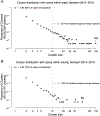
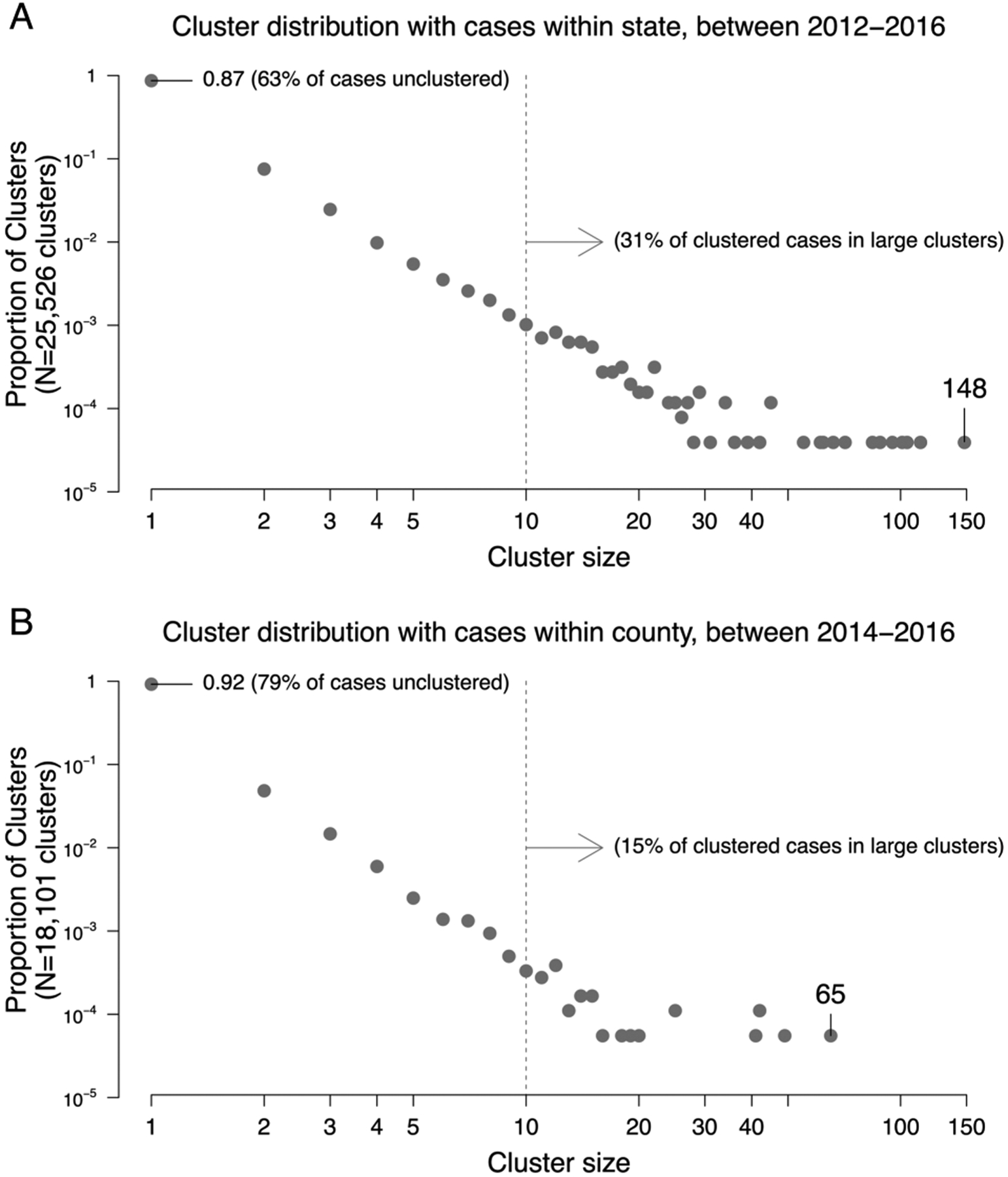
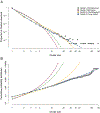
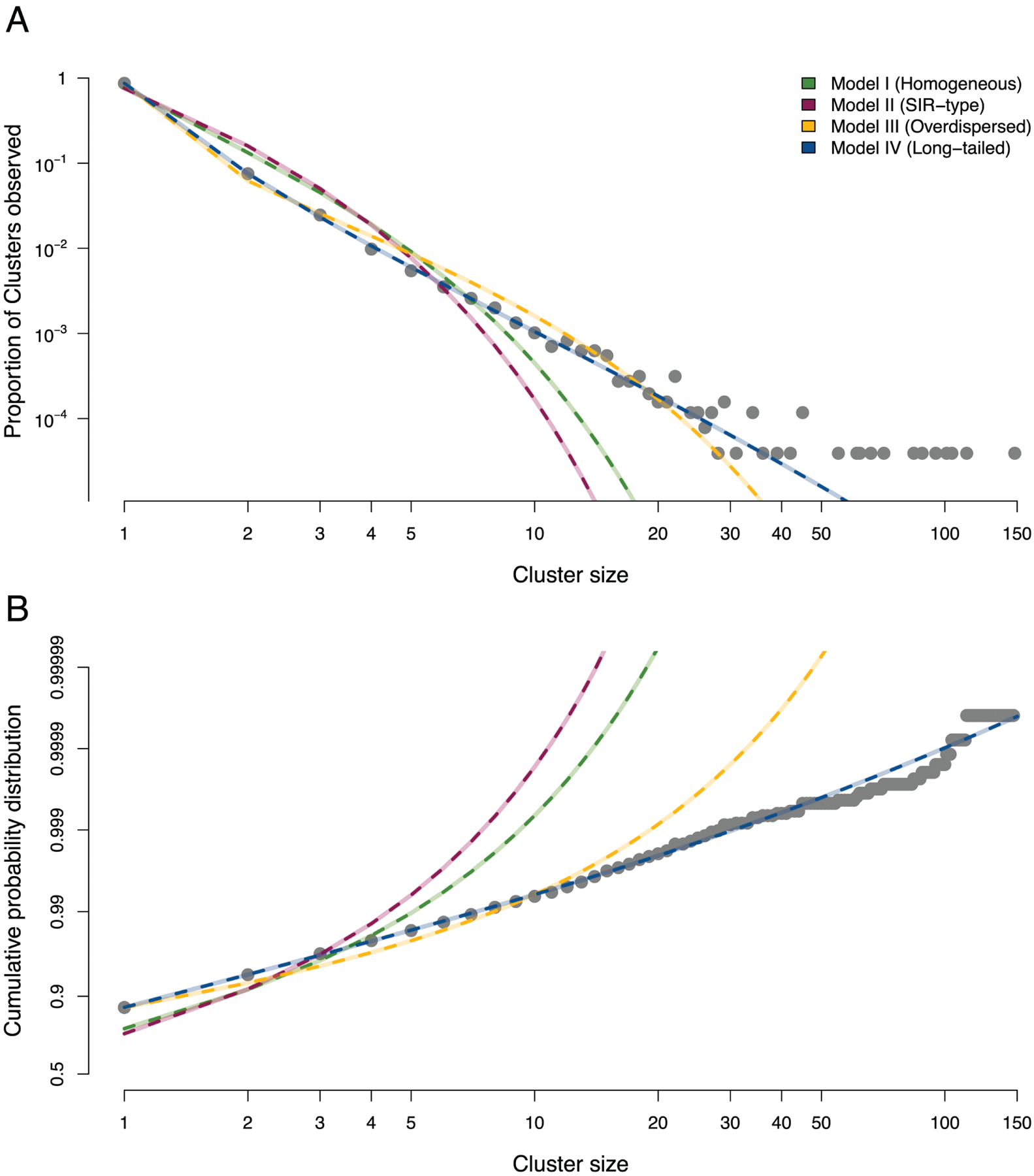
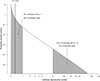
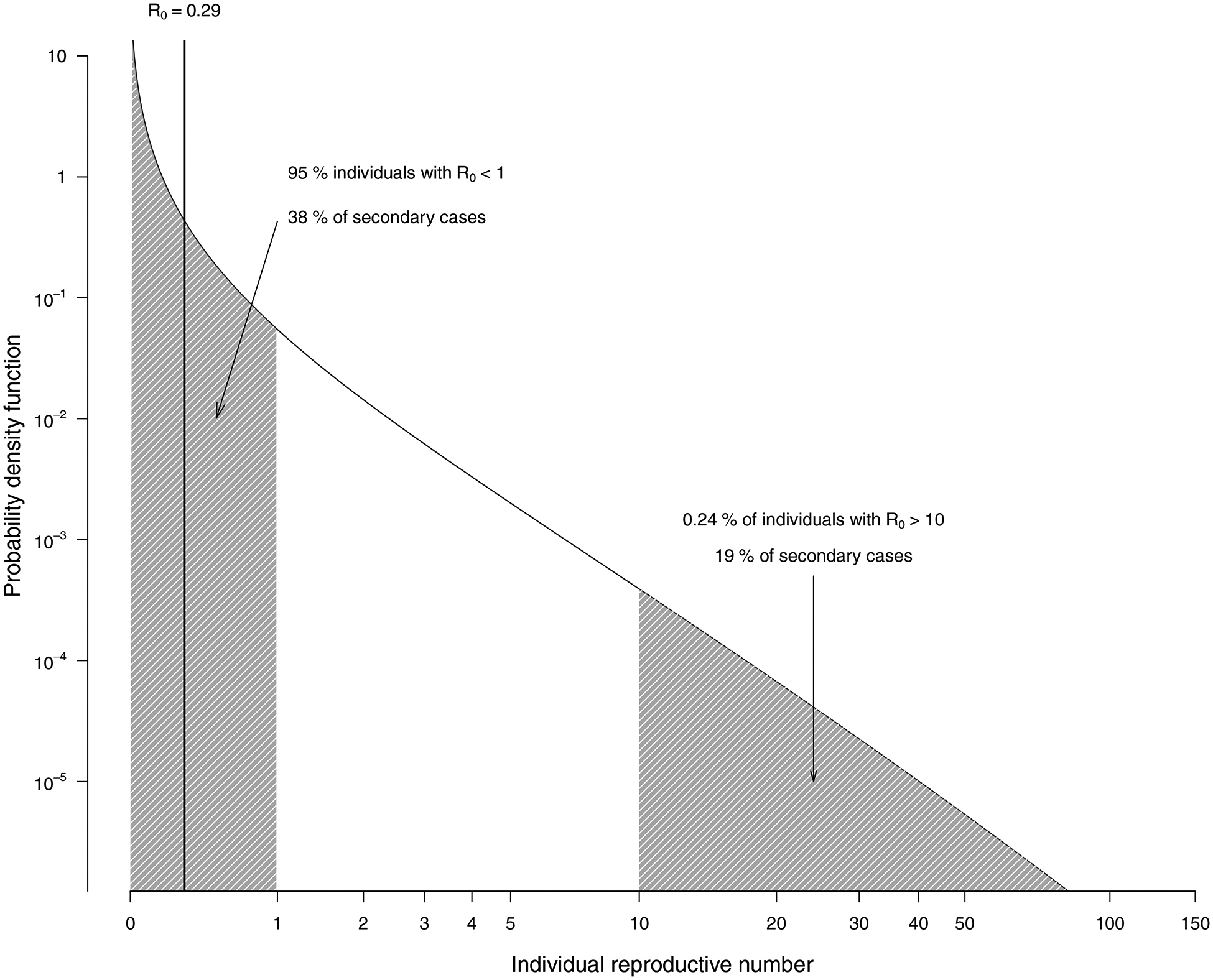
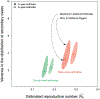
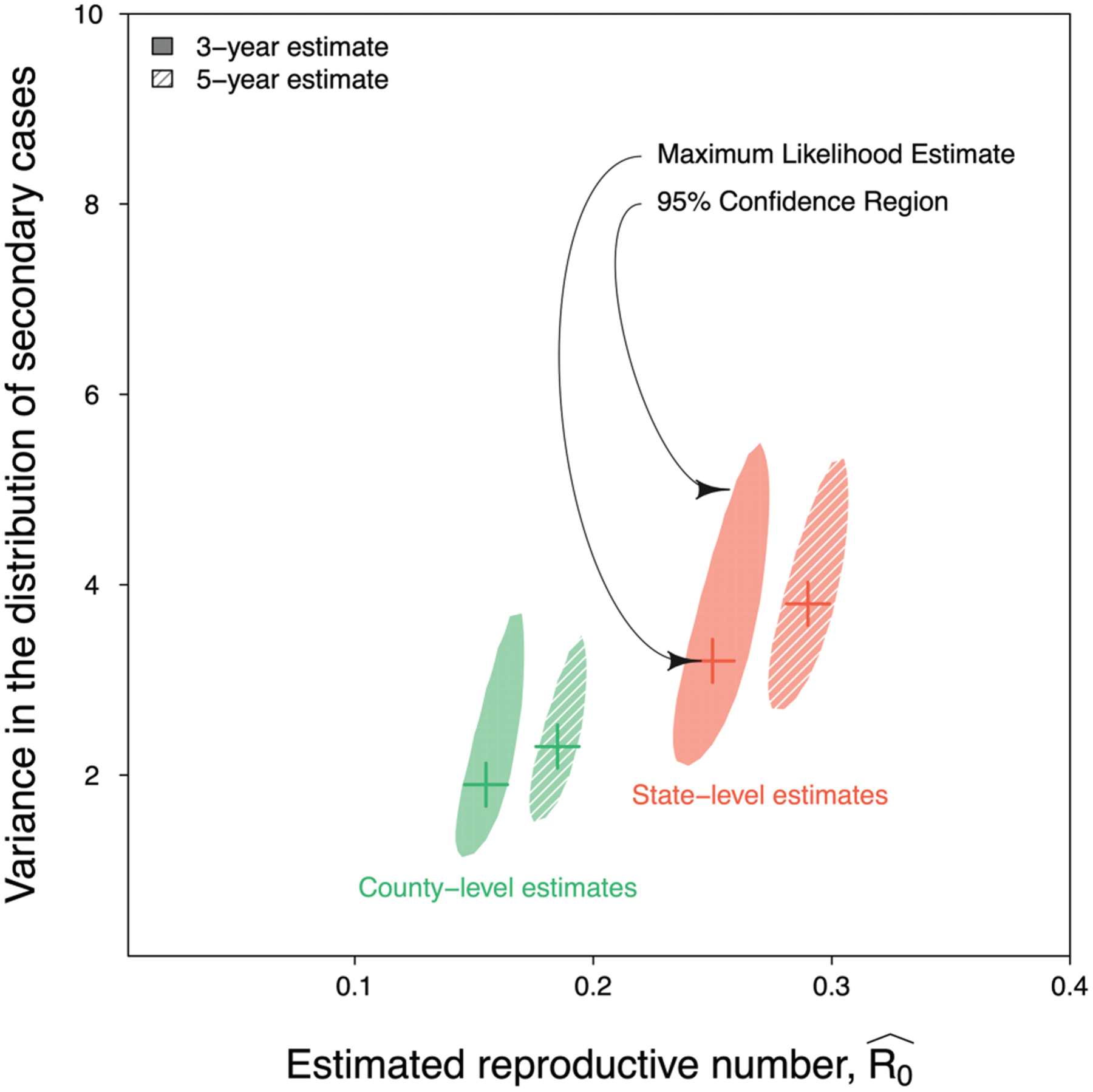
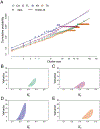
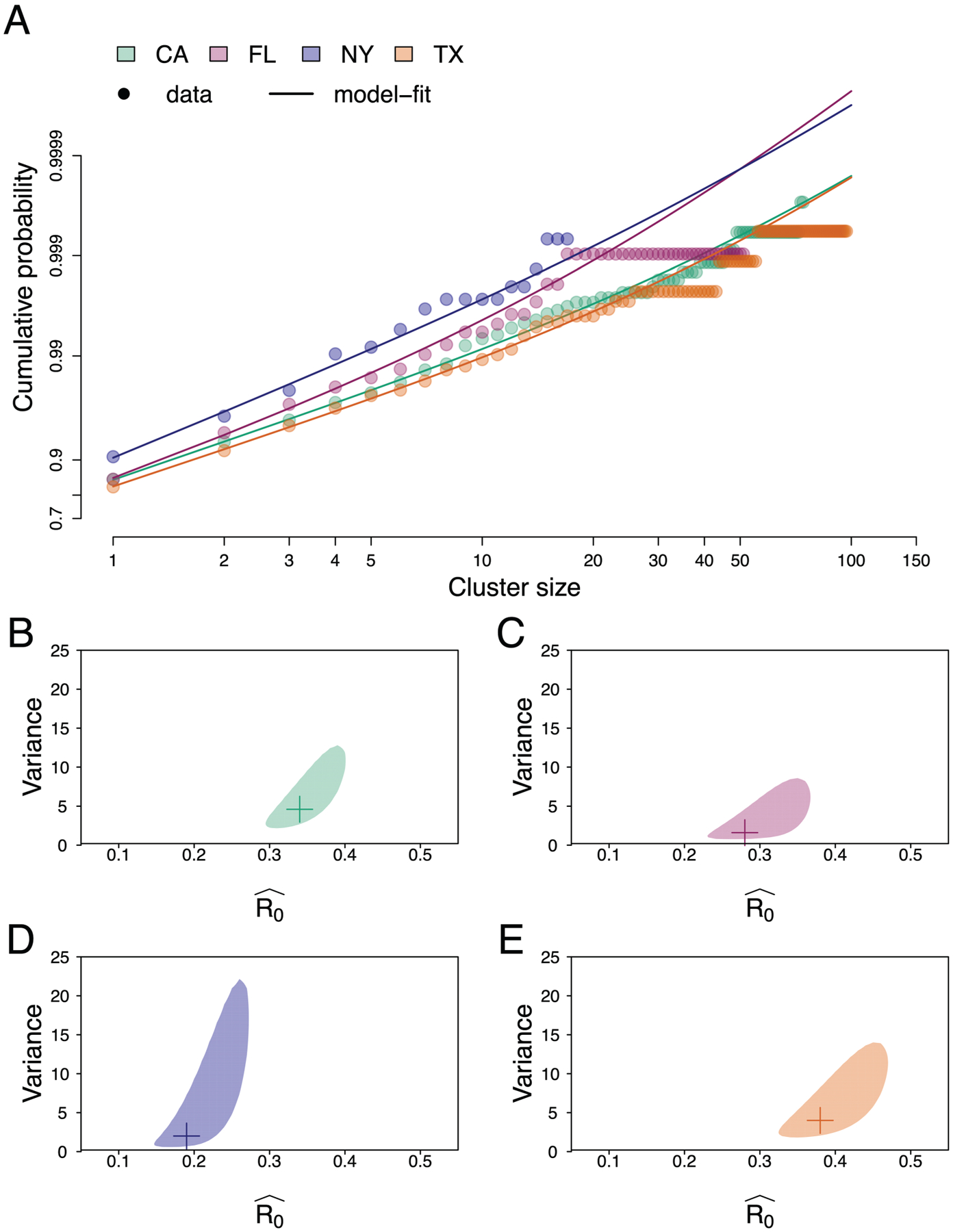
Description:Background. ; Reductions in tuberculosis (TB) transmission have been instrumental in lowering TB incidence in the United States. Sustaining and augmenting these reductions are key public health priorities. ; Methods. ; We fit mechanistic transmission models to distributions of genotype clusters of TB cases reported to the Centers for Disease Control and Prevention during 2012–2016 in the United States and separately in California, Florida, New York, and Texas. We estimated the mean number of secondary cases generated per infectious case (R0) and individual-level heterogeneity in R0 at state and national levels and assessed how different definitions of clustering affected these estimates. ; Results. ; In clusters of genotypically linked TB cases that occurred within a state over a 5-year period (reference scenario), the estimated R0 was 0.29 (95% confidence interval CI, .28–.31) in the United States. Transmission was highly heterogeneous; 0.24% of simulated cases with individual R0 >10 generated 19% of all recent secondary transmissions. R0 estimate was 0.16 (95% CI, .15–.17) when a cluster was defined as cases occurring within the same county over a 3-year period. Transmission varied across states: estimated R0s were 0.34 (95% CI, .3–.4) in California, 0.28 (95% CI, .24–.36) in Florida, 0.19 (95% CI, .15–.27) in New York, and 0.38 (95% CI, .33–.46) in Texas. ; Conclusions. ; TB transmission in the United States is characterized by pronounced heterogeneity at the individual and state levels. Improving detection of transmission clusters through incorporation of whole-genome sequencing and identifying the drivers of this heterogeneity will be essential to reducing TB transmission.
-
Keywords:
-
Source:Clin Infect Dis. 75(8):1433-1441
-
Pubmed ID:35143641
-
Pubmed Central ID:PMC9412192
-
Document Type:
-
Funding:
-
Volume:75
-
Issue:8
-
Download URL:
-
File Type:
 [PDF - 1.25 MB]
 -
Collection(s):
-
Main Document Checksum:urn:sha256:fc131eccde3b23e0900481fa6a2da36efec652aa1d19b9d6a5f467e33dd02e22
Supporting Files


File Language:
English
 Was this page helpful?
 Found an issue?

CDC STACKS serves as an archival repository of CDC-published products including
scientific findings, journal articles, guidelines, recommendations, or other public health information authored or
co-authored by CDC or funded partners.
As a repository, CDC STACKS retains documents in their original published format to ensure public access to scientific information.
As a repository, CDC STACKS retains documents in their original published format to ensure public access to scientific information.
You May Also Like
COLLECTION
CDC Public Access