


Global update on the susceptibilities of human influenza viruses to neuraminidase inhibitors and the cap-dependent endonuclease inhibitor baloxavir, 2018–2020
Supporting Files

-
4 2022
-
File Language:
English
Details
-
Alternative Title:Antiviral Res
-
Personal Author:Govorkova, Elena A. ; Takashita, Emi ; Daniels, Rod S. ; Fujisaki, Seiichiro ; Presser, Lance D. ; Patel, Mira C. ; Huang, Weijuan ; Lackenby, Angie ; Nguyen, Ha T. ; Pereyaslov, Dmitriy ; Rattigan, Aine ; Brown, Sook Kwan ; Samaan, Magdi ; Subbarao, Kanta ; Wong, Sun ; Wang, Dayan ; Webby, Richard J. ; Yen, Hui-Ling ; Zhang, Wenqing ; Meijer, Adam ; Gubareva, Larisa V.
-
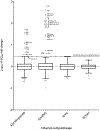
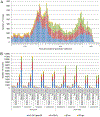
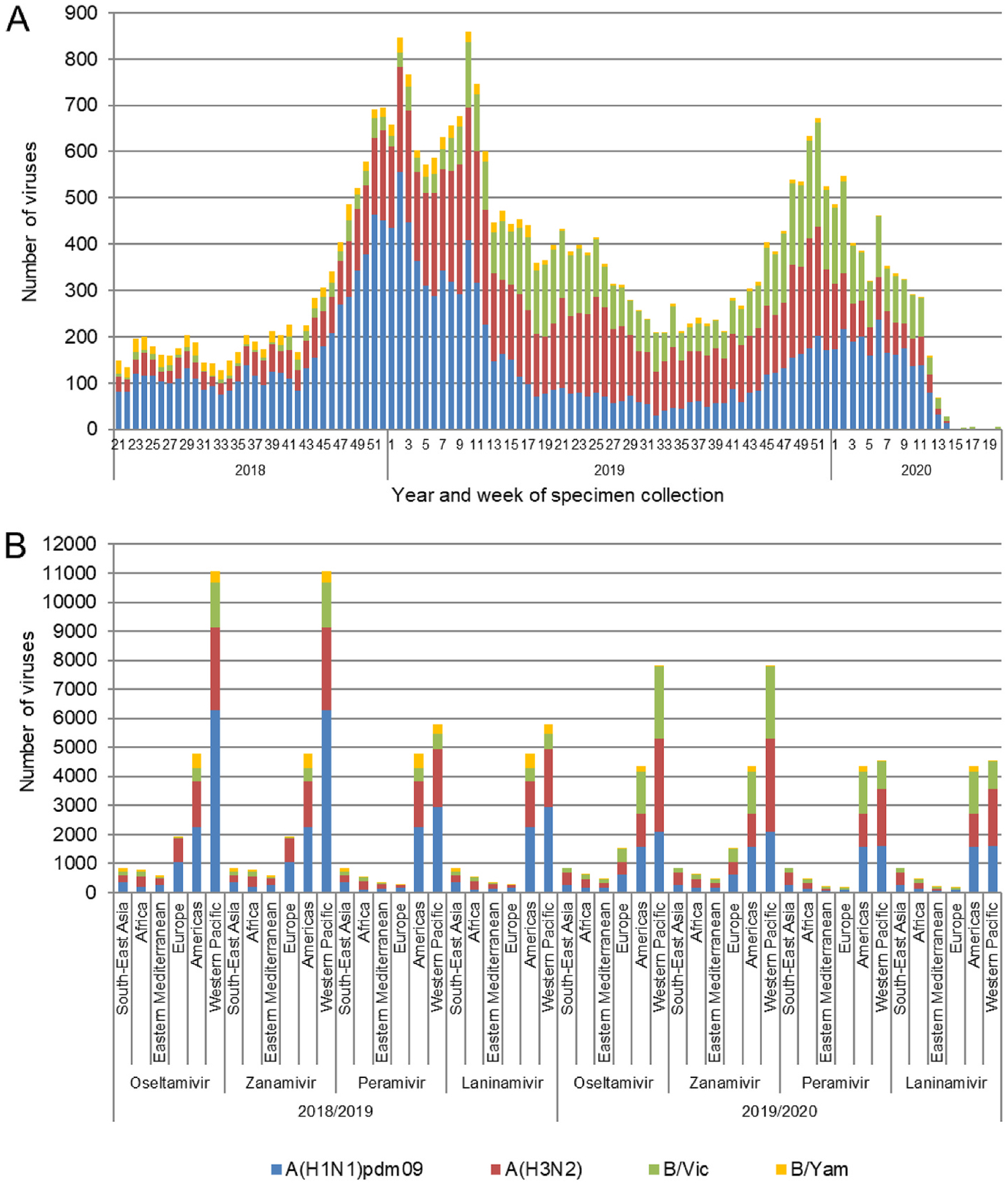
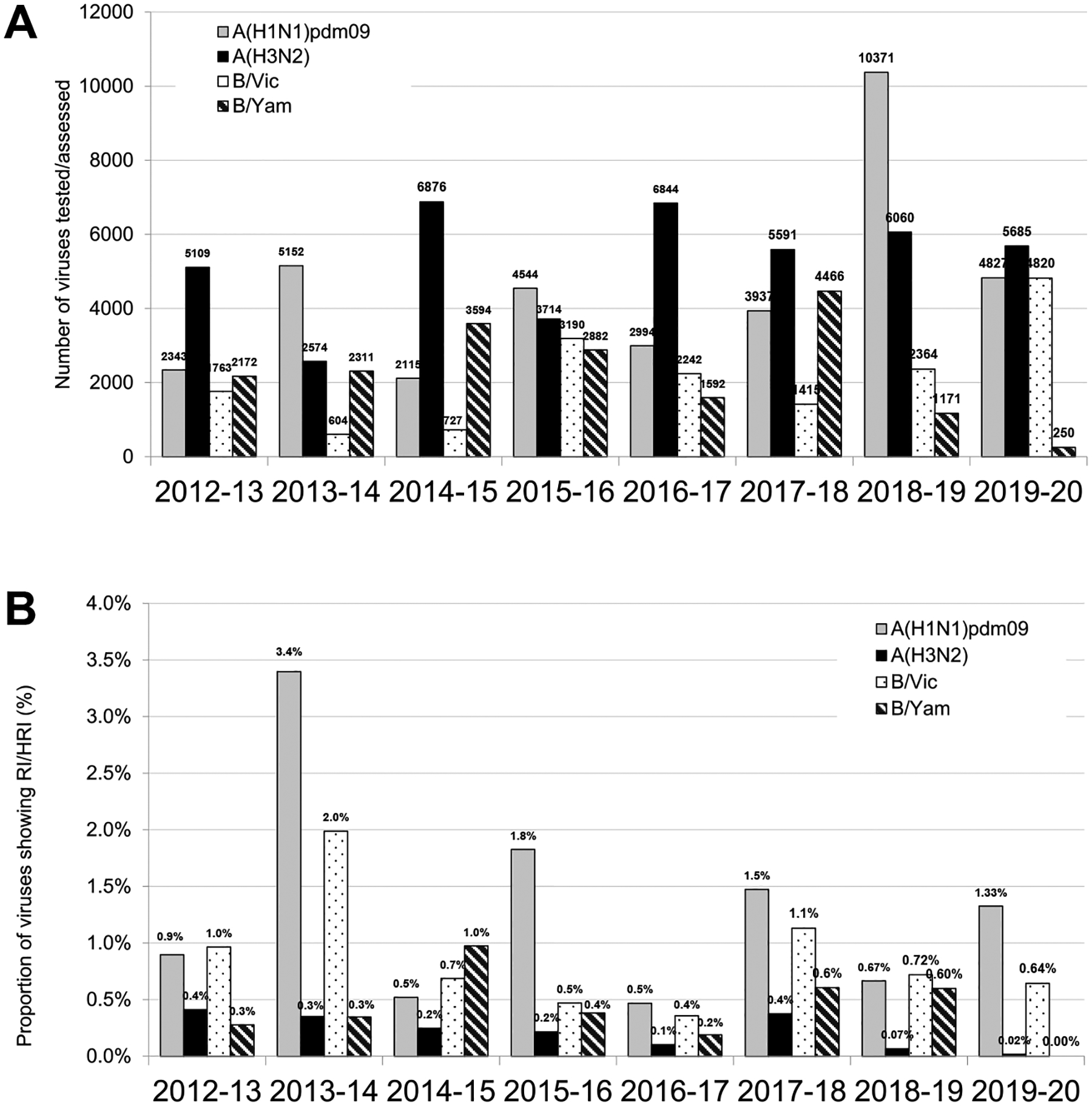
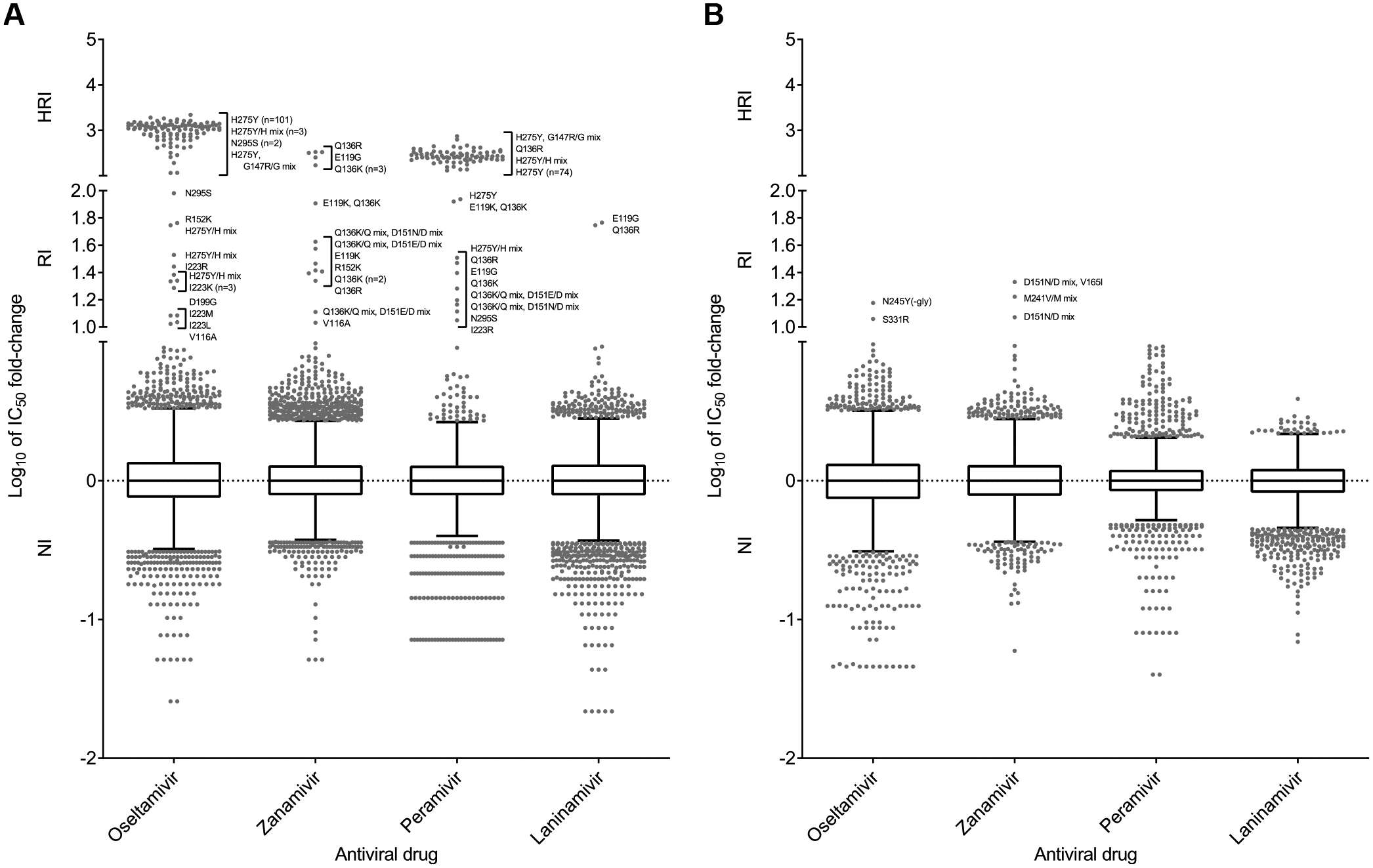
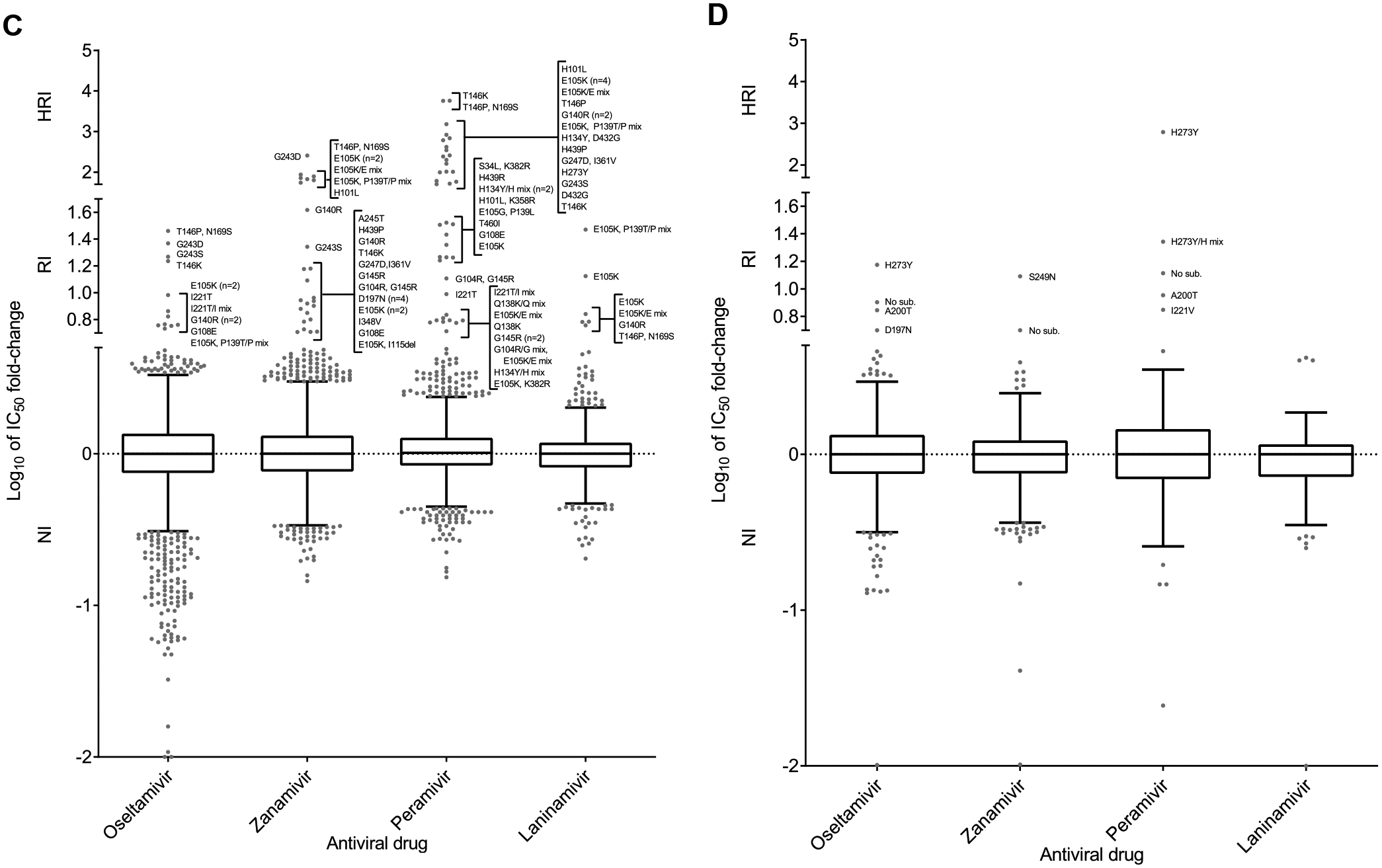
Description:Global analysis of the susceptibility of influenza viruses to neuraminidase (NA) inhibitors (NAIs) and the polymerase acidic (PA) inhibitor (PAI) baloxavir was conducted by five World Health Organization Collaborating Centres for Reference and Research on Influenza during two periods (May 2018-May 2019 and May 2019-May 2020). Combined phenotypic and NA sequence-based analysis revealed that the global frequency of viruses displaying reduced or highly reduced inhibition (RI or HRI) or potential to show RI/HRI by NAIs remained low, 0.5% (165/35045) and 0.6% (159/26010) for the 2018-2019 and 2019-2020 periods, respectively. The most common amino acid substitution was NA-H275Y (N1 numbering) conferring HRI by oseltamivir and peramivir in A(H1N1)pdm09 viruses. Combined phenotypic and PA sequence-based analysis showed that the global frequency of viruses showing reduced susceptibility to baloxavir or carrying substitutions associated with reduced susceptibility was low, 0.5% (72/15906) and 0.1% (18/15692) for the 2018-2019 and 2019-2020 periods, respectively. Most (n = 61) of these viruses had I38→T/F/M/S/L/V PA amino acid substitutions. In Japan, where baloxavir use was highest, the rate was 4.5% (41/919) in the 2018-2019 period and most of the viruses (n = 32) had PA-I38T. Zoonotic viruses isolated from humans (n = 32) in different countries did not contain substitutions in NA associated with NAI RI/HRI phenotypes. One A(H5N6) virus had a dual substitution PA-I38V + PA-E199G, which may reduce susceptibility to baloxavir. Therefore, NAIs and baloxavir remain appropriate choices for the treatment of influenza virus infections, but close monitoring of antiviral susceptibility is warranted.
-
Subjects:
-
Source:Antiviral Res. 200:105281
-
Pubmed ID:35292289
-
Pubmed Central ID:PMC9254721
-
Document Type:
-
Funding:FC001030/WT_/Wellcome TrustUnited Kingdom/ ; MRC_/Medical Research CouncilUnited Kingdom/ ; CC999999/ImCDC/Intramural CDC HHSUnited States/ ; WT_/Wellcome TrustUnited Kingdom/ ; 001/WHO_/World Health OrganizationInternational/ ; CRUK_/Cancer Research UKUnited Kingdom/ ; 75N93021C00016/AI/NIAID NIH HHSUnited States/ ; FC001030/ARC_/Arthritis Research UKUnited Kingdom/
-
Volume:200
-
Collection(s):
-
Main Document Checksum:urn:sha256:6ce61416f44b63afe46b323b937fa98281fc1ca631b165f1d2bfc626b12392d3
-
Download URL:
-
File Type:
 [PDF
- 1.39 MB
]
[PDF
- 1.39 MB
]
Supporting Files


File Language:
English
ON THIS PAGE



CDC STACKS serves as an archival repository of CDC-published products including
scientific findings,
journal articles, guidelines, recommendations, or other public health information authored or
co-authored by CDC or funded partners.
As a repository, CDC STACKS retains documents in their original published format to ensure public access to scientific information.
As a repository, CDC STACKS retains documents in their original published format to ensure public access to scientific information.
You May Also Like
COLLECTION
CDC Public Access