



Global update on the susceptibility of human influenza viruses to neuraminidase inhibitors, 2012–2013
Supporting Files

-
10 2014 ; 10-2014
-
Available in CDC Stacks on February 17, 2022, 12:00 AM
File Language:
English
Details
-
Alternative Title:Antiviral Res
-
Personal Author:Meijer, Adam ; Rebelo-de-Andrade, Helena ; Correia, Vanessa ; Besselaar, Terry ; Drager-Dayal, Renu ; Fry, Alicia ; Gregory, Vicky ; Gubareva, Larisa ; Kageyama, Tsutomu ; Lackenby, Angie ; Lo, Janice ; Odagiri, Takato ; Pereyaslov, Dmitriy ; Siqueira, Marilda M. ; Takashita, Emi ; Tashiro, Masato ; Wang, Dayan ; Wong, Sun ; Zhang, Wenqing ; Daniels, Rod S. ; Hurt, Aeron C.
-
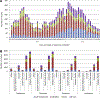
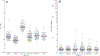
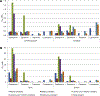
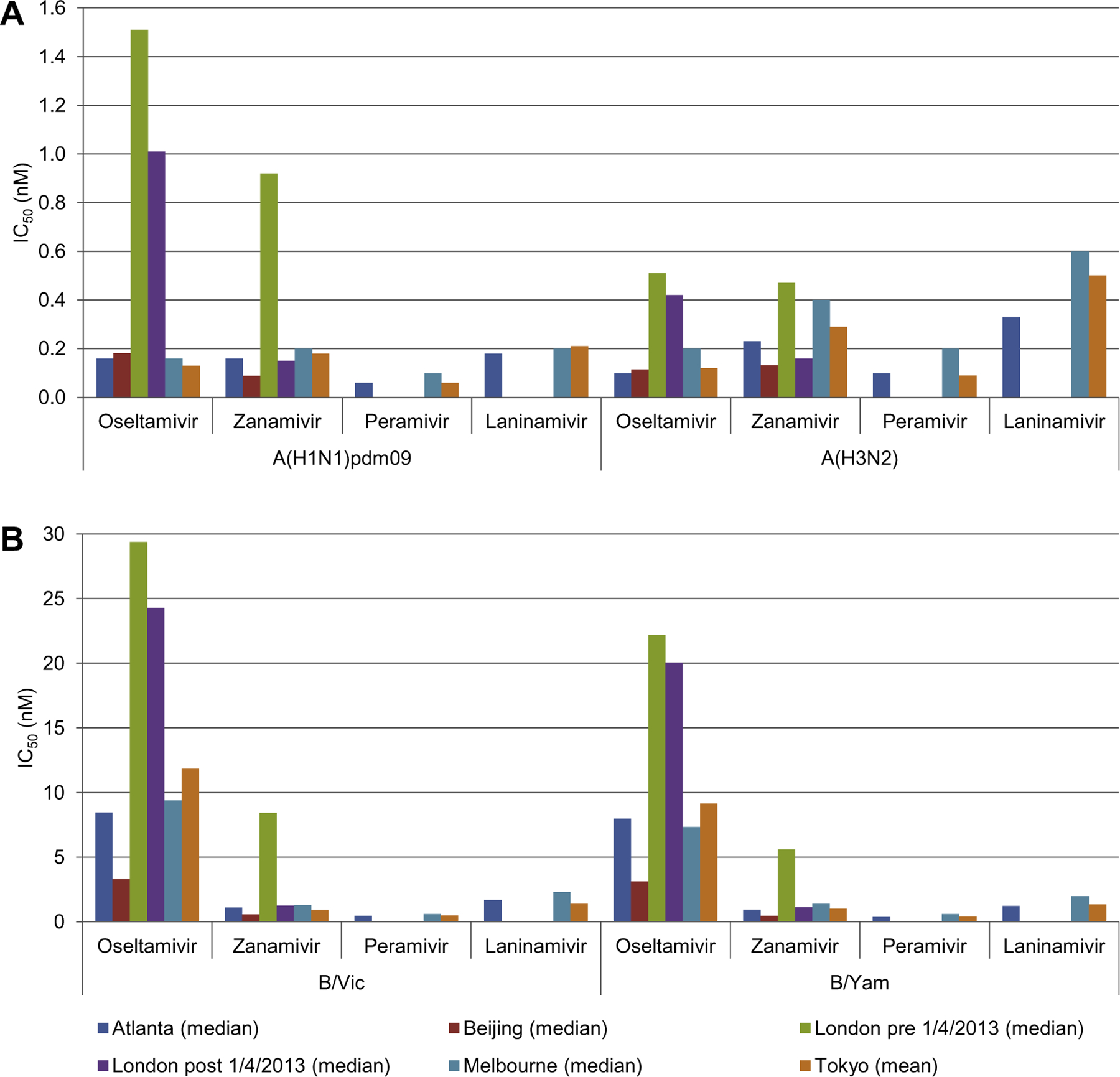
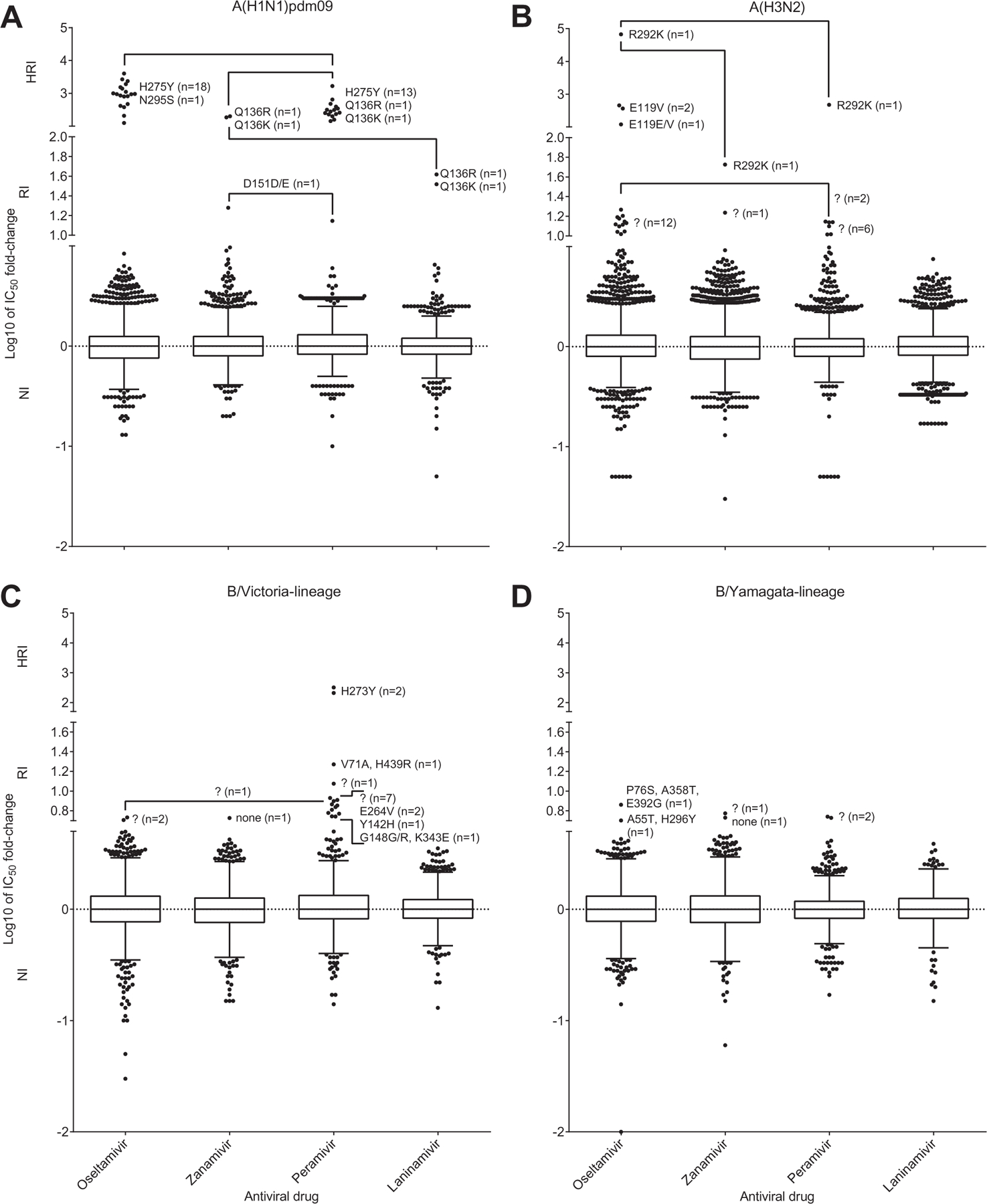
Description:Emergence of influenza viruses with reduced susceptibility to neuraminidase inhibitors (NAIs) is sporadic, often follows exposure to NAIs, but occasionally occurs in the absence of NAI pressure. The emergence and global spread in 2007/2008 of A(H1N1) influenza viruses showing clinical resistance to oseltamivir due to neuraminidase (NA) H275Y substitution, in the absence of drug pressure, warrants continued vigilance and monitoring for similar viruses. Four World Health Organization (WHO) Collaborating Centres for Reference and Research on Influenza and one WHO Collaborating Centre for the Surveillance, Epidemiology and Control of Influenza (WHO CCs) tested 11,387 viruses collected by WHO-recognized National Influenza Centres (NIC) between May 2012 and May 2013 to determine 50% inhibitory concentration (IC50) data for oseltamivir, zanamivir, peramivir and laninamivir. The data were evaluated using normalized IC50 fold-changes rather than raw IC50 data. Nearly 90% of the 11,387 viruses were from three WHO regions: Western Pacific, the Americas and Europe. Only 0.2% (n=27) showed highly reduced inhibition (HRI) against at least one of the four NAIs, usually oseltamivir, while 0.3% (n=39) showed reduced inhibition (RI). NA sequence data, available from the WHO CCs and from sequence databases (n=3661), were screened for amino acid substitutions associated with reduced NAI susceptibility. Those showing HRI were A(H1N1)pdm09 with NA H275Y (n=18), A(H3N2) with NA E119V (n=3) or NA R292K (n=1) and B/Victoria-lineage with NA H273Y (n=2); amino acid position numbering is A subtype and B type specific. Overall, approximately 99% of circulating viruses tested during the 2012-2013 period were sensitive to all four NAIs. Consequently, these drugs remain an appropriate choice for the treatment and prophylaxis of influenza virus infections.
-
Subjects:
-
Keywords:
-
Source:Antiviral Res. 110:31-41
-
Pubmed ID:25043638
-
Pubmed Central ID:PMC8851378
-
Document Type:
-
Funding:
-
Volume:110
-
Download URL:
-
File Type:
 [PDF - 979.05 KB]
 -
Collection(s):
-
Main Document Checksum:urn:sha256:e573b738bf03ec2584c6371cdffce0512e604efedfc3a5e6aac27ae327d56292
Supporting Files


File Language:
English
 Was this page helpful?
 Found an issue?



CDC STACKS serves as an archival repository of CDC-published products including
scientific findings, journal articles, guidelines, recommendations, or other public health information authored or
co-authored by CDC or funded partners.
As a repository, CDC STACKS retains documents in their original published format to ensure public access to scientific information.
As a repository, CDC STACKS retains documents in their original published format to ensure public access to scientific information.
You May Also Like
COLLECTION
CDC Public Access