


Genomic Drivers of Multidrug-Resistant Shigella Affecting Vulnerable Patient Populations in the United States and Abroad
Supporting Files

-
1 26 2021
-
File Language:
English
Details
-
Alternative Title:mBio
-
Personal Author:
-
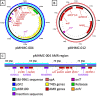
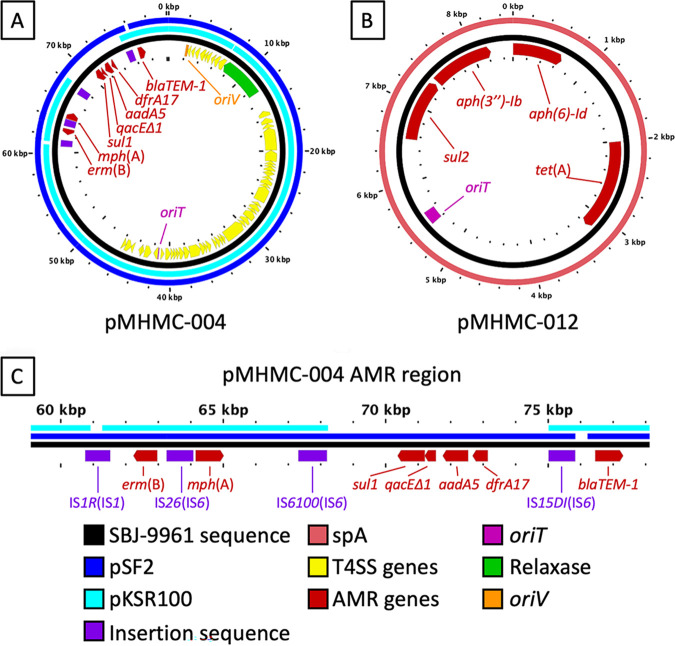
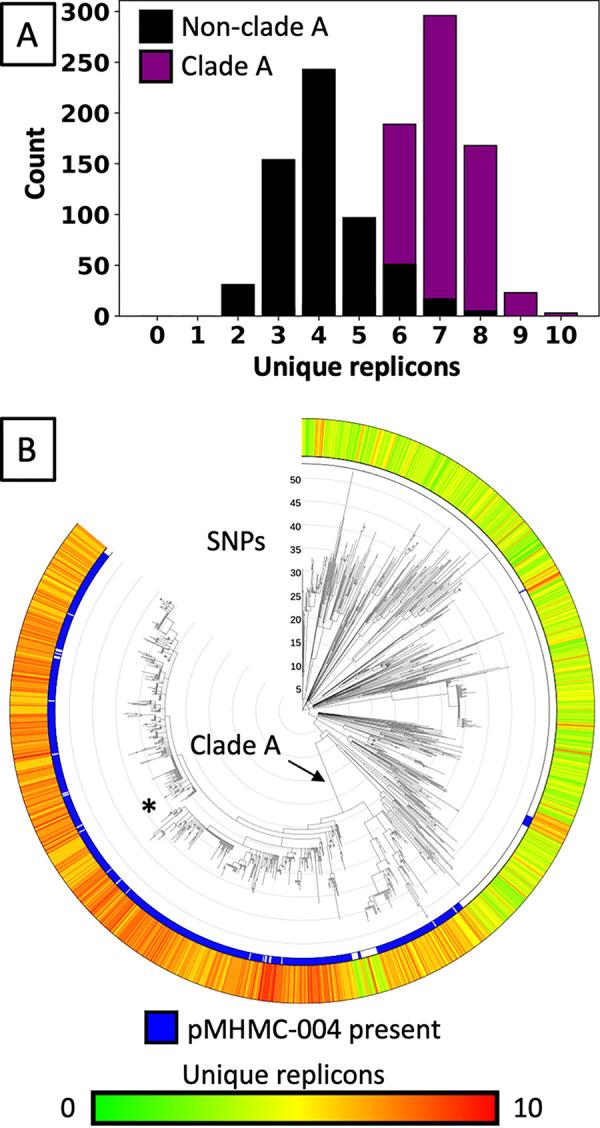
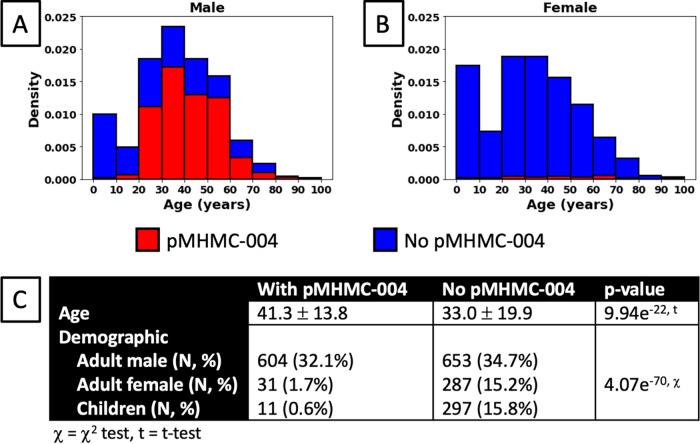
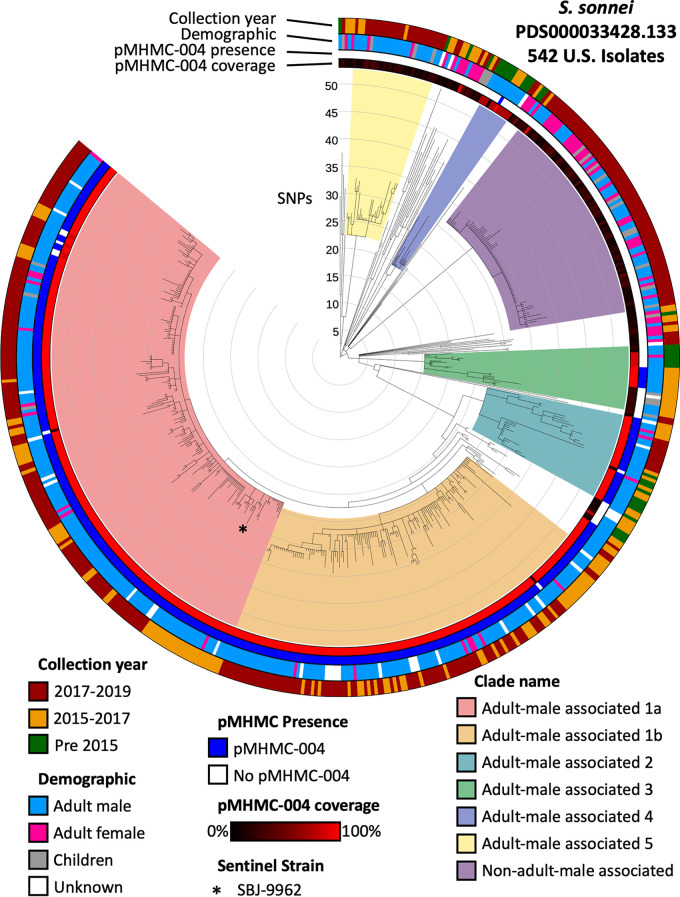
Description:Multidrug-resistant (MDR) | infections have been identified globally among men who have sex with men (MSM). The highly drug-resistant phenotype often confounds initial antimicrobial therapy, placing patients at risk for adverse outcomes, the development of more drug-resistant strains, and additional treatment failures. New macrolide-resistant | strains complicate treatment further as azithromycin is a next-in-line antibiotic for MDR strains, and an antibiotic-strain combination confounded by gaps in validated clinical breakpoints for clinical laboratories to interpret macrolide resistance in | We present the first high-resolution genomic analyses of 2,097 U.S. | isolates, including those from MDR outbreaks. A sentinel shigellosis case in an MSM patient revealed a strain carrying 12 plasmids, of which two carried known resistance genes, the pKSR100-related plasmid pMHMC-004 and spA-related plasmid pMHMC-012. Genomic-epidemiologic analyses of isolates revealed high carriage rates of pMHMC-004 predominantly in U.S. isolates from men and not in other demographic groups. Isolates genetically related to the sentinel case further harbored elevated numbers of unique replicons, showing the receptivity of this | lineage to plasmid acquisition. Findings from integrated genomic-epidemiologic analyses were leveraged to direct targeted clinical actions to improve rapid diagnosis and patient care and for public health efforts to further reduce spread.| Multidrug-resistant | isolates with resistance to macrolides are an emerging public health threat. We define a plasmid/pathogen complex behind infections seen in the United States and globally in vulnerable patient populations and identify multiple outbreaks in the United States and evidence of intercontinental transmission. Using new tools and sequence information, we experimentally identify the drivers of antibiotic resistance that complicate patient treatment to facilitate improvements to clinical microbiologic testing for their detection. We illustrate the use of these methods to support multiagency efforts to combat multidrug-resistant | using publicly available tools, existing genomic data, and resources in clinical microbiology and public health laboratories to inform credible actions to reduce spread.
-
Subjects:
-
Source:mBio. 12(1)
-
Pubmed ID:33500335
-
Pubmed Central ID:PMC7858064
-
Document Type:
-
Funding:
-
Place as Subject:
-
Volume:12
-
Issue:1
-
Collection(s):
-
Main Document Checksum:urn:sha256:af707de7ce66f51c508ff605b93c22fbd240b9b4f3eedcbf71ec8dcc19fe3c9a
-
Download URL:
-
File Type:
 [PDF
- 2.46 MB
]
[PDF
- 2.46 MB
]
Supporting Files


File Language:
English
ON THIS PAGE



CDC STACKS serves as an archival repository of CDC-published products including
scientific findings,
journal articles, guidelines, recommendations, or other public health information authored or
co-authored by CDC or funded partners.
As a repository, CDC STACKS retains documents in their original published format to ensure public access to scientific information.
As a repository, CDC STACKS retains documents in their original published format to ensure public access to scientific information.
You May Also Like
COLLECTION
CDC Public Access