



The Incubation Periods of Dengue Viruses
Supporting Files
Public Domain

-
2012/11/30
File Language:
English
Details
-
Alternative Title:PLoS One
-
Personal Author:
-
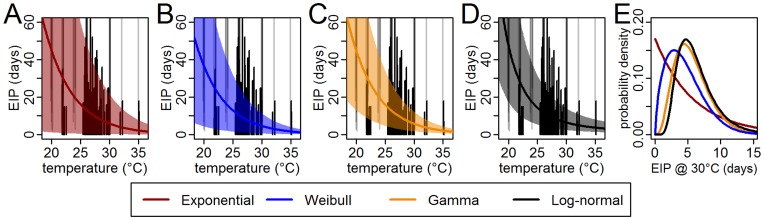
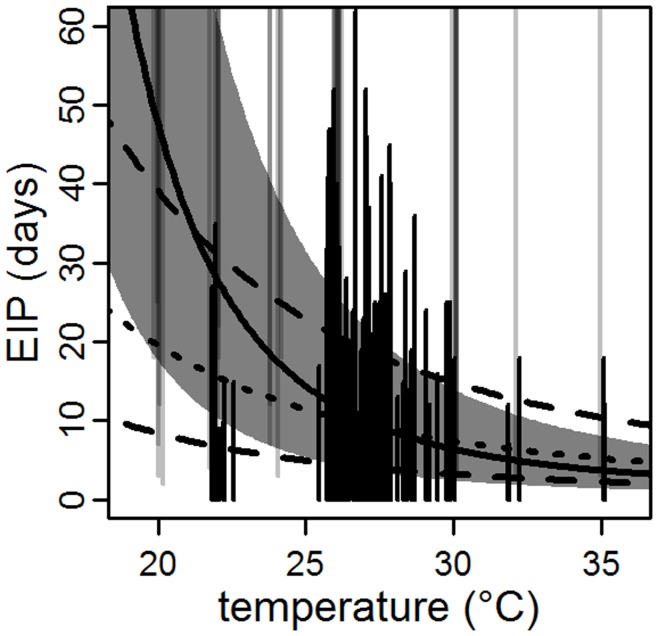
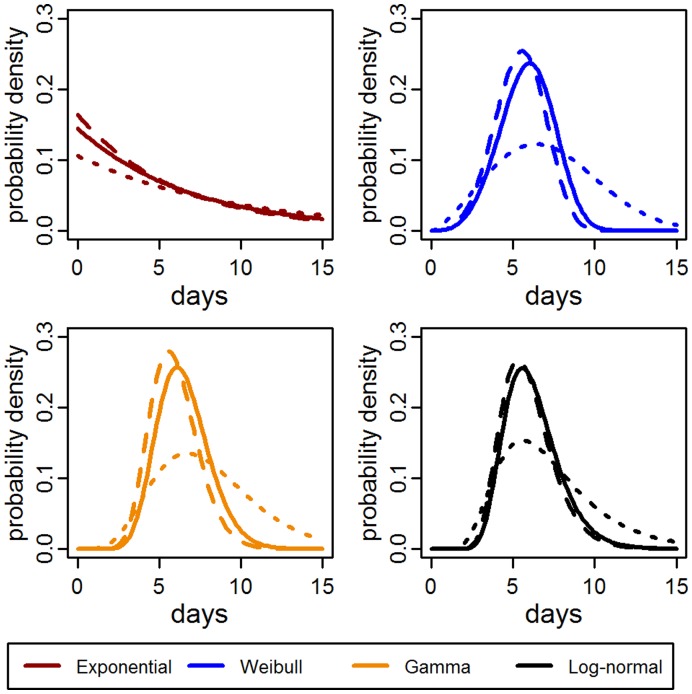
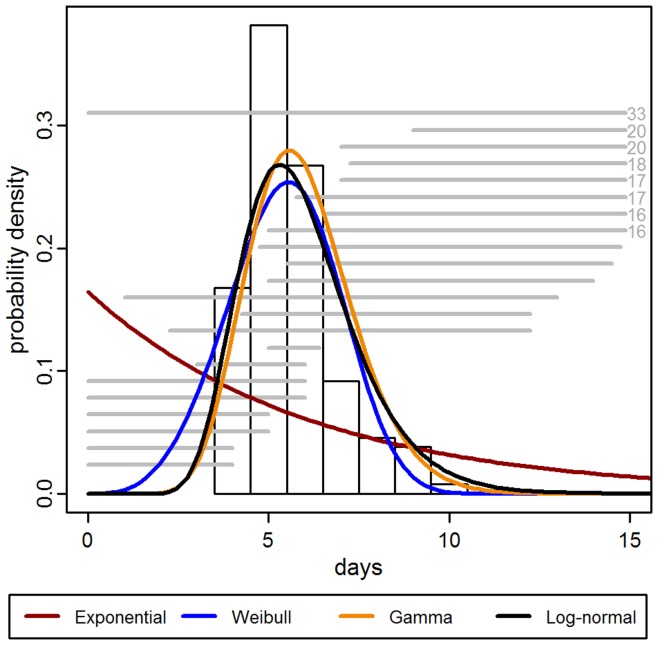
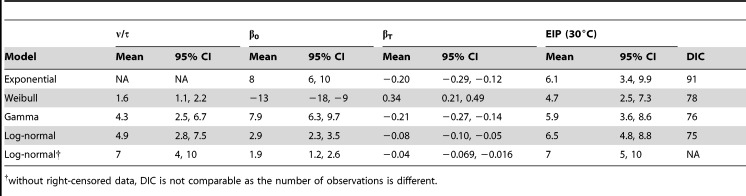
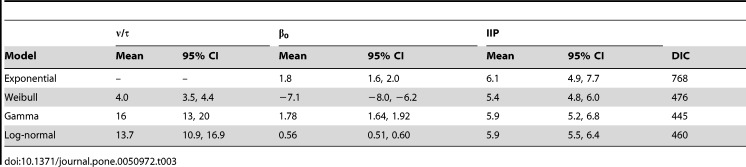
Description:Dengue viruses are major contributors to illness and death globally. Here we analyze the extrinsic and intrinsic incubation periods (EIP and IIP), in the mosquito and human, respectively. We identified 146 EIP observations from 8 studies and 204 IIP observations from 35 studies. These data were fitted with censored Bayesian time-to-event models. The best-fitting temperature-dependent EIP model estimated that 95% of EIPs are between 5 and 33 days at 25°C, and 2 and 15 days at 30°C, with means of 15 and 6.5 days, respectively. The mean IIP estimate was 5.9 days, with 95% expected between days 3 and 10. Differences between serotypes were not identified for either incubation period. These incubation period models should be useful in clinical diagnosis, outbreak investigation, prevention and control efforts, and mathematical modeling of dengue virus transmission.
-
Subjects:
-
Source:PLoS One. 2012; 7(11).
-
Document Type:
-
Genre:
-
Volume:7
-
Issue:11
-
Download URL:
-
File Type:
 [PDF - 423.90 KB]
 -
Collection(s):
-
Main Document Checksum:urn:sha-512:1c29bf77823f6bd2275b366cfd78c4b0eeb12726f41154e05fdd7391924c181693ffd8f0d1c95e05e72a417ffe94c167d56663063e6ecad353df8b58e4674dbc
Supporting Files


File Language:
English
 Was this page helpful?
 Found an issue?
















CDC STACKS serves as an archival repository of CDC-published products including
scientific findings, journal articles, guidelines, recommendations, or other public health information authored or
co-authored by CDC or funded partners.
As a repository, CDC STACKS retains documents in their original published format to ensure public access to scientific information.
As a repository, CDC STACKS retains documents in their original published format to ensure public access to scientific information.
You May Also Like
COLLECTION
CDC Public Access