



IgG Seroconversion and Pathophysiology in Severe Acute Respiratory Syndrome Coronavirus 2 Infection
Supporting Files
Public Domain

-
November 30 2020
File Language:
English
Details
-
Alternative Title:Emerg Infect Dis
-
Personal Author:Staines, Henry M. ; Kirwan, Daniela E. ; Clark, David J. ; Adams, Emily R. ; Augustin, Yolanda ; Byrne, Rachel L. ; Cocozza, Michael ; Cubas-Atienzar, Ana I. ; Cuevas, Luis E. ; Cusinato, Martina ; Davies, Benedict M.O. ; Davis, Mark ; Davis, Paul ; Duvoix, Annelyse ; Eckersley, Nicholas M. ; Forton, Daniel ; Fraser, Alice J. ; Garrod, Gala ; Hadcocks, Linda ; Hu, Qinxue ; Johnson, Michael ; Kay, Grant A. ; Klekotko, Kesja ; Lewis, Zawditu ; Macallan, Derek C. ; Mensah-Kane, Josephine ; Menzies, Stefanie ; Monahan, Irene ; Moore, Catherine M. ; Nebe-von-Caron, Gerhard ; Owen, Sophie I. ; Sainter, Chris ; Sall, Amadou A. ; Schouten, James ; Williams, Christopher T. ; Wilkins, John ; Woolston, Kevin ; Fitchett, Joseph R.A. ; Krishna, Sanjeev ; Planche, Tim
-
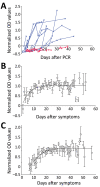
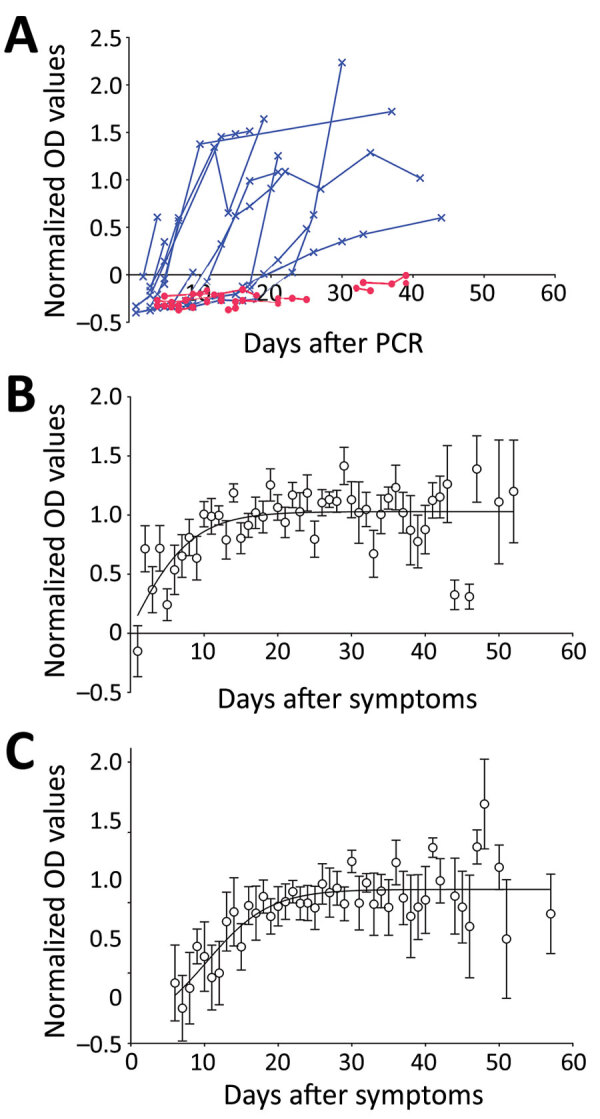
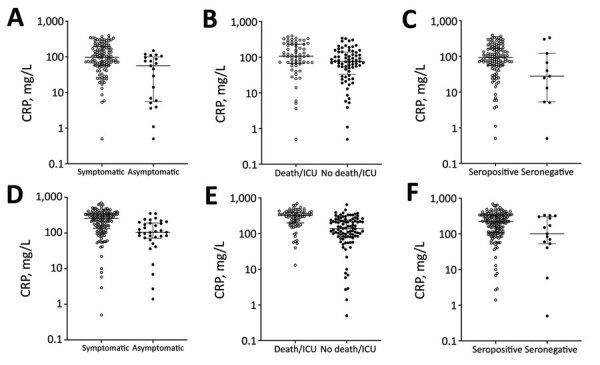
Description:We investigated the dynamics of seroconversion in severe acute respiratory syndrome coronavirus 2 (SARS-CoV-2) infection. During March 29-May 22, 2020, we collected serum samples and associated clinical data from 177 persons in London, UK, who had SARS-CoV-2 infection. We measured IgG against SARS-CoV-2 and compared antibody levels with patient outcomes, demographic information, and laboratory characteristics. We found that 2.0%-8.5% of persons did not seroconvert 3-6 weeks after infection. Persons who seroconverted were older, were more likely to have concurrent conditions, and had higher levels of inflammatory markers. Non-White persons had higher antibody concentrations than those who identified as White; these concentrations did not decline during follow-up. Serologic assay results correlated with disease outcome, race, and other risk factors for severe SARS-CoV-2 infection. Serologic assays can be used in surveillance to clarify the duration and protective nature of humoral responses to SARS-CoV-2 infection.
-
Subjects:
-
Source:Emerg Infect Dis. 27(1):85-91
-
Pubmed ID:33256890
-
Pubmed Central ID:PMC7774532
-
Document Type:
-
Volume:27
-
Issue:1
-
Download URL:
-
File Type:
 [PDF - 917.45 KB]
 -
Collection(s):
-
Main Document Checksum:urn:sha256:bae8de3f99715280f53f6e54925826f92c0c6a02cdde9ac5dc5c73302e9cb358
Supporting Files


File Language:
English
 Was this page helpful?
 Found an issue?

CDC STACKS serves as an archival repository of CDC-published products including
scientific findings, journal articles, guidelines, recommendations, or other public health information authored or
co-authored by CDC or funded partners.
As a repository, CDC STACKS retains documents in their original published format to ensure public access to scientific information.
As a repository, CDC STACKS retains documents in their original published format to ensure public access to scientific information.
You May Also Like
COLLECTION
Emerging Infectious Diseases