



Outdoor artificial light at night and risk of non-Hodgkin lymphoma among women in the California Teachers Study cohort
Supporting Files

-
12 2020 ; 12-2020
-
Available in CDC Stacks on December 01, 2021, 12:00 AM
File Language:
English
Details
-
Alternative Title:Cancer Epidemiol
-
Personal Author:
-
Description:Background:
Outdoor artificial light at night (ALAN) has been implicated in a growing number of adverse health outcomes. ALAN is believed to disrupt circadian rhythms and has been associated with increased inflammation, one of the hallmarks of cancer. We examined the association between outdoor ALAN and a cancer strongly associated with autoimmune and inflammatory conditions, non-Hodgkin lymphoma (NHL), in the prospective California Teachers Study cohort.
Methods:
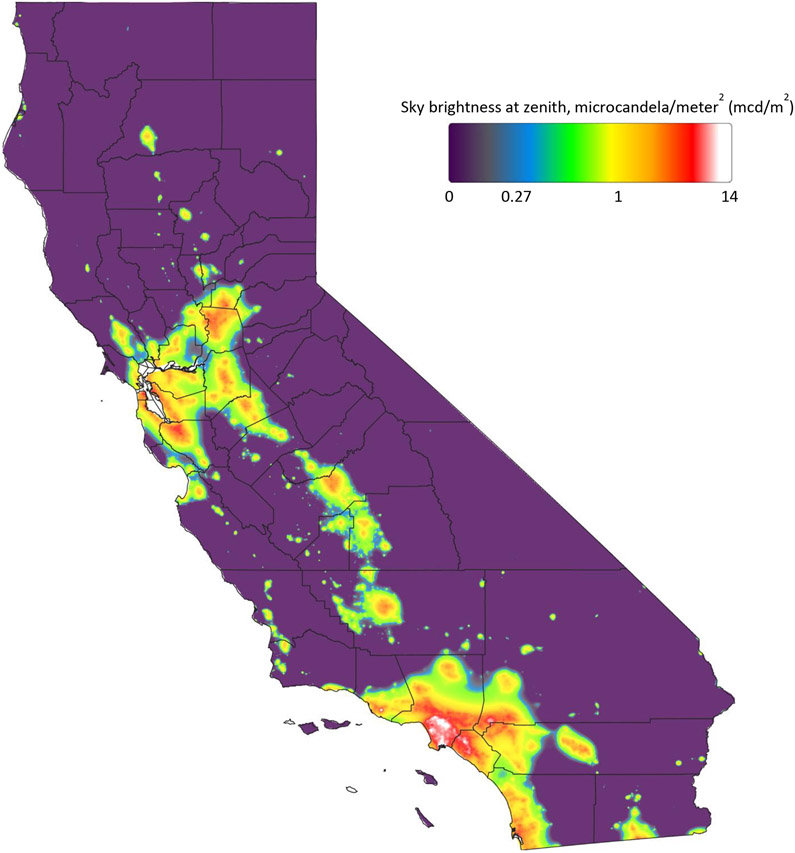
Outdoor ALAN was assigned to participant addresses at study baseline (1995-96) through use of the New World Atlas of Artificial Night Sky Brightness. Among 105,937 women followed from 1995-2015, linkage to the California Cancer Registry identified 873 incident cases of NHL. Age-stratified Cox proportional hazards models were used to calculate hazard ratios (HR) and 95% confidence intervals (95%CI) for overall NHL and the most common NHL subtypes; diffuse large B-cell lymphoma (DLBCL), follicular lymphoma (FL) and chronic lymphocytic leukemia/small lymphocytic lymphoma (CLL/SLL). Multivariate analyses adjusted for previously reported subtype specific covariates (e.g. body mass index (BMI) for DLBCL).
Results:
Compared to the lowest quintile, participants residing in the highest quintile of outdoor ALAN at baseline were more likely to develop NHL (HR=1.32, 95%CI=1.07-1.63), and, in particular, DLBCL (HR=1.87, 95%CI=1.16-3.02). The elevated risk for DLBCL remained statistically significant after adjusting for age, race/ethnicity, BMI, and socioeconomic status (DLBCL:HR=1.87, 95%CI=1.16-3.02, NHL:HR=1.32, 95%CI=1.07-1.63). There was no association between ALAN and FL or CLL/SLL.
Conclusion:
DLBCL risk was elevated among women residing in neighborhoods with greater outdoor ALAN. Future research in circadian disruption and DLBCL may clarify potential biological processes implicated in this association. -
Subjects:
-
Keywords:
-
Source:Cancer Epidemiol. 69:101811
-
Pubmed ID:33002844
-
Pubmed Central ID:PMC7710554
-
Document Type:
-
Funding:HHSN261201800032C/CA/NCI NIH HHSUnited States/ ; HHSN261201800009C/CA/NCI NIH HHSUnited States/ ; NU58DP006344/DP/NCCDPHP CDC HHSUnited States/ ; HHSN261201800015I/CA/NCI NIH HHSUnited States/ ; HHSN261201800032I/CA/NCI NIH HHSUnited States/ ; P30 CA033572/CA/NCI NIH HHSUnited States/ ; HHSN261201800015C/CA/NCI NIH HHSUnited States/ ; HHSN261201800009I/CA/NCI NIH HHSUnited States/ ; U01 CA199277/CA/NCI NIH HHSUnited States/ ; UM1 CA164917/CA/NCI NIH HHSUnited States/ ; P30 CA023100/CA/NCI NIH HHSUnited States/ ; R01 CA077398/CA/NCI NIH HHSUnited States/
-
Volume:69
-
Download URL:
-
File Type:
 [PDF - 575.04 KB]
 -
Collection(s):
-
Main Document Checksum:urn:sha-512:ab5fb82179292a5dbcb77c3689faade9023690124f76a249df1f95d4dcaebba56f5b17aa873fd6ef0f43e164177f1745693946011e89df620ef673e6615c952a
Supporting Files


File Language:
English
 Was this page helpful?
 Found an issue?

CDC STACKS serves as an archival repository of CDC-published products including
scientific findings, journal articles, guidelines, recommendations, or other public health information authored or
co-authored by CDC or funded partners.
As a repository, CDC STACKS retains documents in their original published format to ensure public access to scientific information.
As a repository, CDC STACKS retains documents in their original published format to ensure public access to scientific information.
You May Also Like
COLLECTION
CDC Public Access