



Vitamin D status and determinants of deficiency among non-pregnant Jordanian women of reproductive age
Supporting Files

-
2012/06/01
-
Available in CDC Stacks on 2020-11-03T00:00:00Z
File Language:
English
Details
-
Journal Article:Eur J Clin Nutr
-
Personal Author:
-
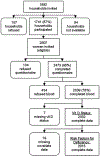
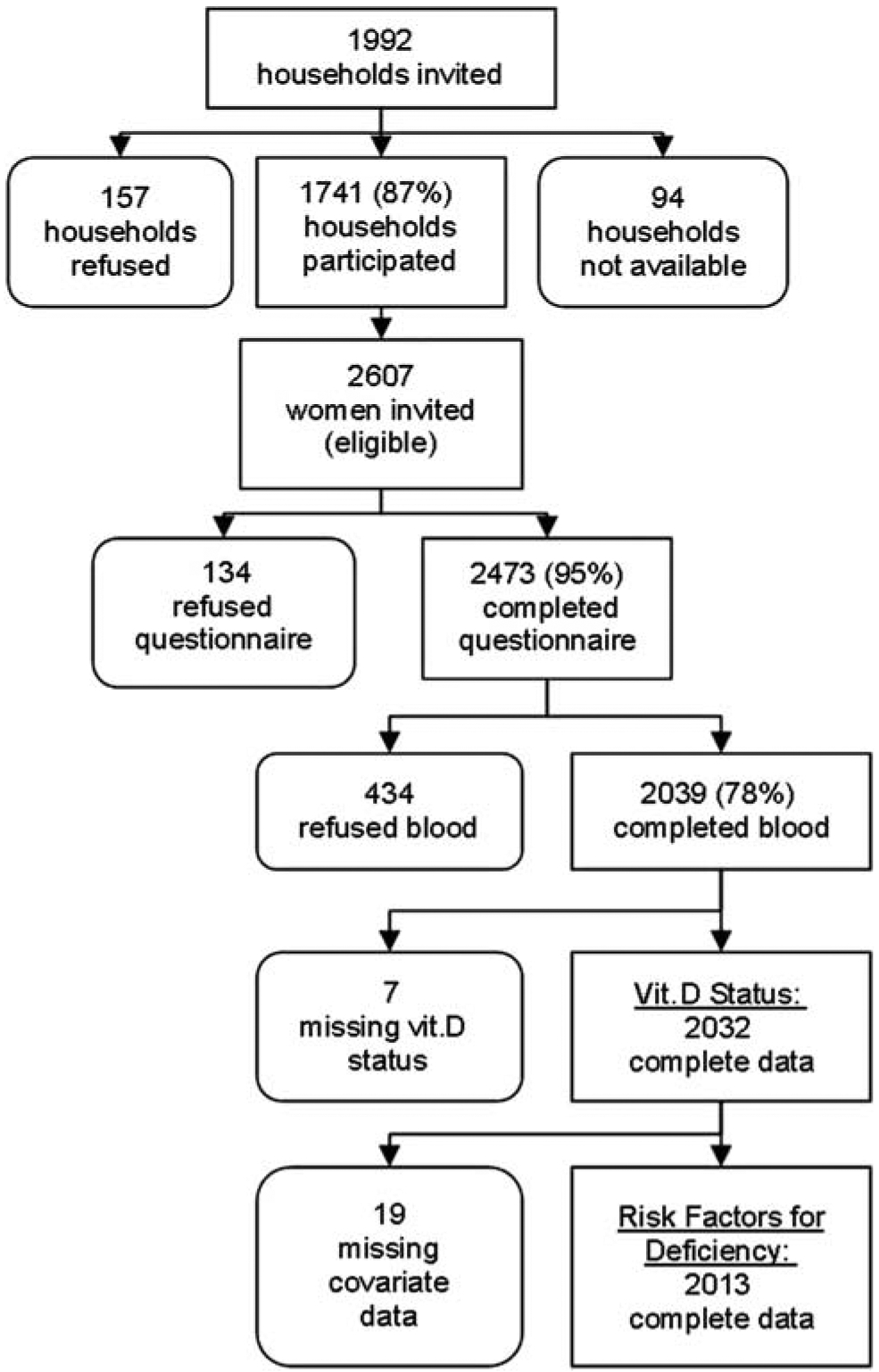
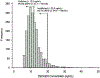
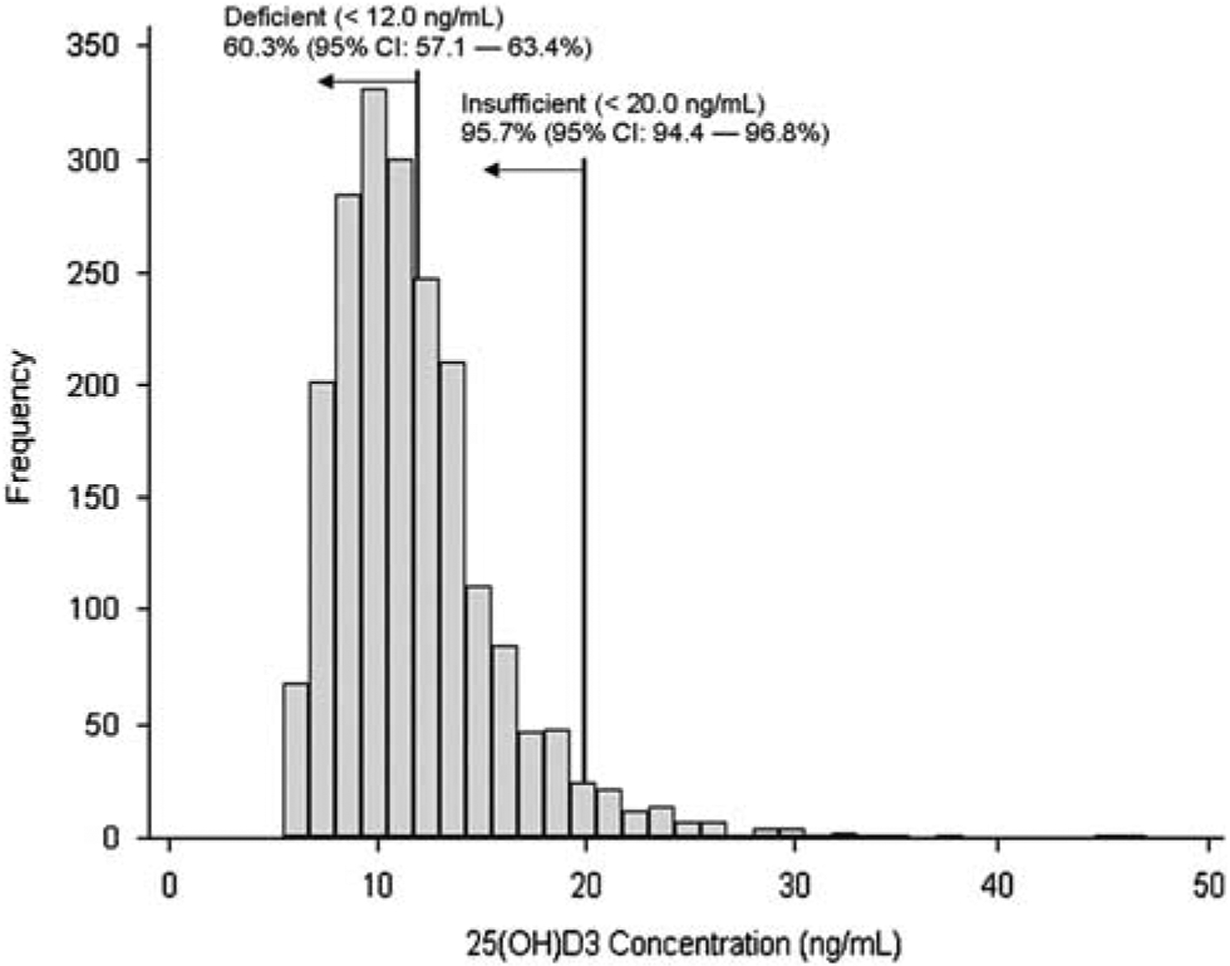
Description:BACKGROUND/OBJECTIVES: ; Vitamin D deficiency, a risk factor for osteomalacia and osteoporosis, is a re-emerging health problem globally. While sunlight is an important vitamin D source, previous investigations among women whose culture encourages skin covering have been small, not nationally representative, or both. We investigated serum 25-hydroxyvitamin D (25(OH)D3) status and factors associated with deficiency in a nationally representative survey of 2013 Jordanian women of reproductive age in Spring 2010. ; SUBJECTS/METHODS: ; We measured 25(OH)D3 concentrations by liquid chromatography-tandem mass spectrometry and calculated prevalence ratios for deficiency associated with skin covering and other factors. ; RESULTS: ; Results showed 60.3% (95% CI: 57.1-63.4%) deficiency (<12 ng/ml) and 95.7% (95% CI: 94.4-96.8%) insufficiency (<20 ng/ml) among women. Prevalence of deficiency was 1.60 times higher for women who covered with a scarf/hijab (95% CI: 1.06-2.40, P = 0.024) and 1.87 times higher for women who wore full cover, or a niqab (95% CI: 1.20-2.93, P = 0.006), compared with the women who did not wear a scarf/hijab or niqab. Compared with rural women completing at least secondary education, prevalence of deficiency was 1.30 times higher for urban women of the same education level (95% CI: 1.08-1.57, P = 0.006), 1.18 times higher for urban women completing less than secondary education (95% CI: 0.98-1.43, P = 0.09), and 0.66 times lower for rural women completing less than secondary education (95% CI: 0.52-0.84, P = 0.001). ; CONCLUSION: ; Vitamin D deficiency and insufficiency pose significant public health problems in Jordanian women. Prevalence of deficiency is significantly higher among urban women and among women who cover with a scarf/hijab or niqab.
-
Subjects:
-
Keywords:
-
Source:Eur J Clin Nutr. 66(6):751-756
-
DOI:
-
Pubmed ID:22415337
-
Pubmed Central ID:PMC7607369
-
Document Type:
-
Funding:
-
Genre:
-
Volume:66
-
Issue:6
-
Download URL:
-
File Type:
 [PDF - 537.41 KB]
 -
Collection(s):
-
Main Document Checksum:urn:sha-512:72bb78dce01a47fa693be473f17d69af059b06bbcdd3dbf433d2e1c5db6dfcfcf760f5aea6ae205274fafa114919d46afcca27cb2133e16fe03c9914466c86b9
Supporting Files


File Language:
English
 Was this page helpful?
 Found an issue?

CDC STACKS serves as an archival repository of CDC-published products including
scientific findings, journal articles, guidelines, recommendations, or other public health information authored or
co-authored by CDC or funded partners.
As a repository, CDC STACKS retains documents in their original published format to ensure public access to scientific information.
As a repository, CDC STACKS retains documents in their original published format to ensure public access to scientific information.
You May Also Like
COLLECTION
CDC Public Access