



Polyclonal Burkholderia cepacia Complex Outbreak in Peritoneal Dialysis Patients Caused by Contaminated Aqueous Chlorhexidine
Supporting Files
Public Domain

-
Sep 2020
File Language:
English
Details
-
Alternative Title:Emerg Infect Dis
-
Personal Author:Wong, Sally C.Y. ; Wong, Shuk-Ching ; Chen, Jonathan H.K. ; Poon, Rosana W.S. ; Hung, Derek L.L. ; Chiu, Kelvin H.Y. ; So, Simon Y.C. ; Leung, Wing Shan ; Chan, Tak Mao ; Yap, Desmond Y.H. ; Chuang, Vivien W.M. ; Yuen, Kwok-Yung ; Cheng, Vincent C.C.
-
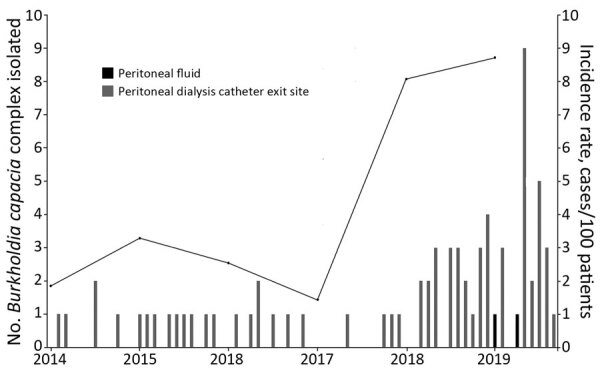
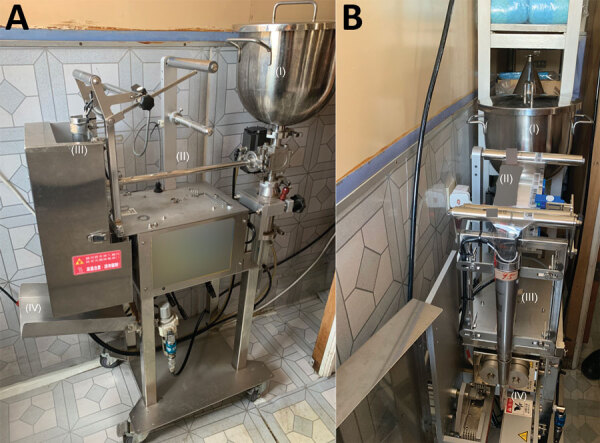
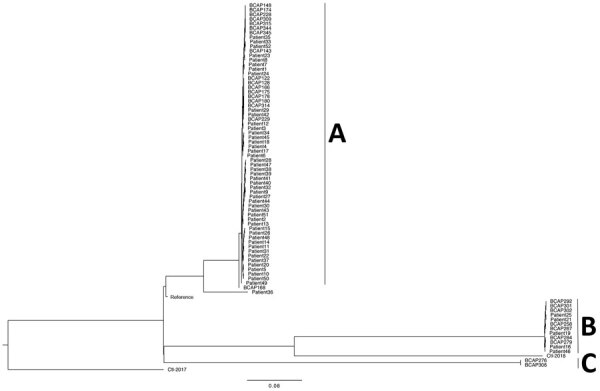
Description:Whether Burkholderia cepacia complex should be an objectionable organism in antiseptic solutions with acceptable total bacterial counts is controversial. By using next-generation sequencing, we documented a polyclonal B. cepacia complex outbreak affecting peritoneal dialysis patients in Hong Kong that was caused by contaminated chlorhexidine solutions. Epidemiologic investigations at a manufacturing site identified a semiautomated packaging machine as the probable source of contamination in some of the brands. Use of whole-genome sequencing differentiated the isolates into 3 brand-specific clonal types. Changes in exit site care recommendations, rapid recall of affected products, and tightening of regulatory control for chlorhexidine-containing skin antiseptics could prevent future similar outbreaks. Environmental opportunistic pathogens, including B. cepacia complex, might be included in regular surveillance as indicator organisms for monitoring environmental contamination.
-
Subjects:
-
Source:Emerg Infect Dis. 26(9):1987-1997
-
Pubmed ID:32818396
-
Pubmed Central ID:PMC7454066
-
Document Type:
-
Place as Subject:
-
Volume:26
-
Issue:9
-
Download URL:
-
File Type:
 [PDF - 1.36 MB]
 -
Collection(s):
-
Main Document Checksum:urn:sha256:bc9ac2a2d51cec5dc71ec693439180b155747552613cab4c19f697fe5340bbca
Supporting Files


File Language:
English
 Was this page helpful?
 Found an issue?


CDC STACKS serves as an archival repository of CDC-published products including
scientific findings, journal articles, guidelines, recommendations, or other public health information authored or
co-authored by CDC or funded partners.
As a repository, CDC STACKS retains documents in their original published format to ensure public access to scientific information.
As a repository, CDC STACKS retains documents in their original published format to ensure public access to scientific information.
You May Also Like
COLLECTION
Emerging Infectious Diseases