



Prospective cohort study of influenza vaccine effectiveness among healthcare personnel in Lima, Peru: Estudio Vacuna de Influenza Peru, 2016‐2018
Supporting Files

-
April 05 2020 ; 7-2020
File Language:
English
Details
-
Alternative Title:Influenza Other Respir Viruses
-
Personal Author:Wesley, Meredith G. ; Soto, Giselle ; Arriola, Carmen Sofia ; Gonzales, Miriam ; Newes‐Adeyi, Gabriella ; Romero, Candice ; Veguilla, Vic ; Levine, Min Z. ; Silva, Maria ; Ferdinands, Jill M. ; Dawood, Fatimah S. ; Reynolds, Sue B. ; Hirsch, Avital ; Katz, Mark ; Matos, Eduardo ; Ticona, Eduardo ; Castro, Juan ; Castillo, Maria ; Bravo, Eduar ; Cheung, Angela ; Phadnis, Rachel ; Martin, Emily Toth ; Tinoco, Yeny ; Neyra Quijandria, Joan Manuel ; Azziz‐Baumgartner, Eduardo ; Thompson, Mark G.
-
Corporate Authors:
-
Description:Background
The Estudio Vacuna de Influenza Peru (VIP) cohort aims to describe the frequency of influenza virus infection, identify predictors of vaccine acceptance, examine the effects of repeated influenza vaccination on immunogenicity, and evaluate influenza vaccine effectiveness among HCP.
Methods
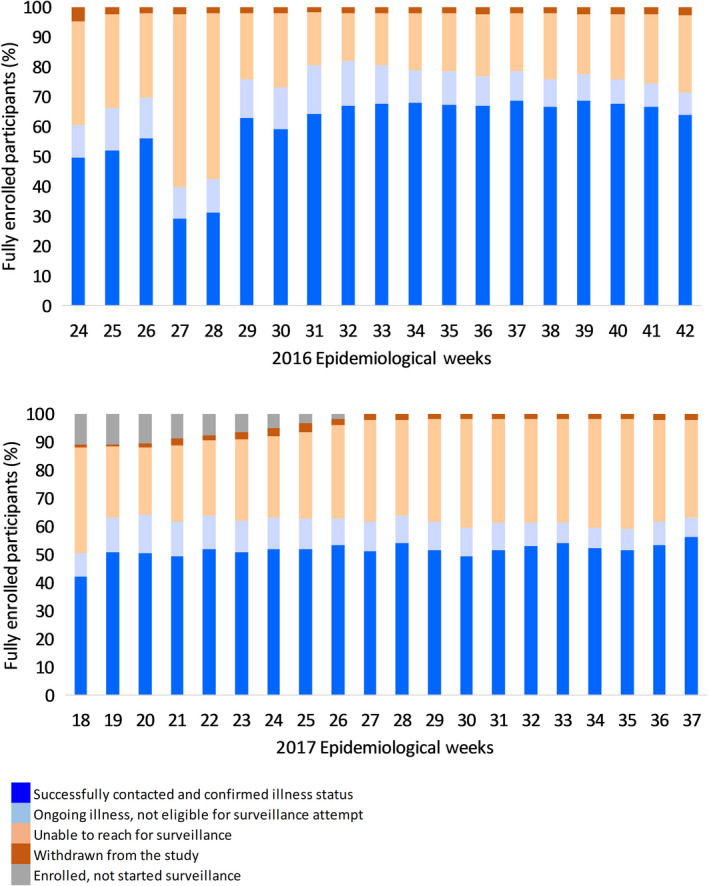
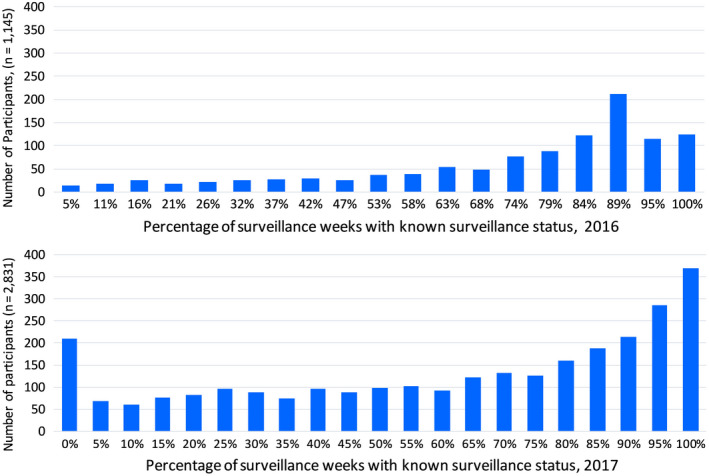
The VIP cohort prospectively followed HCP in Lima, Peru, during the 2016‐2018 influenza seasons; a fourth year is ongoing. Participants contribute blood samples before and after the influenza season and after influenza vaccination (for vaccinees). Weekly surveillance is conducted to identify acute respiratory or febrile illnesses (ARFI). When an ARFI is identified, participants self‐collect nasal swabs that are tested for influenza viruses by real‐time reverse transcriptase‐polymerase chain reaction. Influenza vaccination status and 5‐year vaccination history are ascertained. We analyzed recruitment and enrollment results for 2016‐2018 and surveillance participation for 2016‐2017.
Results
In the first 3 years of the cohort, VIP successfully contacted 92% of potential participants, enrolled 76% of eligible HCP, and retained >90% of participants across years. About half of participants are medical assistants (54%), and most provide “hands‐on” medical care (76%). Sixty‐nine percent and 52% of participants completed surveillance for >70% of weeks in years 1 and 2, respectively. Fewer weeks of completed surveillance was associated with older age (≥50 years), being a medical assistant, self‐rated health of fair or poor, and not receiving the influenza vaccine during the current season (P‐values < .05).
Conclusions
The VIP cohort provides an opportunity to address knowledge gaps about influenza virus infection, vaccination uptake, effectiveness and immunogenicity among HCP. -
Subjects:
-
Source:Influenza Other Respir Viruses. 14(4):391-402
-
Pubmed ID:32249553
-
Pubmed Central ID:PMC7298283
-
Document Type:
-
Funding:
-
Volume:14
-
Issue:4
-
Download URL:
-
File Type:
 [PDF - 783.36 KB]
 -
Collection(s):
-
Main Document Checksum:urn:sha256:933dcec17fc4712ef393c93aaa89f687e2edd60519cc4cb6be20cfb434f82be4
Supporting Files


File Language:
English
 Was this page helpful?
 Found an issue?




CDC STACKS serves as an archival repository of CDC-published products including
scientific findings, journal articles, guidelines, recommendations, or other public health information authored or
co-authored by CDC or funded partners.
As a repository, CDC STACKS retains documents in their original published format to ensure public access to scientific information.
As a repository, CDC STACKS retains documents in their original published format to ensure public access to scientific information.
You May Also Like
COLLECTION
CDC Public Access