


The S Genome Segment Is Sufficient to Maintain Pathogenicity in Intra-Clade Lassa Virus Reassortants in a Guinea Pig Model
Supporting Files

-
July 11 2018
-
File Language:
English
Details
-
Alternative Title:Front Cell Infect Microbiol
-
Personal Author:
-
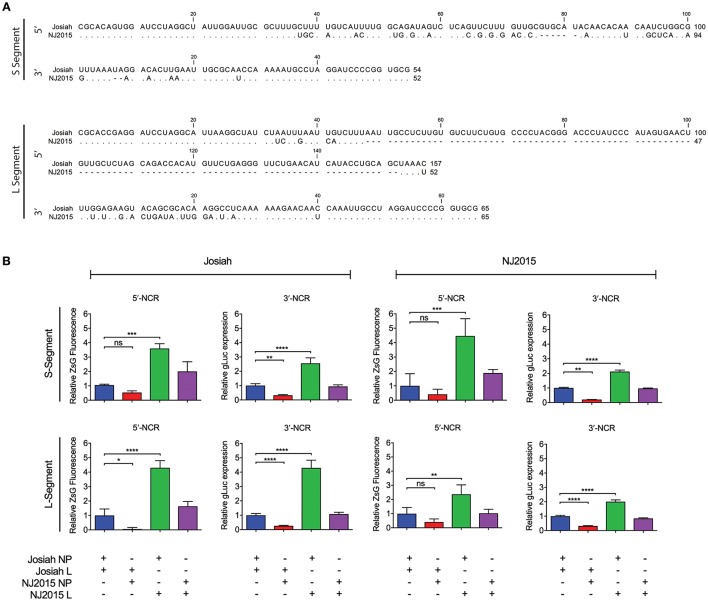
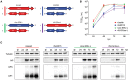
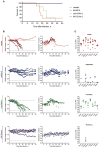
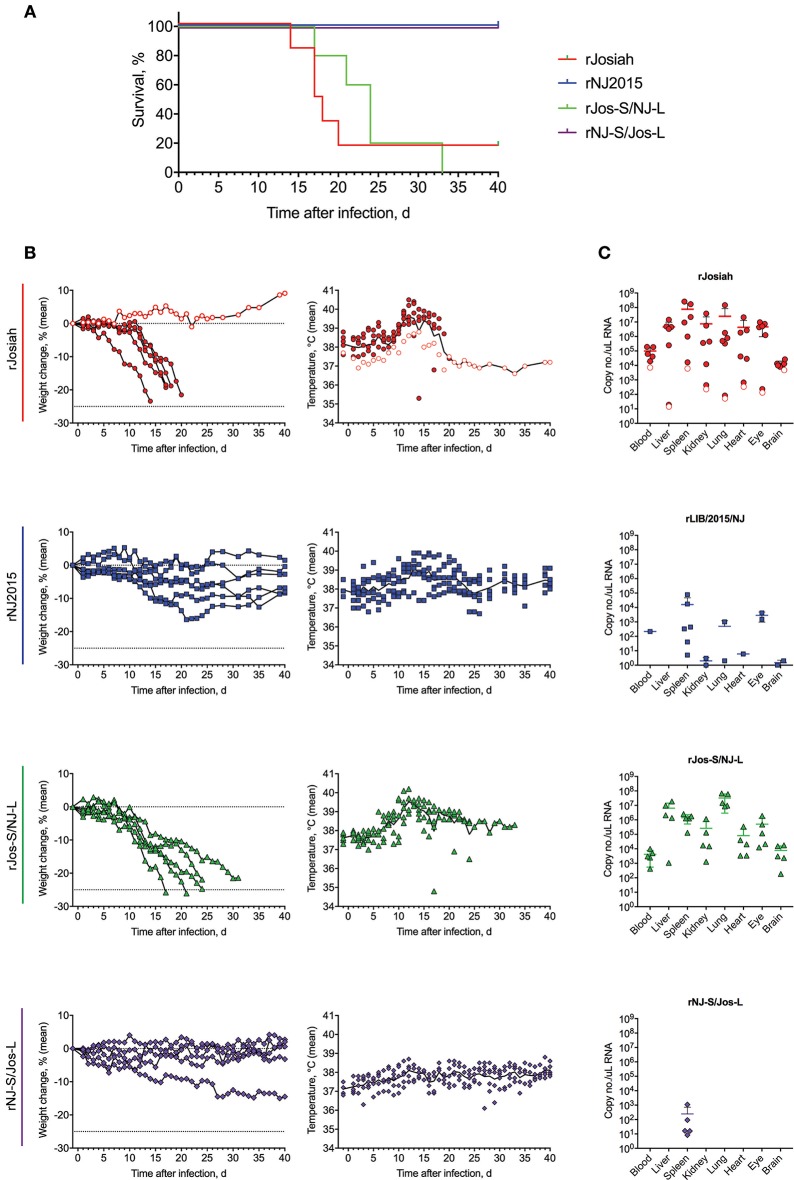
Description:Genome reassortment in Lassa virus (LASV) has been reported in nature, but phenotypic consequences of this phenomenon are not well described. Here we characterize, both | and |, reassortment between 2 LASV strains: the prototypic 1976 Josiah strain and a more recently isolated 2015 Liberian strain. | analysis showed that although cis- and trans-acting elements of viral RNA synthesis were compatible between strains, reassortants demonstrated different levels of viral replication. These differences were also apparent |, as reassortants varied in pathogenicity in the guinea pig model of LASV infection. The reassortant variant containing the Josiah S segment retained the virulence of the parental Josiah strain, but the reassortant variant containing the S segment of the Liberian isolate was highly attenuated compared to both parental strains. Contrary to observations in reassortants between LASV and other arenavirus species, which suggest that L segment-encoded factors are responsible for virulence, these studies highlight a role for S segment-encoded virulence factors in disease, and also suggest that inefficient interactions between proteins of heterologous strains may limit the prevalence of reassortant LASV variants in nature.
-
Subjects:
-
Source:Front Cell Infect Microbiol. 2018; 8
-
Pubmed ID:30050872
-
Pubmed Central ID:PMC6050391
-
Document Type:
-
Funding:
-
Volume:8
-
Collection(s):
-
Main Document Checksum:urn:sha256:8b482cd72bcff666ea8935163c6154ed3721e64e4fae8fc55ab6292948133686
-
Download URL:
-
File Type:
 [PDF
- 7.16 MB
]
[PDF
- 7.16 MB
]
Supporting Files


File Language:
English
ON THIS PAGE



CDC STACKS serves as an archival repository of CDC-published products including
scientific findings,
journal articles, guidelines, recommendations, or other public health information authored or
co-authored by CDC or funded partners.
As a repository, CDC STACKS retains documents in their original published format to ensure public access to scientific information.
As a repository, CDC STACKS retains documents in their original published format to ensure public access to scientific information.
You May Also Like
COLLECTION
CDC Public Access